- 04 May, 2026
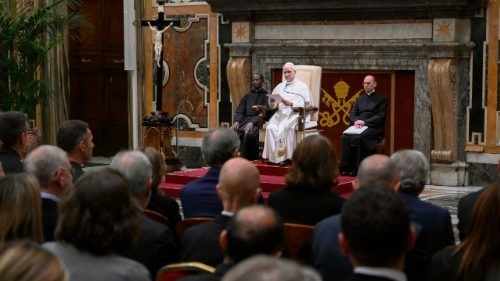
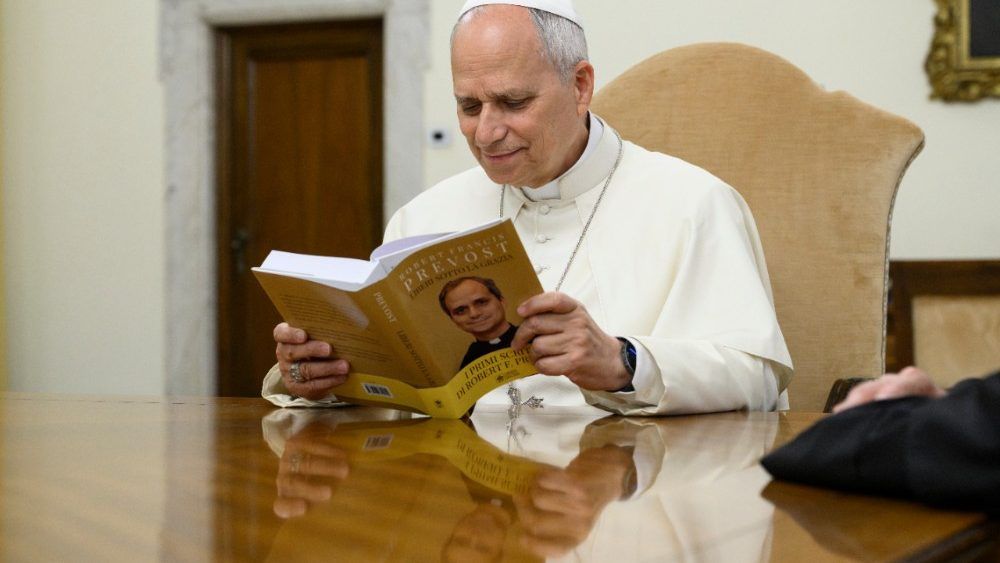
Vatican, March 27, 2026: Pope Leo XIV addressed Italy's National Center for Transplants and urged them to "keep the good of the patient as your guiding principle."

The Pope, speaking on Thursday in the Vatican to participants attending a meeting organised by Italy's National Transplant Center, suggested that they should always keep the good of the patient as their guiding principle.
He expressed his satisfaction in welcoming them on the occasion of the General Assembly of the National Transplant Network, observing that their presence reflects the commitment of numerous healthcare workers, professionals, and volunteers who, with competence and dedication, serve human life at its most fragile stages.


He recalled that they are marking 70 years since the first organ donation in Italy, "when Blessed Don Carlo Gnocchi asked that his corneas be removed after his death and transplanted to two very young beneficiaries of his work, who were thus able to see again."
The Pope noted that this gesture, carried out in a context where comprehensive legislation was still absent, prompted wide reflection within Italian society and contributed to the beginning of a path towards legal definition.
Only a few weeks after Don Gnocchi’s act, Pope Pius XII, Pope Leo recalled, offered an initial moral orientation on the matter, acknowledging the legitimacy of organ removal for therapeutic purposes, while respecting the dignity of the human body and the rights of those involved.
Church's tradition on the issue
From the beginning, the Pope said, the Church’s reflection has accompanied the development of transplant medicine, recognising its importance while also outlining the necessary ethical criteria.
Since then, he noted, extensive scientific progress and human commitment have enabled the Italian Transplant Network to achieve significant results recognised internationally. He pointed out that behind these achievements lies a wealth of expertise, along with a culture of responsibility and trust that must be maintained and supported.
Pope John Paul II, in the Encyclical Evangelium vitae, Pope Leo recalled, stated that among the actions that promote a culture of life, “organ donation performed in an ethically acceptable manner deserves special appreciation.” He added that it represents an act combining generosity in giving with the moral responsibility that accompanies it.
The Holy Father reaffirmed that the Catechism of the Catholic Church teaches that “organ donation after death is a noble and meritorious act and is to be encouraged as an expression of generous solidarity,” while also highlighting the importance of consent and respect for the dignity of the person.
Constant vigilance and just and transparent criteria
"Constant vigilance," Pope Leo said, "is required to avoid any form of commercialization of the human body and to ensure that transplantation is governed by just and transparent criteria."
He stressed that transplant medicine reminds us that relationships of care, trust, and shared responsibility are essential conditions for transplantation to take place. "Indeed, the very possibility of saving lives through transplantation," he also observed, "depends on the generosity of donors."
The Pope recalled that Pope Francis had emphasised that donation goes beyond its social usefulness, important though it is, and takes form as an expression of universal fraternity. He also reiterated that it must remain a gratuitous act, capable of witnessing to a culture of help, giving, hope, and life.
Pope Leo described this as a "particularly valuable reminder" at a time when everything risks being judged according to the logic of price, efficiency, or self-interest.
He also used the occasion to encourage scientific research, which continues to open significant possibilities for transplant medicine.
"It is called to develop ever more," the Holy Father said, "effective solutions to meet the demand for organs and the needs of patients, in a context where demand still far exceeds availability. It is essential that this commitment always proceed together with responsible reflection, so that scientific progress remains oriented toward the integral good of the person and respect for his or her dignity."
Keeping the good of the patient as your guiding principle
The Pope expressed his deep appreciation.
"Yours," the Holy Father acknowledged, "is demanding and often hidden work, requiring competence and rigor, as well as conscience, balance, and a deep sense of humanity."
Recognising that their work involves clinical responsibilities, sensitive decisions, and relationships that affect people’s lives in their most difficult moments, he encouraged them to continue carrying out their mission with fidelity and dedication, "always keeping the good of the patient as your guiding principle."
Pope Leo XIV concluded by encouraging institutions and the world of volunteering to continue their efforts in information and awareness-raising, "so that a culture of donation may grow ever more conscious, free, and shared, capable of recognizing in this act a sign of solidarity, fraternity, and hope."
Courtesy: Vatican News

© 2026 CATHOLIC CONNECT POWERED BY ATCONLINE LLP