- 10 September, 2026
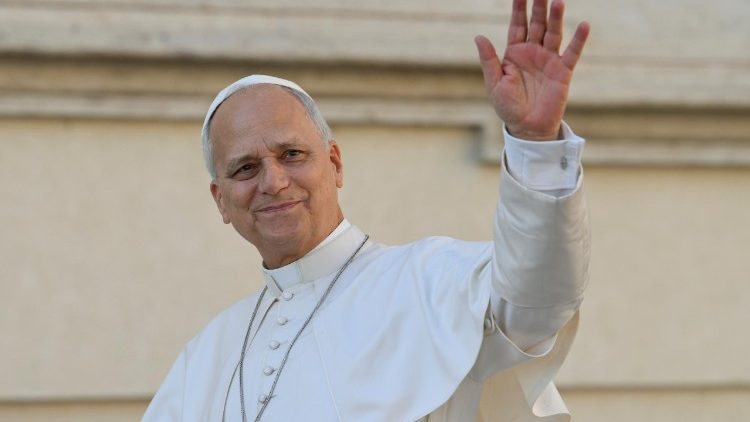
VATICAN CITY, September 10, 2026 — Pope Leo implored Christians to recognise, promote and defend the unique dignity of every human person during his Wednesday General Audience, stressing that human worth does not depend on abilities, wealth, social position or even the choices a person makes, but is rooted in being created and loved by God.

Reflecting on the Second Vatican Council’s Pastoral Constitution Gaudium et Spes during the General Audience, the Pope placed human dignity at the heart of the Church’s understanding of the human person. He recalled that the Constitution begins its reflection on contemporary society by highlighting the dignity of the human person as the foundation of many of the values most highly prized today, while warning that these values must not be separated from their divine source.
The Pope acknowledged the progress made throughout history in recognising fundamental human rights and dignity, but said the journey remains unfinished. Old and new contradictions continue to prevent human dignity from being fully realised.

A dignity that comes before everything else
The Church’s contribution, the Pope explained, is to affirm that human dignity arises from the very being of the person. Referring to his recent Encyclical Magnifica Humanitas, he stressed that every human person is planned and willed by God for communion with Him, with others and with creation.
Human dignity, therefore, cannot be measured by a person’s abilities, wealth, social standing or moral record. It is a gift that precedes and transcends every individual and is an expression of God’s unfailing love.
This dignity is ultimately rooted in humanity’s creation in the image of God. The human person is uniquely capable of knowing and loving the Creator and is entrusted with responsibility for creation.
The Pope further recalled Gaudium et Spes’ teaching that Christ fully reveals the human person to himself and makes clear humanity’s supreme calling. In Christ, the deepest mystery of the human person receives its true light.
To be human is to live in relationship
Pope Leo XIV emphasised that being a person can never be reduced to isolated individual existence. Human life is fundamentally relational, involving communion and participation with God and with others.
This relationship is expressed through a filial relationship with God the Father and a fraternal relationship with Christ and all humanity. True personhood, he said, excludes self-centred isolation. A person discovers himself as a gift to be shared and grows through acceptance, reciprocity and service.
Such dignity also carries responsibility. While every person is called to respect and protect his or her own dignity, the same dignity demands solidarity and mutual care. This requires confronting the ways in which human dignity continues to be falsified, manipulated or denied.
The struggle within the human person
The Pope acknowledged the wounded condition of humanity, recalling Gaudium et Spes’ description of the human person as divided within himself and of human life as a dramatic struggle between good and evil, light and darkness.
Yet this condition is not without hope. Christ came to free and strengthen humanity, renewing the person from within and liberating him from the bondage of sin.
The Pope also stressed that human dignity embraces the whole person. Gaudium et Spes rejects any separation between body and soul, affirming that the human being, though made of both, is one.
The body, therefore, must never be treated merely as an object to be disposed of arbitrarily. Because God created the human body and will raise it up on the last day, bodily life is good and worthy of honour. At the same time, human beings are called not to become enslaved by the evil inclinations of the heart.
Intelligence, conscience and freedom
The Pope identified three important expressions of human dignity highlighted by Gaudium et Spes: intelligence, conscience and freedom.
Through intelligence, the human person becomes an insatiable seeker of truth. Through conscience, he gives unity and meaning to his life. Through freedom, he becomes responsible for his decisions.
These dimensions cannot be separated. Conscience recognises truth, while freedom finds in truth its foundation and possibility.
The Pope pointed to the Holy Spirit as the one who gives life in Christ, makes humanity free and continually assures believers of their dignity as children of God. The Spirit leads them beyond fear towards the fullness of life promised by Christ.
Ultimately, the Pope said, it is in Christ that the mystery of the human person finds its true light. In Him, humanity receives light for understanding the enigma of suffering and death and finds the path towards the Resurrection.
Concluding his reflection, Pope Leo XIV reminded Christians that, having been created in God’s image, through Christ and for His sake, every person possesses a unique and indelible dignity.
He urged the faithful to commit themselves to promoting and defending that dignity always, with the light and strength of the Gospel.
By Catholic Connect Reporter
Image courtesy: Vatican News

© 2026 CATHOLIC CONNECT POWERED BY ATCONLINE LLP