- 19 June, 2026
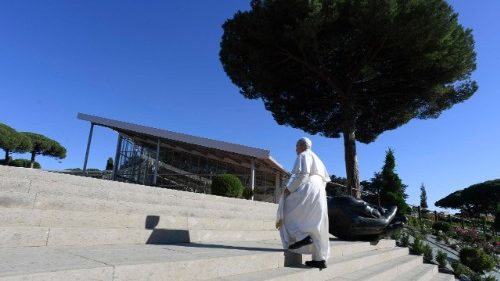
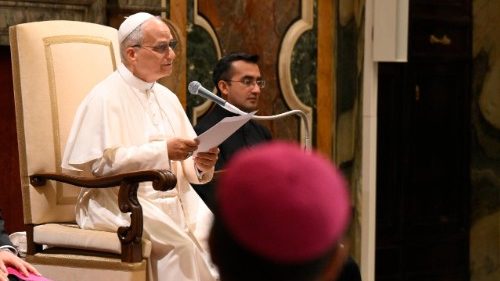
Vatican, June 19, 2026: Pope Leo on Friday welcomed participants attending the inaugural edition of the Borgo Laudato si’ Dialogues. The gathering took place at Borgo Laudato si’ in Castel Gandolfo over two days and focused on several urgent global concerns, including artificial intelligence and its effects on human dignity, healthy ageing, sports diplomacy, and environmental sustainability.


The initiative is part of the wider mission of Borgo Laudato si’, which was established within the Papal Villas of Castel Gandolfo as a centre for integral ecology inspired by Pope Francis’ 2015 Encyclical Laudato si’. The dialogues brought together experts, practitioners, and leaders from various countries and disciplines to examine how ethical leadership can help foster ecological, social, and economic transformation.
Reimagining moral leadership
Speaking to participants at the end of the meeting, Pope Leo described the event as “the first step of a process aimed at renewing and reimagining moral leadership in a world that today appears fractured and forgetful of its historical roots.”


Referring to themes explored in his Encyclical Magnifica humanitas, the Pope once again stressed the importance of dialogue in addressing present-day challenges. “We seek to identify new paths for the common good and for promoting a dignified life for all,” he said, recalling his appeal “to engage in dialogue with all men and women of our time, with whom we share in the events, questions and aspirations of humanity.”
The Holy Father cautioned against what he described as increasing “spiritual and cultural blindness” that threatens to detach society from its historical memory. "A false pragmatism," he said, "urges us to sever the roots of our history, as if it were possible to inaugurate a kind of ‘new creation’ detached from the past." He further warned that even those who refer to moral principles may fall into a form of "historical nihilism," wrongly assuming that the tragedies of the twentieth century cannot happen again.
Pope Leo also observed that the dialogues drew inspiration from the Church’s understanding of synodality, bringing together different voices while striving for unity around shared concerns. He praised participants for their dedication to advancing ecological, social, and economic renewal despite their varied backgrounds and fields of expertise.
The challenges of technological development
Addressing the ethical issues linked to technological and economic progress, the Pope contrasted two opposing visions of society. “In the face of the temptation to build the ‘Tower of Babel,’ which represents the idolatry of profit at the expense of the most vulnerable and enhances the risk of dehumanisation,” he said, Christians are instead called “to contribute to the construction of the New Jerusalem, the civilization of love.”
The Pope explained that such a civilisation is not created through extraordinary gestures, but through consistent daily acts of commitment and care. “The civilisation of love will not arise from a single or spectacular gesture, but from the sum total of small and steadfast acts of fidelity that serve as a bulwark against dehumanization,” he said.
Pope Leo also underlined the importance of holding the meeting amid the natural surroundings of the Pontifical Gardens at Borgo Laudato si’, where participants could draw inspiration from “the beauty of creation - and of the Creator” while attempting to connect local experiences with global responsibility.
Expressing gratitude to those present for their dedication, the Holy Father concluded by voicing hope that the process initiated at Castel Gandolfo would continue through future meetings and initiatives.
Courtesy: Vatican News
© 2026 CATHOLIC CONNECT POWERED BY ATCONLINE LLP