- 19 June, 2026

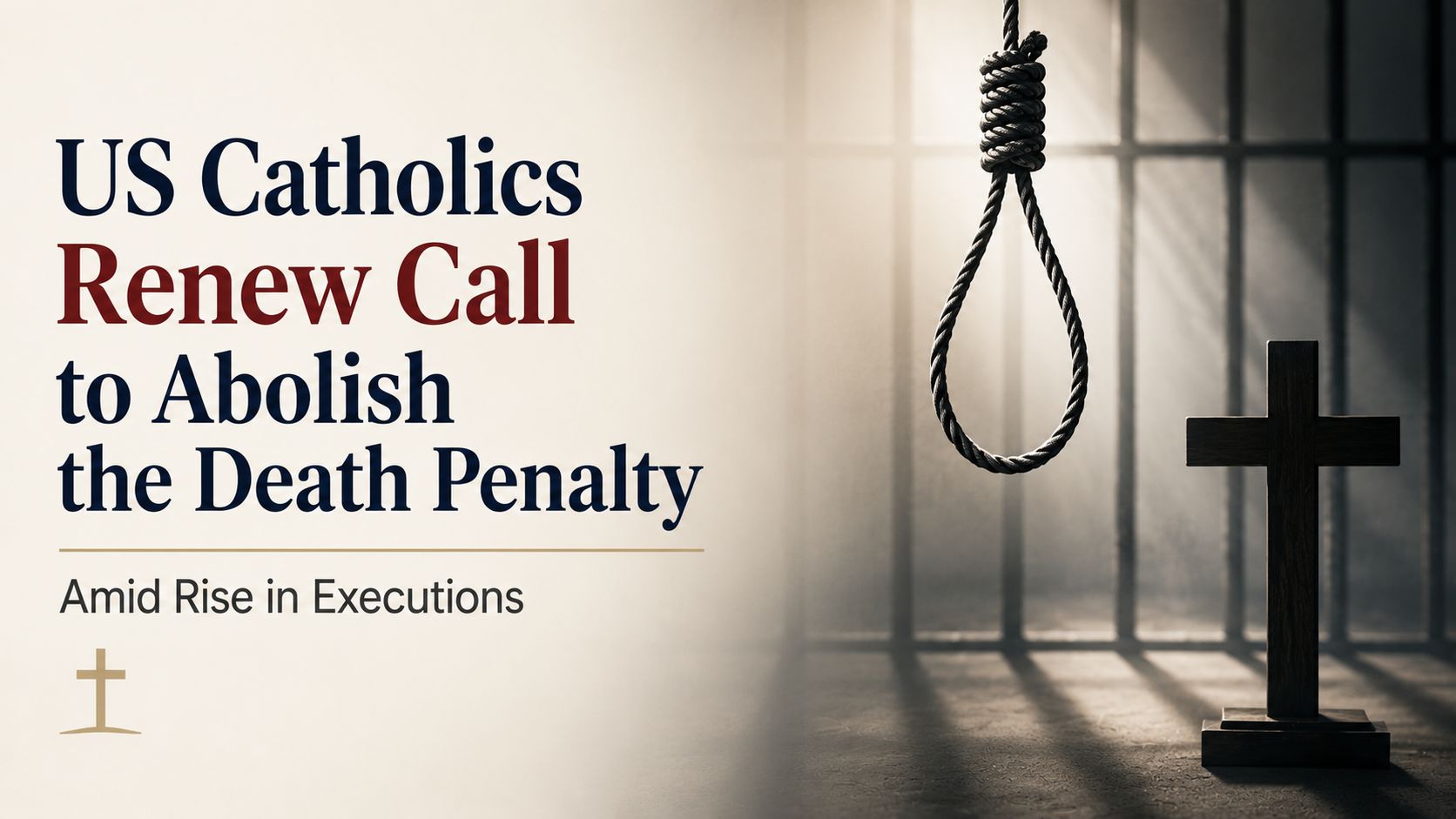
June 19, 2026: Catholic leaders and pro-life advocates in the United States are renewing their appeal for the abolition of the death penalty following a significant rise in executions across the country in 2025.


According to the Catholic Mobilizing Network, 47 people were executed in the United States during 2025, more than double the average annual number of executions recorded over the past decade. Krisanne Vaillancourt Murphy, Executive Director of the Catholic Mobilizing Network, said in an interview with Vatican News during a recent visit to Rome that the increase was particularly troubling at a time when public support for the death penalty is declining and more states are moving towards abolition. She noted that capital punishment is often used as a political tool to project a tough stance on crime despite growing opposition to the practice.
The figures reveal a sharp divide across the country. While 47 executions took place in 2025, only 11 states carried them out. The remaining 39 states conducted none, and 23 states have already abolished the death penalty.


Florida alone accounted for 19 executions during the year, averaging nearly one execution every two weeks. Murphy argued that executions do not necessarily bring healing or closure to victims' families and instead risk extending the cycle of violence.
“It just creates more harm and more hurt and more victims in a system of violence where violence begets more violence.”
Church Teaching on Capital Punishment
The Catholic Church has consistently opposed the use of capital punishment. The Catechism of the Catholic Church states that “the death penalty is inadmissible because it is an attack on the inviolability and dignity of the person” (CCC 2267).
This teaching was reaffirmed by Pope Leo XIV in a video message on 24 April 2026 marking the fifteenth anniversary of the abolition of the death penalty in the US state of Illinois.
The Pope expressed his support for those advocating the abolition of capital punishment and prayed that their efforts would lead to a greater recognition of the dignity of every human person and inspire others to support the same cause.
Murphy also emphasised that modern justice systems are capable of protecting society and holding offenders accountable without resorting to executions.
Ohio Governor Urged to Act
Attention has also turned to Ohio, where 114 inmates currently remain on death row. Of these, 28 have exhausted all avenues of appeal.
Murphy said Ohio Governor Mike DeWine, a practising Catholic who has publicly opposed the death penalty and maintained a moratorium on executions during his tenure, has a unique opportunity to commute the sentences of all 114 prisoners before leaving office in January 2027.
She stressed that human life retains its value even when serious harm has been committed and argued that society can remain safe while allowing opportunities for redemption and accountability.
A commutation would spare those on death row from execution while ensuring they remain imprisoned, typically serving life sentences without the possibility of parole. Supporters of abolition argue that such measures offer offenders the opportunity for repentance and conversion while helping to break the cycle of violence.
The Situation in India
India retains the death penalty under law, although it is reserved for the “rarest of rare” cases. This principle, established by the Supreme Court of India, requires courts to impose capital punishment only in exceptional circumstances where alternative punishments are considered inadequate. While death sentences continue to be awarded by courts, many are later commuted to life imprisonment through the appeals process.
The Catholic Church's teaching on the death penalty applies universally, including in countries where capital punishment remains legal. In 2018, Pope Francis approved a revision to the Catechism of the Catholic Church declaring that “the death penalty is inadmissible because it is an attack on the inviolability and dignity of the person.”
While the Church fully supports justice for victims and the protection of society, it also teaches that modern penal systems can effectively safeguard communities without taking the life of an offender. Catholic teaching therefore promotes justice that includes accountability, rehabilitation and the possibility of repentance and redemption.
Courtesy: Vatican News



© 2026 CATHOLIC CONNECT POWERED BY ATCONLINE LLP