- 07 May, 2026

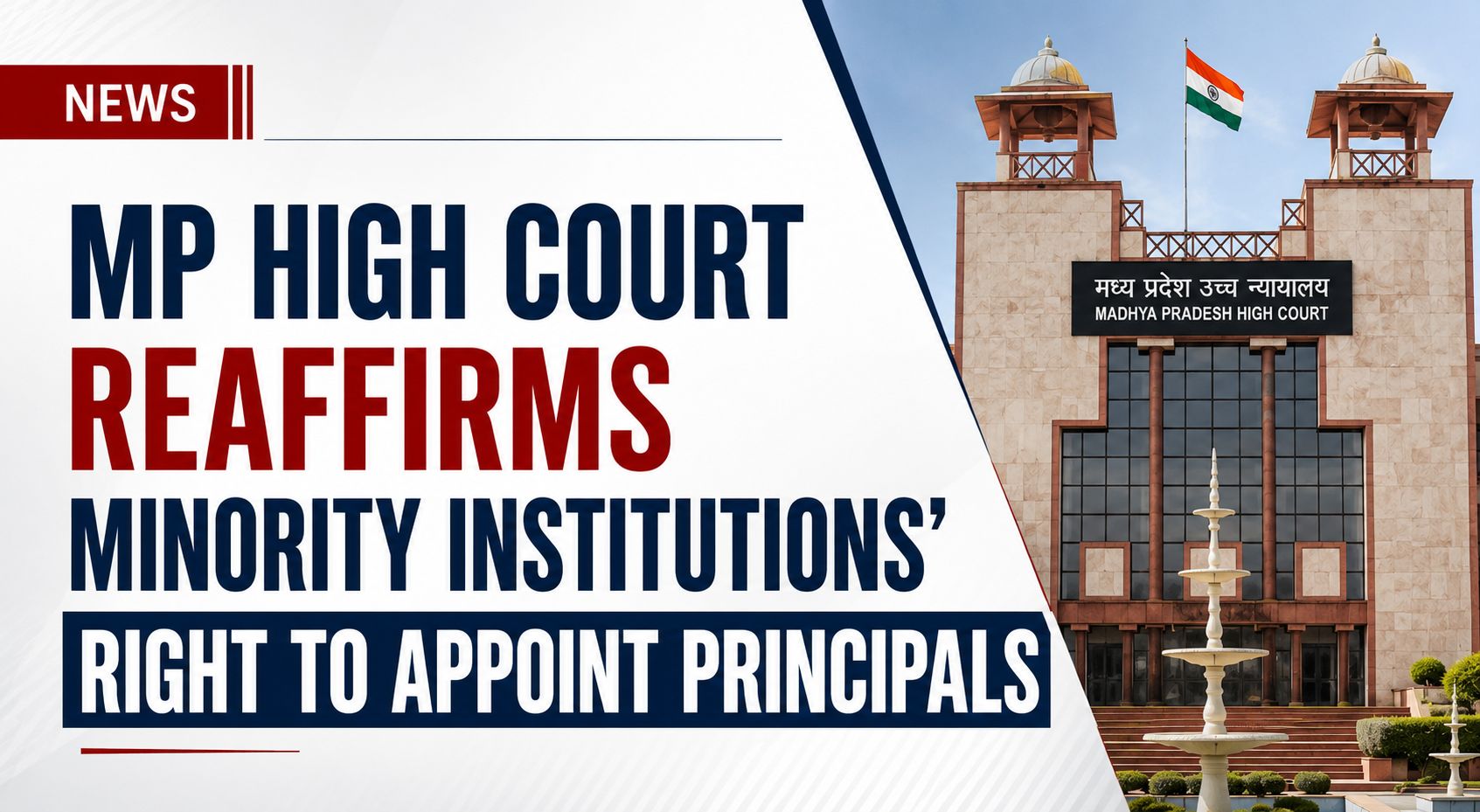
Madhya Pradesh, May 7, 2026: The Madhya Pradesh High Court has delivered a significant judgment upholding the constitutional rights of minority educational institutions, ruling that the State cannot question the choice of principal made by a minority institution once the selected candidate is qualified.


In its ruling, the Division Bench observed that the right of minorities to establish and administer educational institutions under Article 30(1) of the Constitution includes the freedom to appoint heads of institutions according to their own vision and priorities. The court stated that once a minority institution has made a conscious decision in selecting a qualified candidate, such a decision cannot be tested on the grounds of “merits” or “rationality” by government authorities or courts.
The case arose from a dispute involving a minority-run aided college in Madhya Pradesh where the management appointed a faculty member as in-charge principal after the retirement of the previous head. State authorities had objected to the appointment and insisted that the senior-most teacher should hold the post in accordance with government circulars.


Rejecting the State’s position, the High Court ruled that administrative instructions issued by the government cannot override the constitutional protections guaranteed to minority institutions. The bench emphasized that the appointment of principals and institutional heads forms an integral part of the administration of minority educational institutions.
The judgment also referred to earlier Supreme Court decisions which recognised that minority institutions must retain autonomy in matters central to preserving their identity, ethos, and mission. The court noted that even when institutions receive government aid, their constitutional rights remain protected.
The ruling is being viewed as an important reaffirmation of minority rights, especially for Christian and other faith-based educational institutions across the country. Church-run institutions have consistently maintained that the freedom to appoint principals and administrators is essential to safeguarding the religious and educational character of their institutions.
At a time when concerns are being raised in several states over increasing governmental intervention in minority institutions, the judgment is expected to strengthen constitutional safeguards protecting the autonomy of minority educational apostolates in India.
By Catholic Connect Reporter




© 2026 CATHOLIC CONNECT POWERED BY ATCONLINE LLP