- 05 September, 2026
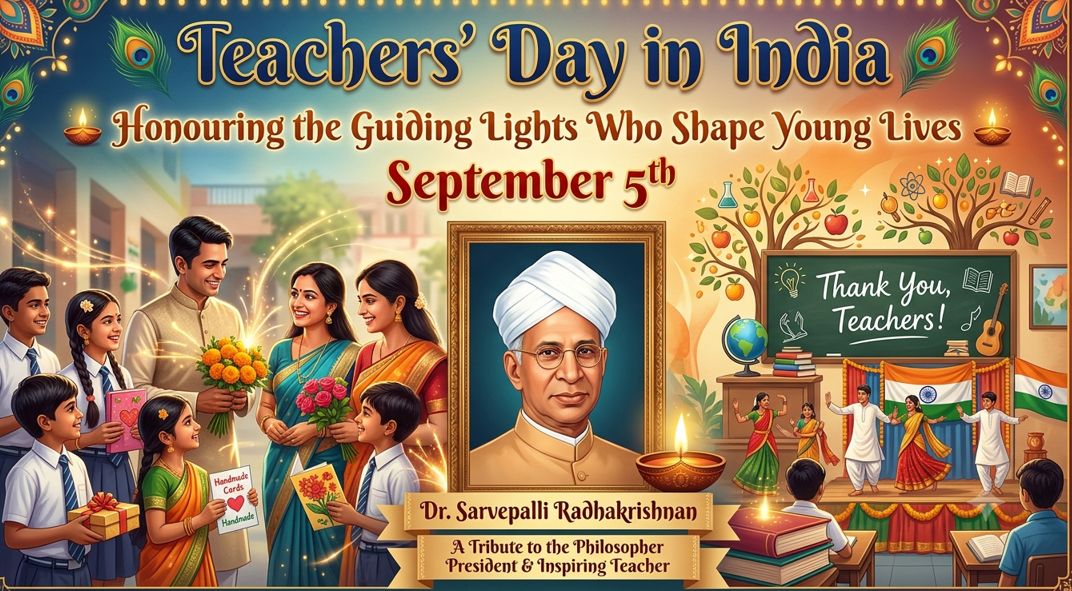
September 5, 2026: Every 5 September, Teachers’ Day offers us an opportunity to pause and thank those who have shaped our minds, encouraged our questions and helped us discover our gifts. For Catholics, however, teaching has a meaning that reaches far beyond the classroom. To teach is not simply to pass on information; it is to form the whole person—to nurture wisdom, conscience, character and, ultimately, a desire for truth.


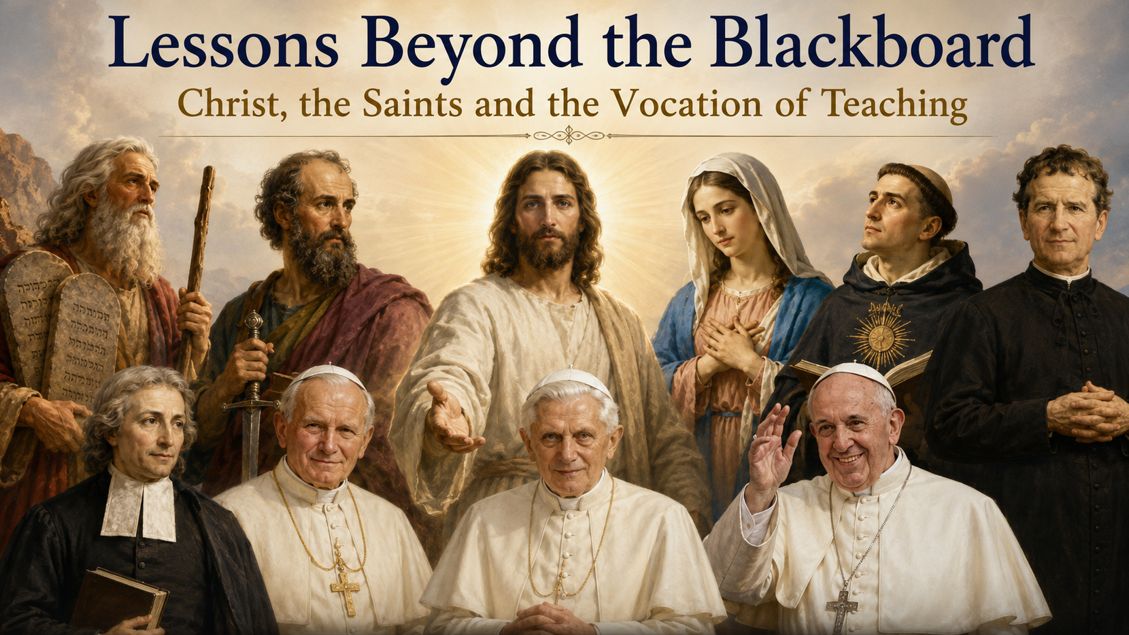
The Catholic tradition gives us a rich gallery of teachers: Biblical figures who proclaimed God's word, saints who educated through both their words and their lives, and popes who have served as teachers of the universal Church. At the heart of them all stands Christ, the Divine Teacher.
Jesus is repeatedly addressed as Teacher or Rabbi in the Gospels. Yet Christ's teaching was unlike that of an ordinary instructor. He did not merely fill minds with information; He transformed hearts.


He taught through parables, questions, conversations and even silence. He could challenge the crowds, console the broken-hearted and patiently form His disciples. His encounter with the Samaritan woman, His conversation with Nicodemus and His patient formation of Peter show a teacher who sees the person behind the question.
The Scriptures also give us other models.
Moses taught the people to remember God's covenant and to pass their faith from one generation to the next.
St. Paul, describing himself as a preacher, apostle and teacher, spent his life forming Christian communities despite persecution and hardship.
Then there is Mary, whose teaching was largely expressed through her life. At the Annunciation, she listened; at Cana, she directed others towards Christ; and throughout Jesus' life, she treasured and pondered God's works in her heart. She reminds us that a teacher must first be a listener and a learner.
The saints demonstrate that some of the greatest teachers have taught not only from books or classrooms, but through the witness of their lives.
St. Thomas Aquinas, the great Dominican theologian and Doctor of the Church, reminds Catholic educators that faith and reason are not enemies. His life was devoted to the pursuit of truth, demonstrating that intellectual excellence can itself become an act of faith.
St. John Bosco offers another model. Working with poor and vulnerable young people, he understood that education begins with relationship. His approach was rooted in patience, trust and kindness. For Don Bosco, young people needed not merely discipline, but someone who believed in them.
St. John Baptist de La Salle, patron saint of teachers, dedicated his life to the education of children, particularly those from poorer families. He recognised teaching as a vocation and worked to prepare teachers not simply to instruct, but to form their pupils with care and Christian purpose.
These saints remind us that the credibility of a teacher depends not only on what is taught, but on how one lives.
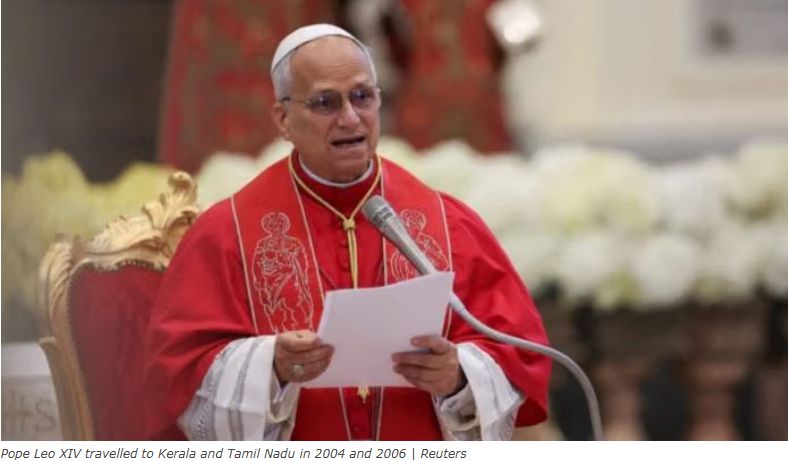
The popes, too, have a distinctive teaching vocation. Through homilies, encyclicals, catechesis and personal witness, they help the Church understand how the Gospel speaks to the circumstances of each age.
St John Paul II was a particularly powerful teacher of young people. Through his World Youth Days and his writings, he repeatedly called the younger generation to recognise their dignity, responsibility and vocation.
Pope Benedict XVI, a distinguished theologian, placed great emphasis on the relationship between faith and reason. His teaching challenged a culture that can sometimes confuse knowledge with wisdom, reminding us that truth ultimately points beyond ourselves.
Pope Francis frequently spoke of education as an encounter. For him, education could never be reduced to examination results or academic achievement; it had to involve accompaniment, fraternity, compassion and concern for those on the margins.
Teachers' Day, therefore, is more than a celebration of a profession. It is a reminder of a vocation. Every teacher has the opportunity to leave something lasting in another person's life.
A teacher may teach mathematics or history, science or literature. But through patience, fairness, courage and compassion, a teacher may also teach a child how to persevere, how to forgive, how to respect another person and how to seek truth.
The Christian teacher ultimately follows Christ, the Teacher who does not merely say, “Learn from me”, but invites us to walk with Him.
And perhaps that is the greatest lesson of all: the finest teachers do not simply prepare us to know more. They help us to become more fully human, and to discover the Truth who calls each of us by name.
By Catholic Connect Reporter
© 2026 CATHOLIC CONNECT POWERED BY ATCONLINE LLP