image

He Walked With Them… and Revealed Himself in Joy: The Living Hope of Easter Monday

Vatican City, April 6, 2026: Easter Monday continues the celebration of the Resurrection of Jesus Christ, extending the joy of Easter Sunday into a new day of hope and renewal. In the Catholic Church, it forms part of the “Octave of Easter”—eight days of celebration that highlight the victory of Christ over death and invite believers to live in the light of the Resurrection.


Significance of Easter Monday

Easter Monday reflects the continuation of resurrection joy and new beginnings.

  • It celebrates the ongoing reality of Christ’s Resurrection in the lives of believers.
  • The day emphasizes renewal, hope, and the promise of eternal life.
  • It reminds Catholics that Easter is not just a single day, but a season of transformation.
  • In Catholic teaching, it invites the faithful to live out the Resurrection in daily life.


Historical Origins of Easter Monday

Easter Monday developed as part of the early Church’s extended Easter celebrations.

  • By the 3rd–4th century, Christians celebrated the Octave of Easter, an eight-day feast following Easter Sunday.
  • Each day of the octave, including Monday, was treated with the same joy and solemnity as Easter itself.
  • The term “Easter Monday” emerged as part of this continuous celebration of Christ’s victory.
  • The practice reflects the early Church’s desire to prolong the celebration of the Resurrection.


Relevance in the Catholic Church Today

Easter Monday continues to inspire joy and renewal in modern Catholic life.

  • It encourages believers to carry the message of Easter into everyday living.
  • The liturgy focuses on encounters with the risen Christ and renewed faith.
  • It serves as a reminder that the Resurrection is a living reality, not just a past event.
  • In many countries, it is also observed as a public holiday, allowing families to celebrate together.


Interesting Stories and Biblical Reflections

Easter Monday is connected with powerful Resurrection experiences.

  • The Gospel recalls moments where Jesus appears to His followers after rising from the dead.
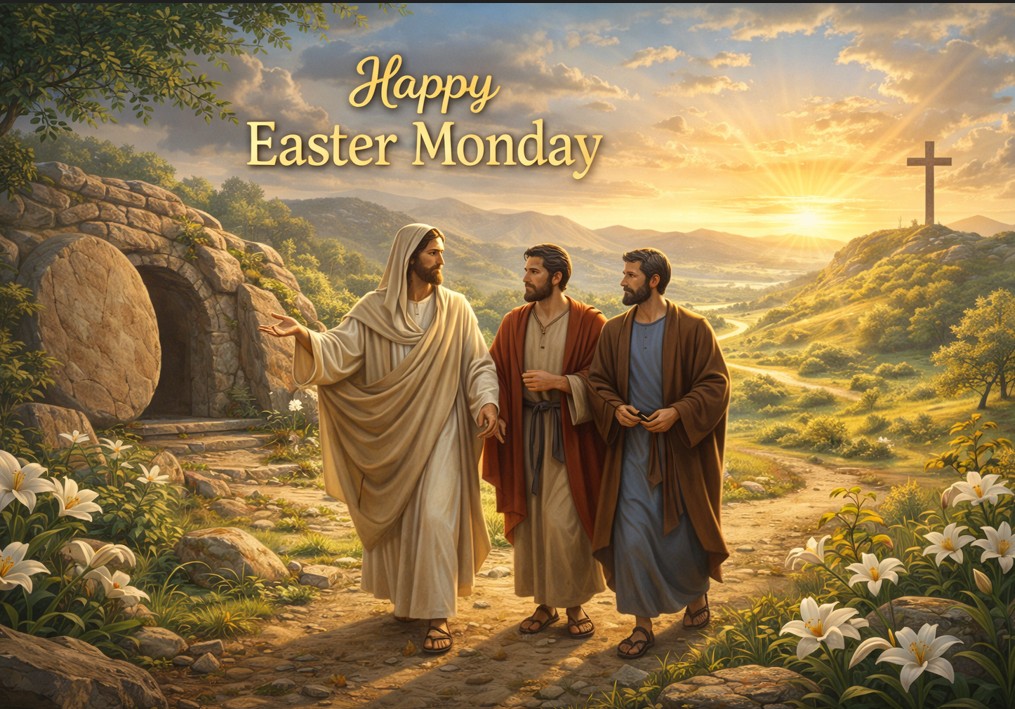
  • One tradition links this day to the road to Emmaus, where Christ walks with disciples who do not immediately recognize Him.
  • These encounters reveal how Christ continues to reveal Himself in unexpected ways.
  • The Resurrection transforms confusion into clarity and sorrow into joy.


Insight: Easter Monday shows that the story didn’t end at the empty tomb—it continues in every encounter with the risen Christ.


When It Became Part of the Catholic Church

Easter Monday became firmly established within early Christian worship.

  • The celebration of Easter itself dates back to the 2nd century.
  • By the 4th century, the Church formalized the Easter Octave, including Easter Monday.
  • Over time, it became an integral part of the Catholic liturgical calendar.
  • The Church continues to uphold it as a day within the highest celebration of the year.


Other Interesting Facts About Easter Monday

  • It is also known as “Bright Monday” or “Monday of the Angel.”
  • In some cultures, it is celebrated with traditions like water sprinkling and festive gatherings.
  • It is not a Holy Day of Obligation in the Catholic Church.
  • The day reflects joy after the penitential season of Lent.
  • In many countries, it is a public holiday marked by rest and celebration.


Easter Monday reminds believers that the joy of the Resurrection is not confined to one day—it is a reality meant to be lived and shared. It calls the faithful to walk forward with renewed hope, carrying the light of Christ into the world.


By Catholic Connect Reporter

__________________________


Reflective Keywords : Easter Monday Catholic meaning, Easter Octave Catholic Church, Resurrection of Jesus continued celebration, Easter Monday significance Christianity, Catholic Easter traditions, Bright Monday meaning, living the Resurrection Catholic


© 2026 CATHOLIC CONNECT POWERED BY ATCONLINE LLP