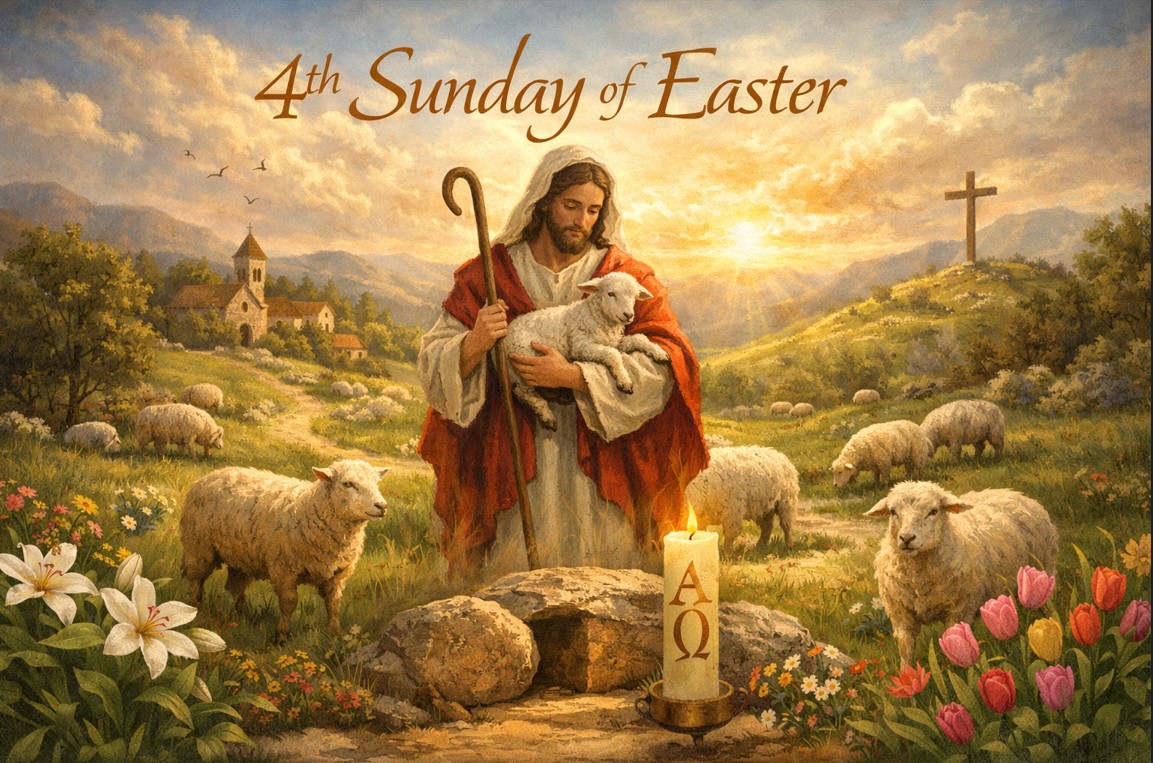
Vatican City, April 26, 2026: The 4th Sunday of Easter, known as “Good Shepherd Sunday,” reveals one of the most comforting and powerful images in the Catholic faith—Jesus Christ as the Good Shepherd who knows, protects, and guides His people. This Sunday shifts the Easter message from appearances of the risen Lord to a deeper understanding of His ongoing care and presence in the lives of believers.

Significance of the 4th Sunday of Easter
This Sunday highlights Christ’s personal relationship with His followers.
- It is traditionally called “Good Shepherd Sunday”, centered on Jesus’ teaching in John 10.
- It emphasizes that Christ knows each believer personally and calls them by name.
- The day reflects themes of guidance, protection, and sacrificial love.
- In Catholic teaching, it shows Jesus as both Shepherd and Gate, leading to eternal life.
Historical Origins of the 4th Sunday of Easter
This celebration developed through the Church’s liturgical evolution.

- It is part of the Easter season (Eastertide), celebrated 50 days after Easter.
- Before the liturgical reforms, it was known as the “Third Sunday after Easter.”
- The “Good Shepherd” Gospel was reassigned to this Sunday after Vatican II reforms.
- Over time, it became firmly associated with Christ’s identity as Shepherd.
Relevance in the Catholic Church Today
The 4th Sunday of Easter carries strong spiritual meaning today.
- It reminds Catholics to listen for Christ’s voice in daily life.
- The Church observes it as the World Day of Prayer for Vocations, encouraging prayers for priests and religious life.
- It strengthens trust in God’s care during uncertainty and struggle.
- It invites believers to follow Christ faithfully rather than the distractions of the world.
Interesting Stories and Biblical Events
This Sunday is rooted in one of Jesus’ most powerful teachings.
- The Gospel presents Jesus declaring: “I am the Good Shepherd.”
- He describes how the sheep recognize His voice and follow Him.
- Christ contrasts Himself with false shepherds who mislead and harm.
- The message emphasizes that Jesus came to give “life in abundance.”
Insight: The Good Shepherd does not drive His people—He walks ahead, inviting them to follow in trust and love.
When It Became Part of the Catholic Church
This Sunday has deep roots in early and modern Church practice.
- The Easter season has been celebrated since apostolic times.
- The Good Shepherd theme became central through Gospel readings over centuries.
- In 1964, Pope Paul VI established the World Day of Prayer for Vocations on this Sunday.
- Today, it remains a globally observed and spiritually significant Sunday.
Other Interesting Facts About the 4th Sunday of Easter
- It is sometimes referred to as “Vocations Sunday.”
- Psalm 23 (“The Lord is my shepherd”) is often featured in the liturgy.
- The focus shifts from Resurrection appearances to teachings about Christ’s mission.
- It highlights unity—believers as one flock under one Shepherd.
- It is a popular day for First Holy Communion celebrations in many parishes.
The 4th Sunday of Easter offers a message of reassurance and direction. It reminds believers that they are never alone—Christ, the Good Shepherd, walks ahead of them, calls them by name, and leads them toward a life filled with grace, purpose, and eternal hope.
By Catholic Connect Reporter
Reflective Keywords : 4th Sunday of Easter Catholic meaning, Good Shepherd Sunday explained, Jesus the Good Shepherd Bible meaning, Catholic vocations Sunday significance, Easter season Catholic Church teachings, John 10 Good Shepherd reflection, listening to God’s voice Catholic