- 18 June, 2026
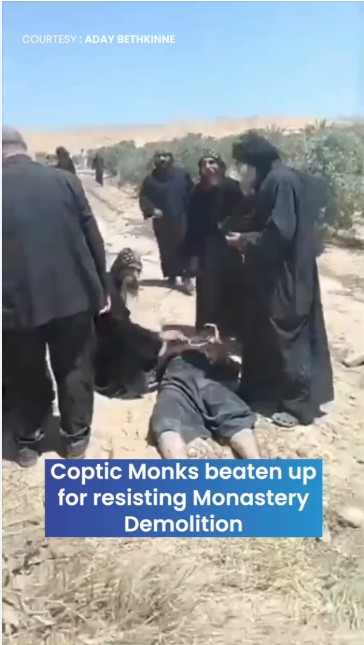
Egypt, April 23, 2026: In the quiet expanse of Fayoum, a place known more for its ancient beauty than unrest, a deeply emotional confrontation has stirred national and global attention. At the heart of it stands the Deir al-Malak Monastery—a sacred space now caught in a storm of conflict, fear, and unanswered questions.


Around April 22, 2026, what began as an administrative action reportedly escalated into a tense standoff between Coptic Orthodox monks and Egyptian security forces. Police and military personnel arrived to demolish parts of the monastery’s property—land that the monastic community insists has been integral to their religious life for more than two decades. What followed, according to eyewitnesses, was not just resistance, but anguish.
Clergy and monks reportedly stood firm, physically placing themselves between the demolition equipment and the land they hold sacred. Videos and firsthand accounts describe a scene charged with emotion—voices raised in protest, prayers whispered in desperation, and, most disturbingly, allegations that members of the clergy were subjected to physical force. For many observers, these images were not merely about a property dispute; they symbolized something far deeper.
To understand the gravity of this moment, one must understand who these monks are. The Coptic Orthodox Church preserves one of the oldest monastic traditions in the world—dating back to the 3rd and 4th centuries in Egypt itself. Often regarded as the birthplace of Christian monasticism, this way of life was shaped by figures like Anthony the Great, considered the first monk, and Pachomius the Great, who established community-based monastic living.


Coptic monks take vows of poverty, chastity, obedience, and patience. Their lives are marked by simplicity, prayer, and detachment from worldly possessions. Living in structured communities, often in desert monasteries, they dedicate themselves to spiritual discipline and manual work. Monasteries such as the Monastery of Saint Anthony and the Monastery of Saint Pishoy stand as enduring symbols of this legacy. These are not just religious sites—they are spiritual anchors, shaping the identity and continuity of Coptic Christianity.
For the monks of Deir al-Malak, the land in question is not merely property. It is part of a sacred tradition that has endured for centuries—a place where faith is lived daily through silence, sacrifice, and devotion. To see it threatened is to feel a rupture not just in space, but in spiritual continuity.
Authorities, however, maintain that the demolition aligns with legal and administrative procedures governing land use. From their standpoint, the action is regulatory, not discriminatory. Yet, for many within the Coptic community, such explanations fall short of addressing deeper concerns—of fairness, recognition, and respect.
The incident has reignited long-standing debates about religious freedom and minority rights. Egypt’s Coptic Christians, though deeply woven into the nation’s history, have often expressed concerns about unequal treatment. Events like those in Fayoum amplify these anxieties, raising pressing questions about how a modern state navigates its responsibilities toward diverse faith communities.
And yet, amid the tension, there is also a quiet resilience. Coptic monasticism today is not fading—it is experiencing a revival, with new monasteries emerging not only in Egypt but across the world, from Ireland to Texas. This enduring vitality is a testament to a faith that cannot easily be shaken.
The events at Deir al-Malak are a stark reminder of the fragile balance between authority and belief. But they also offer an opportunity—an invitation for dialogue, for empathy, and for a renewed commitment to justice that honors both law and humanity.
Because in the end, faith is not just about places—it is about people. And where there is faith, there is always hope that even in moments of conflict, understanding will prevail, and peace will find its way back.
Courtesy Shalom World News


© 2026 CATHOLIC CONNECT POWERED BY ATCONLINE LLP