- 05 August, 2026

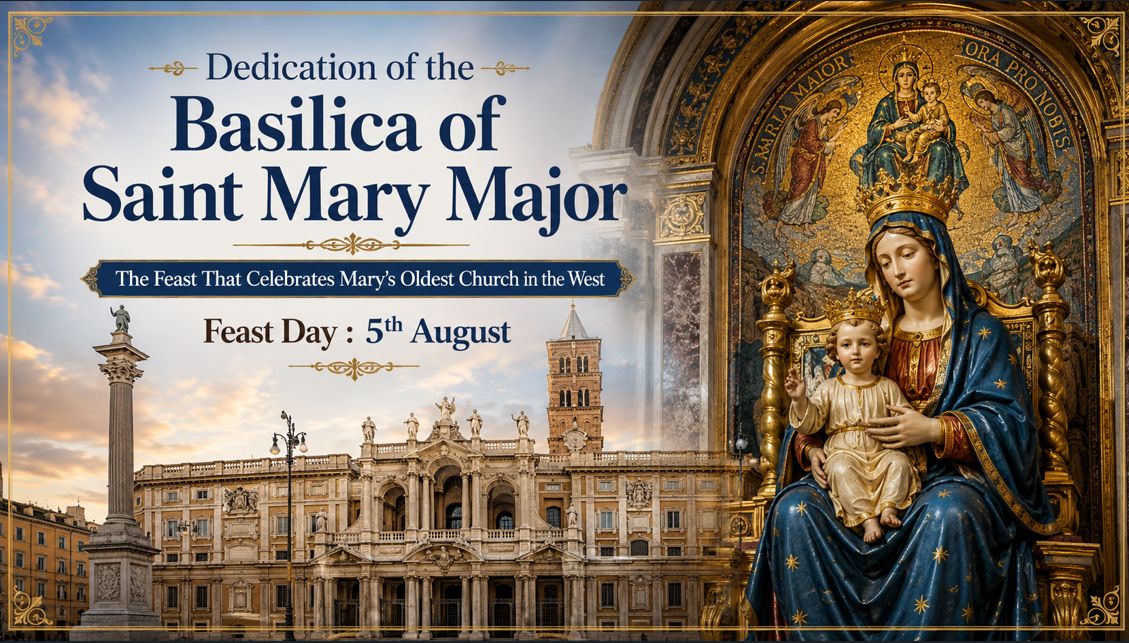
Rome, August 5, 2026: Why does the Catholic Church celebrate the Dedication of the Basilica of Saint Mary Major every year on August 5? Discover the remarkable history of one of Christianity's oldest and most beloved churches—a basilica that has stood for more than sixteen centuries as a lasting tribute to the Blessed Virgin Mary and a symbol of her maternal care for the faithful.


Feast Day: 5 August
Location: Basilica of Saint Mary Major, Rome, Italy
Established: Originally built in the 4th century; rebuilt under Pope Sixtus III after the Council of Ephesus (431 AD)
Celebrates: The dedication of the oldest Marian basilica in the Western Church


Known For: The "Miracle of the Snow," its connection to the Council of Ephesus, priceless Christian relics, and devotion to the Blessed Virgin Mary
Title: Memorial of the Dedication of the Basilica of Saint Mary Major
Among the many Marian feasts celebrated throughout the liturgical year, the Dedication of the Basilica of Saint Mary Major holds a unique place.
Rather than commemorating an apparition or a saint's life, this feast honors one of the most important churches in Christendom—a basilica dedicated to the Blessed Virgin Mary that has welcomed pilgrims for more than 1,600 years.
(CLICK HERE to follow Catholic Connect and to stay updated with Catholic News & Content)
Standing on Rome's Esquiline Hill, Saint Mary Major remains the oldest church in the West dedicated to Mary under her title as the Mother of God.
Each year on August 5, Catholics around the world celebrate not only the basilica itself but also the Church's enduring love and devotion to the Blessed Virgin.
According to ancient Christian tradition, a wealthy Roman nobleman named John and his wife prayed for guidance on how they should dedicate their fortune in honor of the Blessed Virgin Mary.
On the night of August 4–5, both they and Pope Liberius reportedly received the same vision.
Mary instructed them to build a church at the place where snow would miraculously fall.
The following morning—despite the heat of the Roman summer—snow was said to have covered part of the Esquiline Hill.
The Pope traced the outline of the future church in the snow, and construction soon began.
Although historians regard this account as a cherished tradition rather than a documented historical event, it has remained one of the most beloved Marian stories in Catholic history.
Even today, white flower petals are dropped from the ceiling during the August 5 liturgy inside the basilica to recall the miraculous snowfall.
The present basilica owes much of its importance to the Council of Ephesus in 431 AD.
At that council, the Church solemnly proclaimed that the Virgin Mary is truly Theotokos, meaning "Mother of God," because Jesus Christ is one divine Person with both a human and divine nature.
To celebrate this great affirmation of Catholic faith, Pope Sixtus III rebuilt and magnificently decorated the basilica soon after the council.
From that time onward, Saint Mary Major became one of the foremost centers of Marian devotion in the Christian world.
The Basilica of Saint Mary Major is one of Rome's four major papal basilicas and remains an active place of worship and pilgrimage.
Over the centuries, popes, saints, emperors, and countless pilgrims have prayed within its walls.
The basilica is renowned for its magnificent fifth-century mosaics, beautiful chapels, and priceless works of sacred art that depict key moments in salvation history.
It also houses several treasured relics, including a revered relic traditionally believed to come from the manger of the Infant Jesus in Bethlehem.
Because of its historical, artistic, and spiritual importance, the basilica continues to attract millions of visitors each year.
Many saints have prayed at Saint Mary Major before beginning important missions or making significant decisions.
The basilica has long been closely associated with the Popes, who frequently celebrate important Marian feasts there.
In recent years, it has become especially well known through the frequent visits of Pope Francis, who traditionally prayed before the icon Salus Populi Romani ("Protectress of the Roman People") before and after each of his apostolic journeys.
This ancient Marian image remains one of the most venerated icons in the Catholic Church.
The Dedication of Saint Mary Major reminds Catholics that churches are more than beautiful buildings.
They are sacred places where believers gather to celebrate the Eucharist, encounter Christ, and experience the loving care of His Blessed Mother.
The feast also recalls the Church's unwavering belief that Mary continues to intercede for all who seek her Son.
Through every century, Saint Mary Major has stood as a visible reminder of that maternal protection.
This feast offers several important spiritual lessons:
The basilica reminds believers that every church dedicated to God becomes a place where heaven touches earth.
For more than sixteen centuries, the Basilica of Saint Mary Major has remained one of Christianity's greatest symbols of Marian devotion.
Its history connects the faithful with the early Church, the proclamation of Mary as the Mother of God, and the countless generations of believers who have entrusted their lives to her maternal care.
From the legendary snowfall on Rome's Esquiline Hill to the magnificent basilica that still welcomes pilgrims today, this feast proclaims an enduring truth: honoring Mary always leads believers closer to her Son, Jesus Christ.
Each year on August 5, Catholics throughout the world celebrate not merely a historic building but the living faith it continues to represent—a faith rooted in Christ and lovingly nurtured under the protection of His Blessed Mother.
To know about more saints please visit the spiritual section.
By Catholic Connect Reporter
Dedication of Saint Mary Major, Basilica of Saint Mary Major, Saint Mary Major feast day, August 5 Marian feast, Miracle of the Snow, Mother of God, Theotokos, Council of Ephesus, Pope Liberius, Pope Sixtus III, Salus Populi Romani, Marian basilica Rome, Catholic Marian feasts, Basilica of Saint Mary Major history

© 2026 CATHOLIC CONNECT POWERED BY ATCONLINE LLP