- 05 August, 2026

Vatican, August 5, 2026: Although the Christian vision of the "New Heaven and New Earth" and the Confucian ideal of Datong ("Great Unity") emerge from "different religious, philosophical and cultural contexts," Cardinal George Jacob Koovakad said they both reflect one of humanity's deepest aspirations: "to build peaceful, inclusive and supportive societies" capable of creating "a world that is more just, more harmonious and more compassionate."

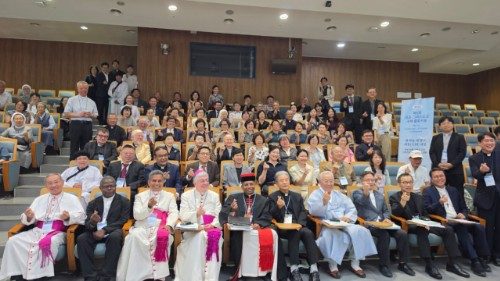
The Prefect of the Dicastery for Interreligious Dialogue made these remarks while delivering the opening address at the first Christian–Confucian Dialogue, which began on the morning of 4 August at Sogang Catholic University in Seoul, South Korea. The two-day meeting, concluding on 5 August, is the first formal dialogue between the two religious traditions. It has been organised by the Holy See's Dicastery for Interreligious Dialogue in collaboration with the Sungkyunkwan Confucian Academy, the Catholic Bishops' Conference of Korea and Sogang University.
Christianity and Confucianism in the search for an ideal society
Held under the theme Dialogue on the Contribution of Christianity and Confucianism to an Ideal Society: The New Heaven, the New Earth, and Datong (Great Unity), the gathering has brought together Confucian and Catholic scholars, religious leaders and those engaged in interreligious dialogue from different countries to reflect on the contribution of their respective traditions.


Cardinal Koovakad pointed out that the meeting began with the presentation of a draft of the Guidelines for Christian–Confucian Dialogue, calling it "an important academic achievement and a significant step forward in our shared journey of listening and mutual understanding."
Archbishop Indunil Janakaratne Kodithuwakku Kankanamalage, Secretary of the Dicastery, explained that the final version of the Guidelines will be released at the conclusion of the two-day meeting.
Traditions that inspire a life of virtue and service
In his address, the Indian cardinal said that Christianity and Confucianism, recognised as two of the world's great civilisational traditions, have deeply influenced the moral, cultural and social development of societies. He added that both continue to inspire people to lead lives marked by virtue and service to the common good.
He observed that dialogue between the two traditions has so far remained limited. Such engagement, he said, must be rooted in mutual respect and a shared commitment to fraternity and to the full flourishing of the human person.
Cardinal Koovakad explained that the Confucian ideal of Datong ("Great Harmony" or "Great Unity") and the Christian vision of the New Heaven and the New Earth both emerged within communities experiencing profound social, political and moral crises. In each case, long-standing traditions were creatively reinterpreted to offer a vision of hope capable of guiding people through times of uncertainty and change.I'll continue with Part 2, beginning with "Datong: Great harmony in the Confucian tradition" and ending with "Distinctive contributions."
Datong: Great harmony in the Confucian tradition
Cardinal Koovakad explained that Confucius looked to the classical heritage in search of a compelling vision of an ideal society. This vision was later developed further by his disciples during the turbulent Warring States period.
He noted that the Li Yun ("Evolution of Rites") chapter of the Book of Rites (Liji) presents this vision through the image of a time "when the Great Way (Dao) prevailed under Heaven," giving rise to Datong, a society guided by ethical values, justice and the common good.
In such a society, work was shared without selfish motives, and people lived in such trust that their doors remained open. Individuals worked diligently, not for personal benefit but because they believed it was right to place their gifts and abilities at the service of others.
The text presents a holistic vision of moral integrity that embraces personal formation, human relationships and good governance.
Cardinal Koovakad said the ideal of Datong therefore offers a socio-moral and aesthetic vision rooted in relationships, responsibility and the common good. It recognises humanity as an interconnected community whose well-being depends on mutual solidarity.
The "New Heaven and the New Earth" in the Book of Revelation
Turning to the Book of Revelation, Cardinal Koovakad explained that John of Patmos wrote towards the end of the first century to Christian communities in Asia Minor that were living under pressure from the Roman Empire, symbolically represented as "Babylon." Through a renewed interpretation of Israel's prophetic promises in the light of Christ's death and resurrection, John offered these communities a message of hope.
At the climax of his vision, John proclaims the coming of "a new heaven and a new earth," where God dwells among humanity, wipes away every tear and renews creation in justice, peace and communion.
The cardinal said this vision represents the definitive fulfilment of God's plan of salvation.
John sought to assure his readers that "Babylon"—oppression, violence and death—would not have the final word. Instead, God would renew creation rather than abandon it. His plan extends beyond the salvation of individuals to include the reconciliation of all things and the complete transformation of creation into God's eternal dwelling with redeemed humanity.
Points of convergence
Although these two visions were shaped within different cultural settings, Cardinal Koovakad observed that they continue to inspire people because they combine faithfulness to tradition with openness to a transformed future.
He said this is also the purpose of the present dialogue—not simply to preserve each tradition, but to help them grow together through mutual learning and encounter.
Reflecting on their shared ground, he noted that in a world marked by rivalry, inequality and injustice, both the Christian hope of the "New Heaven and the New Earth" and the Confucian commitment to Datong present a deeply optimistic vision. Both reject the belief that fragmentation, selfishness and oppression are unavoidable.
Instead, they point towards a world founded on justice, harmony and the full flourishing of the human person.
Distinctive contributions
At the same time, Cardinal Koovakad emphasised that the foundations on which this transformation rests are significantly different.
He explained that, for Christianity, the renewal of humanity and creation is rooted in God's redeeming action through Christ. As a result, ethical conduct is not merely a social virtue but the visible expression of communion with God.
By contrast, he said, Confucianism understands harmony as arising not from divine redemption but through the moral cultivation of the individual, the guidance of virtuous rulers, education shaped by ritual practice and the ethical ordering of human relationships.
This, he said, raises an important question:
[ If Christian morality is rooted in participation in the life of the holy God, what constitutes the deepest motivation for ethical action in the Confucian tradition? Self-cultivation? The good of society? Fidelity to Heaven (Tian)? Or the recognition of an intrinsic good? ]
Cardinal Koovakad concluded that the true value of dialogue lies in safeguarding these differences while allowing each tradition to challenge, enrich and broaden the horizon of the other.
Justice, friendship and care for one another
Concluding his address, Cardinal Koovakad said that the Christian vision and the Confucian ideal both express one of humanity's deepest aspirations:
“That our common life may be in harmony with a Way that is truly good and beautiful; an ethical justice lived in the warmth of friendship and mutual care; a peace that recognizes and promotes the dignity of every person and every community; a harmony born from differences, like the notes of music blending into a single melody or people from different places becoming one community.”
For this reason, he said, religions have a responsibility to place their ethical and spiritual wisdom at the service of building a just and truly human society by promoting moral renewal, social harmony and the full development of the human family.
He added that the Catholic Church has embraced this mission through dialogue with all people of good will. As the Second Vatican Council stated in Gaudium et Spes:
"The Church sincerely professes that all men, believers and unbelievers alike, ought to work for the rightful betterment of this world in which all alike live; such an ideal cannot be realized, however, apart from sincere and prudent dialogue."
A milestone for interreligious dialogue
Cardinal Koovakad expressed the hope that this first Christian–Confucian Dialogue would become a model for future gatherings and would be far more than an academic exchange. Instead, he said, it should mark the beginning of a lasting friendship and an enduring journey of dialogue.
Archbishop Indunil Janakaratne Kodithuwakku Kankanamalage, Secretary of the Dicastery, echoed this hope, describing the meeting as opening "a new chapter in relations between Christians and Confucians" and providing "a broader horizon of dialogue, mutual learning and cooperation in the service of humanity."
He described the gathering as "a milestone not only for Christian–Confucian relations but for the entire journey of interreligious dialogue."
The guidelines for Christian–Confucian dialogue
Archbishop Kankanamalage also referred to the Second Vatican Council's declaration Nostra Aetate, which affirms that "the Catholic Church rejects nothing that is true and holy in these religions."
He emphasised that the participants had come together "not to erase our differences, but to deepen mutual understanding, learn from one another, and work side by side for the common good of humanity," recognising that Christians and Confucians face many of the same challenges and are called to respond to them together.
The archbishop thanked Choi Jong-soo, President of the Sungkyunkwan Confucian Academy, for supporting the initiative, along with the other organisations that partnered in the dialogue.
He explained that the final version of the Guidelines for Christian–Confucian Dialogue will be published at the conclusion of the meeting. Prepared by a group of scholars under the coordination of Father Paulin Batairwa Kubuya, Under-Secretary of the Dicastery, the document is intended for Catholics and for all those interested in Christian–Confucian dialogue.
Shared values for the challenges facing humanity
The Catholic Bishops' Conference of Korea is also among the partners in the dialogue. It is represented by its president, Bishop Matthias Iong Hoon Ri of Suwon, who also serves as chairman of the Commission for the Promotion of Christian Unity and Interreligious Dialogue.
The bishop observed that in a world marked by division, conflict, ecological crisis and ethical uncertainty, the shared values of the Christian vision and the Confucian ideal—including universal fraternity, reverence for Heaven and love for humanity—offer a meaningful response to the challenges facing the human family.
The first Korean Catholics were Confucian scholars
In his welcome address, Father Luke Jong Hyeok Sim, SJ, President of Sogang University, recalled that the Catholic Church in Korea "had humble beginnings rooted in intellectual inquiry, and many of its earliest believers were scholars formed in the Confucian tradition."
From this perspective, he said, the meeting between these two traditions is not something new for Korea but rather "the natural continuation of a history we already share."
Concluding his remarks, he said that in these times of shared challenges, what is needed is not "a hasty agreement, but a sincere and patient encounter."
Courtesy: Vatican News
© 2026 CATHOLIC CONNECT POWERED BY ATCONLINE LLP