- 05 April, 2026


Dec 30, 2025: In recent years, Prime Minister Narendra Modi has repeatedly reached out to India’s Christian community. On several occasions, especially around Christmas, he has visited churches, hosted gatherings with Christian leaders, and publicly acknowledged the invaluable contribution of Christians to India’s social fabric through education, healthcare, and charitable service. These gestures, carried live on national television and widely circulated on social media, project an image of inclusivity and goodwill.

Yet, troublingly, these carefully choreographed moments of outreach are often followed, sometimes even coinciding on the very same day by reports of attacks on Christian churches, prayer halls, convents, schools, and peaceful worship gatherings in different parts of the country. What deepens the anguish is not only the recurrence of such incidents, but the apparent impunity with which they are carried out, frequently in the presence of law enforcement agencies that remain passive observers.
This disturbing contradiction has led many to ask an uncomfortable question: is Prime Minister Modi increasingly appearing as a weak and helpless leader, unable or unwilling, to exercise control over elements within his own ideological ecosystem?


According to data compiled by independent civil society organisations and human rights groups, incidents of harassment, disruption of prayer services, vandalism of religious spaces, and intimidation of clergy and worshippers have seen a marked rise in the last few years. These are not isolated or accidental occurrences; they follow a pattern that suggests ideological hostility rather than spontaneous law-and-order problems. The victims are overwhelmingly members of a non-violent, peace-loving, law-abiding, service-oriented, and friendly minority whose institutions have historically served people of all faiths without discrimination.
What makes the situation particularly grave is that many of those allegedly responsible for these acts openly identify with groups that draw ideological sustenance from the broader political family associated with the ruling dispensation. When such individuals or organisations publicly negate the Prime Minister’s words of appreciation for Christians through acts of aggression, they are not merely attacking a minority community - they are directly challenging the authority of the Prime Minister himself.
A strong leader would respond to such defiance with moral clarity. At the very least, one would expect a clear and unambiguous condemnation of violence, especially when it targets citizens engaged in peaceful worship. However, what has been most striking is the Prime Minister’s continued deafening silence that threatens to drown all the efforts he is apparently making towards inclusivity. There have been no direct instructions issued publicly to rein in violent elements, no firm words denouncing attacks on churches, and no reassurance offered to a frightened community that looks to the highest constitutional office for protection.
The silence becomes even more troubling when one considers the nature of some of these incidents. In one particularly shocking episode, a perpetrator not only insulted Mother Mary, revered by Christians as well as people of other religions, but also outrageously questioned a woman about how she becomes pregnant, thereby outraging her modesty and dignity. Such language is not merely offensive; it reflects a deep moral decay and contempt for women and faith. That such behaviour has gone without strong governmental censure sends a dangerous message of tacit approval.
It is important to state clearly that condemning this violence is not an act of hostility towards the government or the Prime Minister. On the contrary, it is an appeal to constitutional responsibility. India’s Constitution guarantees freedom of religion and the right to worship without fear. When these guarantees are routinely violated and the state remains silent, the credibility of governance itself is eroded.
At the same time, it is heartening that voices of conscience have not been entirely absent. We must sincerely thank all those religious leaders, civil society members, journalists, ordinary citizens, and even some political figures who courageously condemned the attacks on Christians during the Christmas season. Their solidarity affirms that India’s soul is still alive and that moral courage has not been extinguished.
Christians in India are not seeking privilege; they are seeking to be treated as rightful and equal citizens of this country. They are not demanding special treatment; they are asking for justice and for equal application of the law. Their institutions continue to educate millions, heal the sick, and serve the poorest of the poor, often in regions where the state itself struggles to reach. To subject such a community to fear and humiliation is not only unjust - it is self-defeating.
As people of faith, Christians respond not with violence but with prayer. We pray for Prime Minister Narendra Modi, who increasingly appears trapped between public gestures of harmony and private silence in the face of injustice. We pray for his government, that it may find the courage to stand up for the truth even when it means going against members within its own ranks. And we pray that our Lord Jesus Christ may grant wisdom, strength, and moral clarity to all those entrusted with authority, so that they may stand firmly against injustice and unprovoked violence inflicted on minorities.
India deserves leadership that does not merely perform inclusivity before cameras, but enforces it on the ground. Calling a spade a spade is not an act of enmity—it is an act of hope.
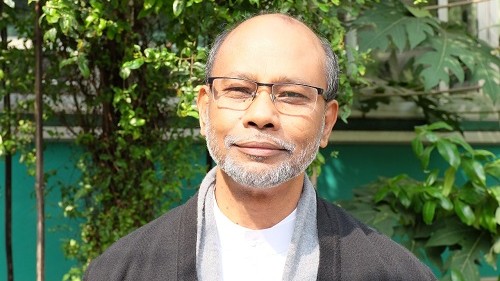
Bishop Savio Fernandes
Auxiliary Bishop of the Archdiocese of Bombay.



© 2026 CATHOLIC CONNECT POWERED BY ATCONLINE LLP