- 17 October, 2026

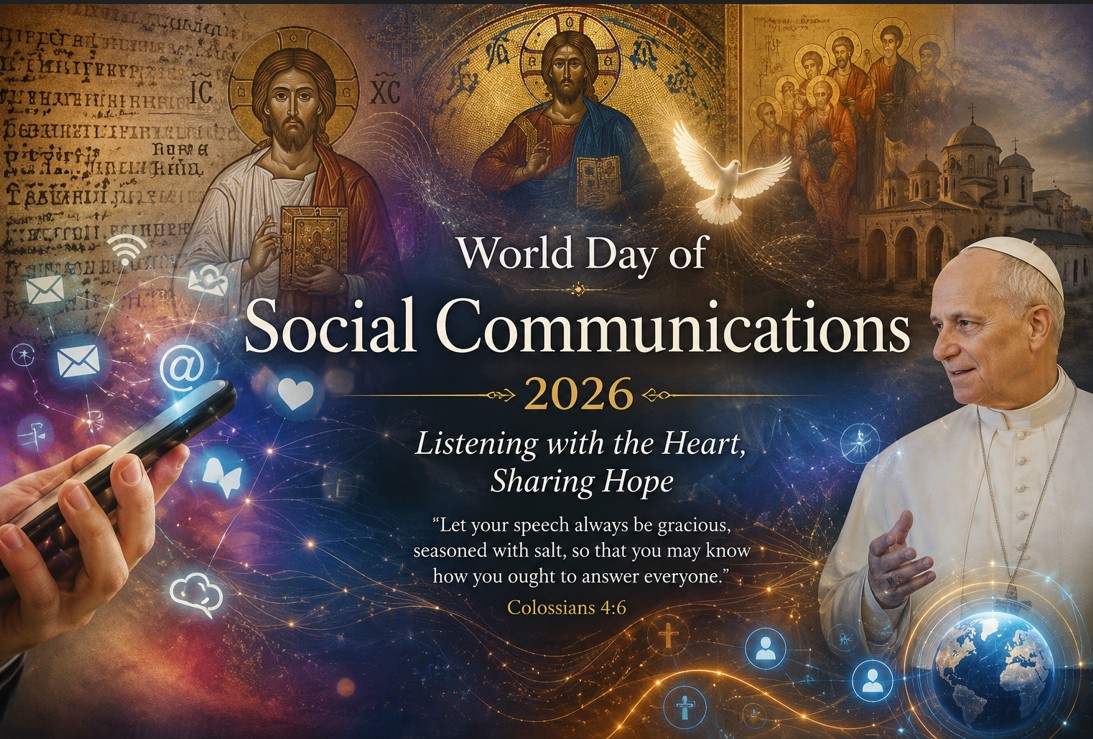
Vatican City, May 17, 2026: The message for this year’s observance is both timely and urgent. In a world flooded with artificial voices, manipulated images, and machine-generated content, Pope Leo XIV reminds humanity that communication is not merely about information, but about encounter, relationship, truth, and human presence.


The Catholic Church will celebrate the 60th World Day of Social Communications on 17 May 2026, the Sunday before Pentecost, under the powerful theme chosen by Pope Leo XIV: “Preserving Human Voices and Faces.” At a time when artificial intelligence, digital media, and algorithms increasingly shape human interaction, the Church is calling the faithful to protect the dignity, authenticity, and humanity of communication.
World Day of Social Communications was established by Pope Paul VI in 1967 following the Second Vatican Council’s decree Inter Mirifica on the means of social communication. The Church recognised early on that media — whether print, radio, television, or later the internet — would profoundly influence culture, society, and faith.
Each year, the Pope issues a special message reflecting on contemporary communication challenges and opportunities. Over the decades, these messages have addressed journalism, truth, digital culture, family communication, social media, ethics, and spreading the word.
What began during the era of newspapers and radio has now entered the age of artificial intelligence, deepfakes, virtual influencers, and algorithm-driven realities. Yet the Church’s mission remains unchanged: to communicate the Gospel with truth, compassion, and human dignity.
From its very beginning, the Catholic Church has been a communicating Church. Jesus Christ Himself preached through stories, parables, personal encounters, and acts of compassion. The Apostles spread the Gospel orally across villages and cities long before written texts became widely available.
In the early centuries, handwritten manuscripts, letters, and sacred art became powerful tools of spreading the word. Church bells called communities to prayer, while stained-glass windows and paintings communicated Biblical stories to those who could not read.
The invention of the printing press in the 15th century transformed Catholic communication forever, allowing Scripture, catechisms, and Church teachings to reach wider audiences. Later came radio broadcasts, television, Catholic journalism, and eventually digital platforms and social media.
Today, communication has become instantaneous and global. A papal message can reach millions within seconds. However, the rise of AI-generated content has also created new ethical and spiritual concerns about truth, authenticity, and human identity.
In his message for the 60th World Day of Social Communications, Pope Leo XIV speaks passionately about safeguarding the sacredness of human communication.
“Our faces and voices are unique gifts to the world,” the Pope writes. “We need the face and the voice to once again speak for the person.”
He warns that artificial intelligence, while useful, must never replace human wisdom, empathy, and moral responsibility. According to the Holy Father, the challenge facing humanity today is not simply technological, but deeply anthropological.
“Faces and voices are sacred,” Pope Leo states. “To guard human faces and voices therefore means to guard this seal, this indelible reflection of God’s love.”
The Pope expresses concern about how algorithms and AI systems can manipulate emotions, spread disinformation, and weaken critical thinking. He cautions against becoming passive consumers of machine-generated thoughts and losing the ability to reflect creatively and spiritually.
At the same time, Pope Leo does not reject technology. Instead, he calls for responsible innovation guided by ethics, cooperation, education, and respect for human dignity.
“We need to cherish the gift of communication as humanity’s deepest truth,” he writes, “towards which all technological innovation must also be directed.”
The 60th World Day of Social Communications challenges Catholics, journalists, educators, families, and young people to rediscover authentic communication rooted in truth and human encounter.
In an increasingly digital world, the Church invites society not to abandon technology, but to humanise it — ensuring that communication continues to build relationships rather than replace them.
As the Church marks six decades of reflecting on communication, Pope Leo XIV’s message stands as a powerful reminder that behind every screen, profile, and digital interaction is a real human face, a real human voice, and a person created in the image of God.
By Catholic Connect Reporter




© 2026 CATHOLIC CONNECT POWERED BY ATCONLINE LLP