- 03 April, 2026
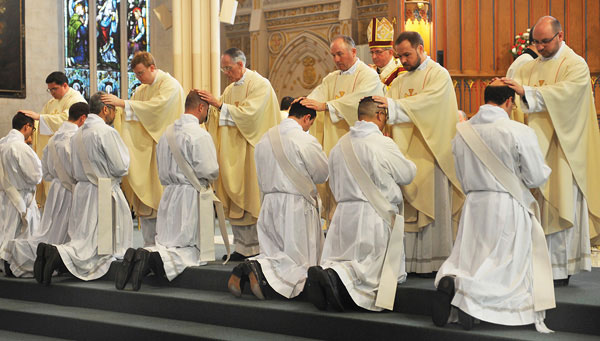
Feb 2, 2026: Thirty years ago, Vita Consecrata (1996) was offered to the Church both as a mirror and a map – a mirror to see ourselves truthfully and a map to walk forward with courage. In the Year of Consecrated Life in 2014, Pope Francis reminded consecrated persons that their journey included not only “a glorious history to remember” but also “a great history still to be accomplished.” With these words, he invited the Church to look ahead with a hope toward a future that is consoling and challenging. The document was never meant to be a commemorative text frozen in time; it is a living charter that continues to interrogate, inspire and challenge consecrated life in rapidly changing social, political and ecclesial realities.

In India, the history of consecrated life has been written in the sweat, sacrifice and silent fidelity of thousands of priests, brothers and sisters. They have shaped the nation’s educational, healthcare, pastoral and social landscapes -- often in places where neither the State nor the nongovernmental organizations dared to tread. From remote tribal belts to urban slums, from classrooms to hospital wards, from courtrooms to centres of social advocacy, consecrated persons have embodied the Church’s compassionate presence. Yet, thirty years after Vita Consecrata, the question is no longer only about what consecrated life has done, but about what it is called to become.
The first step is to look at the past with gratitude. For the religious men and women, this means acknowledging the heroic faith of missionaries—foreign and indigenous—who laid the foundations of dioceses, parishes, schools, colleges and hospitals. It means remembering men and women who learned local languages, embraced unfamiliar cultures and lived close to the poor, often at great personal cost. Their commitment was not driven by efficiency or visibility, but by fidelity to the Gospel. The religious have also moved from being recipients of missionary activity to becoming protagonists of mission.


Today, Indian congregations send missionaries across Asia, Africa, Europe and the Americas. This shift underscores the vitality of consecrated life in India, even as it challenges religious to ensure that missionary zeal is accompanied by deep spiritual roots and cultural sensitivity.
Gratitude for the past must never slide into nostalgia. Pope Francis had warned the consecrated persons against reducing our origins to “archaeology.” The founders and early missionaries were not managers of institutions; they were audacious believers who stood with the untouchable, the sick and the forgotten. Remembering them truthfully means reclaiming their fire, not merely preserving their structures. It means we are being invited to move from a mission centred on institutional maintenance to one marked by prophetic presence.
This call becomes sharper when we examine the present with honesty. Within the ecclesial sphere, voices from within the Church have named painful realities: misconceptions about mission, parochialism, clerical domination, pomp and show, weak social engagement and reluctance to stand with workers and the poor. The consequences are visible -- scandals that wound credibility, a fascination with palatial worship spaces, declining missionary enthusiasm and authoritarian styles of leadership that erode transparency and accountability. Added to these are deeper fractures: absence of long-term vision, groupism and power politics, casteism, corruption, individualism in institutions, ritualism divorced from Gospel values, distraction with trivial media and a fragmented sense of mission. These are not accusations from outside; they are examinations of conscience from within.
The socio-political context further intensifies the challenge. Constitutional values are under strain, freedom of religion is contested, tolerance is fraying and the poor face new uncertainties amid shifting policies and exclusions. Economically, inequalities deepen, while culturally, consumerism and individualism seep even into religious spaces. In such a milieu, consecrated life cannot afford silence, comfort or neutrality. The Gospel does not permit it.
If gratitude grounds consecrated life, passion must animate its present. Vita Consecrata insists that consecrated persons are not called to survive but to witness -- to live their vocation with evangelical intensity. In India today, this passion is being tested. Many religious communities struggle with ageing members, declining vocations in certain regions, administrative burdens and increasing legal and financial scrutiny. There is also a growing sense of fatigue and disillusionment among some consecrated persons, who feel overwhelmed by expectations and constrained by structures.
Yet, it is precisely in this fragile moment that passion becomes crucial. Passion is not activism or mere busyness; it is the fire of first love rekindled. For consecrated priests and religious, this means reclaiming the centrality of intimacy with the Lord in prayer, fraternity and mission. Without contemplative depth, ministry becomes mechanical. Without genuine community life, consecration risks becoming individualistic. Without a clear sense of mission, institutions turn inward and self-preserving.
Living the present with passion also requires reading the signs of the times. The poor are no longer only economically marginalised; they are culturally excluded, digitally invisible and politically voiceless. Migrant workers, displaced tribal communities, victims of religious violence, unemployed youth and women facing systemic injustice cry out for a Church that listens before it speaks. Consecrated life must learn to be present at these new frontiers, not as managers of projects, but as companions in struggle and hope.
One of the strongest calls of Vita Consecrata is to become prophetic witnesses. Consecrated life, by its very nature, is a prophetic sign -- a visible contradiction to the values of power, possession and prestige. Today, this prophetic dimension is both necessary and costly. The social climate often rewards conformity and silence, while penalising dissent. Religious institutions are sometimes tempted to adopt a strategy of caution, choosing safety over truth. Yet prophetic identity cannot be outsourced or postponed. Consecrated persons are called to speak and act in ways that defend human dignity, religious freedom and constitutional values. This does not mean aligning with political ideologies, but standing firmly with the Gospel. Silence in the face of injustice is not neutrality; it is complicity. At the same time, prophecy must be rooted in discernment, humility and non-violence. It must emerge from prayerful listening rather than reactive anger.
A prophetic presence also requires simplicity of life. In a society increasingly scandalised by displays of wealth and privilege, consecrated persons must ask hard questions about their lifestyles, investments and institutional priorities. Are our structures serving the mission or has the mission become subservient to structures? Do our institutions empower the poor or do they mirror the inequalities of the society they seek to transform?
Vita Consecrata places strong emphasis also on communion -- within religious communities, with the clergy and with the laity. In India, where diversity is both a gift and a challenge, communion is a powerful witness. Religious communities often bring together members from different regions, languages and cultures. When lived authentically, such communities become living testimonies to unity in diversity. However, communion cannot be taken for granted. Conflicts arising from generational differences, leadership styles and cultural misunderstandings can erode community life. There is also the danger of functional relationships replacing fraternal ones. For consecrated lives, fraternity is not an optional extra; it is an integral part of consecration. A fragmented community weakens mission and diminishes credibility. Communion with the laity is equally crucial. The Church in India is increasingly aware that mission cannot be cleric-centric. Lay men and women bring professional competence and contextual insight.
Consecrated religious are called to collaborate rather than control, to accompany rather than dominate. This shift requires inner conversion -- a move away from clerical privilege towards servant leadership.
Thirty years after Vita Consecrata, the question of formation assumes central importance. Initial and ongoing formation must prepare consecrated persons not for a world that no longer exists, but for the complex realities of today and tomorrow. Intellectual formation must engage contemporary social, political and theological questions. Spiritual formation must cultivate emotional maturity, resilience and discernment. Pastoral formation must prioritise listening skills, intercultural competence and digital literacy.
Formation must also address the challenge of success culture. Many young religious come from contexts where education and religious life are seen as avenues for social mobility. While this is understandable, it can subtly distort motivation. Formation must help candidates integrate personal aspirations with evangelical freedom, ensuring that consecrated life remains a response to God’s call rather than a career choice.
Vita Consecrata also inspires us to look to the future with hope. Hope is not optimism; it is the theological virtue that trusts in God’s fidelity even amid uncertainty. Despite challenges, consecrated life in India has reasons for hope. There is renewed interest in ecological spirituality, interreligious dialogue and many young religious show a genuine desire to serve at the margins. The future of consecrated life will not be measured by numbers or institutions alone but by authenticity. A smaller but more rooted consecrated life can be more credible and transformative. As Vita Consecrata reminds us, the true fruitfulness of consecration lies in its capacity to make visible the primacy of God in a distracted world.
Thirty years after its promulgation, Vita Consecrata remains a prophetic mirror held before consecrated life. The history of consecrated life in India is indeed glorious -- but it is unfinished. The next chapter is being written today, in choices made quietly, in fidelity lived daily and in prophecy embraced courageously. Communion and mission are inseparable. Remember, without deep communion, mission becomes activism; without prophetic mission, communion turns inward and sterile. Called to be salt of the earth and light of the world, consecrated men and women in India must once again dare to become a “city on a hill” -- visible, vocal and radiant with the radical joy of the Gospel. This is the “great history still to be accomplished” -- a history not of triumph, but of faithful love, poured out for God and God’s people.
Fr. Suresh Mathew

© 2026 CATHOLIC CONNECT POWERED BY ATCONLINE LLP