- 06 November, 2026

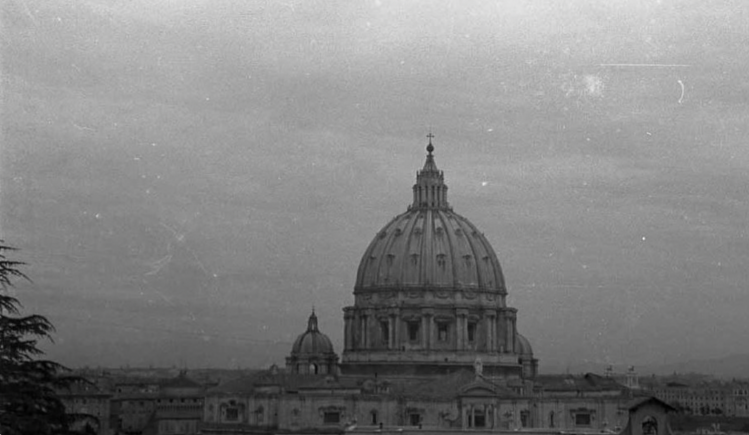
Vatican City, November 5, 2026 : On the evening of 5 November 1943, an unidentified aircraft dropped five bombs on Vatican City, shattering the fragile sense of security surrounding the world's smallest independent state during the Second World War. Although the attack caused considerable damage to buildings and property, no lives were lost. More than eight decades later, the identity of those responsible remains a subject of historical investigation and debate.

At approximately 8.10 pm, a plane circled over Rome before releasing its bombs over Vatican territory. Four reportedly exploded, striking areas near the Vatican railway station, the Mosaic Studio, the Governatorate building and the Vatican Gardens. The blast shattered windows, damaged offices and affected parts of the buildings surrounding St. Peter's Basilica. One bomb exploded close enough to the basilica to blow out a rear window.
At the time, Rome was under German occupation, following the collapse of Mussolini's government and the establishment of the Italian Social Republic. Vatican City, however, maintained its neutrality and had sought assurances from the warring powers that its territory would be spared.
Earlier in 1943, Pope Pius XII had appealed to US President Franklin D. Roosevelt to spare Rome and its historic religious sites from further destruction. Roosevelt replied in June, assuring the Pope that Allied pilots had been informed of the Vatican's location and instructed to prevent bombs from falling within its territory.
The November attack therefore caused considerable alarm in the Vatican. Pope Pius XII reportedly expressed deep disappointment at the incident, questioning the decline of respect for religious and humanitarian principles during the war.
Vatican officials immediately began investigating. Representatives sought explanations from the United States, Britain, Germany and Italy, but none officially accepted responsibility for the bombing.
Several theories emerged over the years. One prominent explanation was presented by Italian researcher Augusto Ferrara in his 2010 book 1943. Bombe sul Vaticano. He argued that the attack was probably carried out using an Italian Savoia-Marchetti S.79 aircraft operating from Viterbo, north of Rome.
Ferrara suggested that Roberto Farinacci, a radical Fascist politician and adviser to Mussolini, had ordered the raid in an attempt to destroy Vatican Radio. Farinacci reportedly suspected that the broadcasting station was transmitting military information to the Allies.
Historian Johan Ickx has described this explanation as plausible, although the precise circumstances and responsibility have never been conclusively established. Other accounts have suggested Allied involvement, but these claims also remain disputed.
Vatican City suffered another bombing incident on 1 March 1944, when bombs fell near its outer boundary during an air raid over Rome. Unlike the November attack, this incident was acknowledged privately by the British Air Ministry as an accidental bombing by a British aircraft.
The explosion killed a Vatican workman and injured an Augustinian friar, while damaging buildings near the Palace of the Holy Office.
The two incidents remain significant episodes in the history of the Vatican during the Second World War. They illustrate the vulnerability of even neutral territory amid a conflict that engulfed Europe and threatened its religious and cultural heritage.
The bombing of 5 November 1943 remains particularly striking: an attack that damaged the heart of the Catholic Church's headquarters, yet left behind a mystery that historians have still not fully resolved.
Courtesy : EWTN News
Picture Courtesy : Vatican Media






© 2026 CATHOLIC CONNECT POWERED BY ATCONLINE LLP