- 07 October, 2026

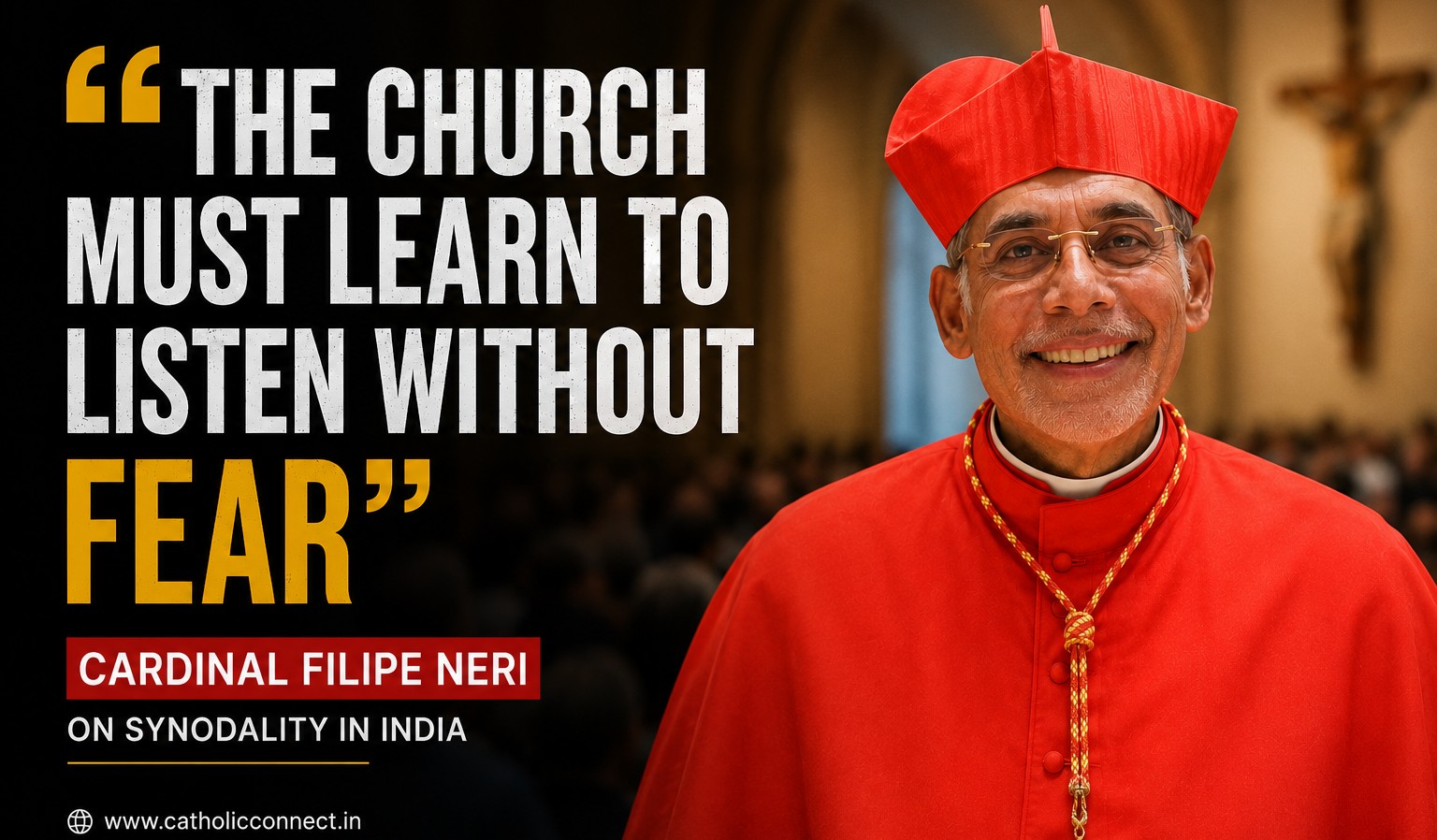
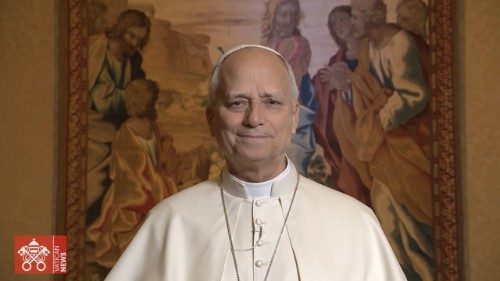
May 12, 2026: As the Church in India continues its synodal journey, Cardinal Filipe Neri Ferrão, President of the Conference of Catholic Bishops of India (CCBI), reflected on the call to become a more participatory, inclusive and missionary Church. Speaking to Catholic Connect, the Cardinal spoke candidly about the opportunities and challenges before the Church in India, urging Catholics to move from “working for people to walking with people” through deeper listening, shared responsibility, synodal conversion and a renewed commitment to Mission 2033.


How do you see the Indian Church embracing the synodal call to become more participatory, inclusive and missionary?
The church in India receives synodality as a Grace, and as a responsibility. I would like to acknowledge that with synodality, Pope Francis has initiated a journey back to the roots of the church - The early Christian Community and to the second Vatican Council. This twofold movement back in history help us move ahead in our times. Pope Francis reminded us that a synodal church is a church where everyone has something to learn. The Faithful, the Bishops and the Pope listen to one another. And all listen to the Holy Spirit.
In India, we are not beginning from zero. In many of our families, parishes, basic Christian communities, religious communities and dioceses, people already walk together. But now we must make this more conscious more structured and more missionary.
The church in India, embraces synodality by moving from consultation to participation. We must move from working for people to walking with people. Pope Francis said in Evangelii Gaudium, “I dream of a missionary option. A missionary impulse capable of transforming our customs, structures, language...”
This is also our dream for India. The participatory church is not a weak church. It is a stronger Church. An inclusive church is not a confused church. A missionary church is not inward-looking. It goes out with Christ to serve to heal and to proclaim.
Pope Leo has also reminded us that synodality is an expression of seeking to be a missionary Church in today's world with the gospel and Christ at the centre. This is the path for the church in India - Communion, Participation and Mission.
In what ways can synodality help the Church in India strengthen unity while respecting and celebrating its rich plurality?
India's diversity is a gift from God. We have many cultures languages rites customs, social groups, and religious traditions. Synodality helps us to understand that unity does not mean uniformity. Unity means working together in Christ.
In India, the church must become a place where every language is respected. Every culture is welcomed and every community feels at home. Synodality teaches us to listen before judging, discern before deciding, and include before organising.
The CCBI National Synodal Assembly also highlighted inter-religious dialogue, peace building, inclusion of the excluded, poverty, integral ecology, and accompaniment of children and youth as important priorities for the Church in India. These are not only social concerns. They are matters of faith. When we listen to the poor, we listen to Christ. When we respect other religions, we witness to Christ.
Pope Francis in Dilexit Nos says that only by starting from the heart can our communities unite and reconcile differing minds and wills. This is the Indian way of synodality — many voices, one heart; many cultures, one faith; many forms of service, one mission in Christ.
How can bishops, clergy, religious and lay faithful cultivate a genuine culture of listening, especially to young people, women and those on the margins?
Listening is the heart of synodality. It is also the heart of pastoral leadership. Pope Francis said, ‘Listen to Him by listening to each other. Leave no one behind or excluded.’ Bishops must listen. Priests must listen. Religious must listen. Lay faithful must listen. And all of us must listen to the Holy Spirit. Listening means respecting the pain, the hope, the fear and the faith of the other.
In India, we must create more spaces for listening through councils and consultative bodies. These existing councils must be strengthened. Pope Leo says that we must have disarming and disarmed words. Only when a person is disarming or disarmed can he or she listen.
The poor, migrants, dalits, tribals, fish folks, domestic workers, persons with disabilities and those wounded by life must not remain at the edges of our church life. Listening also means allowing space for dissent. We must grow to accept dissenting voices without judgment. We must learn to speak with charity, listen without fear and disagree without division. Then listening will not be just a meeting technique; it will become a spiritual culture.
What are some of the challenges the Church in India faces in implementing the synodal vision and how can these challenges become opportunities for renewal and mission?
There are several challenges for the Church in India. The first challenge is to move from synodal awareness to synodal consciousness. The second challenge is clericalism. The Synod reminds us that all the baptised share responsibility for the mission of the Church.
The third challenge is synodal education or formation. Many people still do not know how to listen, discern, participate or take responsibility. The fourth challenge is fear. Some fear that synodality will weaken authority. True synodality purifies authority and makes it more humble and service-oriented.
The fifth challenge is social division. Caste, class, language, region, gender and economic inequality can also enter Church life. The sixth challenge is moving from documents to practice. It is easy to speak about synodality but harder to live it in parish meetings, diocesan planning, formation houses, schools, commissions and families.
The final document of the Synod says that the synodal process continues in the implementation phase. The CCBI pastoral plan, ‘Journeying Towards a Synodal Church: Mission 2033,’ gives a concrete roadmap and invites every person to contribute at parish, diocesan, regional and national levels. A synodal Church is built slowly, patiently and prayerfully.
What message would you like to share with Catholics across the country as they journey together as pilgrims of hope in building a truly synodal Church?
We are pilgrims of hope. We are not walking alone. Christ walks with us. The Holy Spirit guides us. The Church accompanies us. The Synod calls us to walk together.
The CCBI pastoral plan calls us to discern where God wants the Church in India to be by 2033, the great Jubilee Year of Redemption. Do not remain spectators in the Church. You are the Church. Your baptism gives you dignity. Your faith gives you responsibility. Your gifts are needed for the mission.
Pope Francis reminded us that everyone has a part to play. No one is a mere extra. I invite our bishops to lead with listening hearts, our priests to serve with humility, our religious to witness with joy, our families to become schools of communion, our women to share their wisdom and leadership, and our young people to come forward with courage. Our elderly, the sick, the poor and those on the margins must know that they are precious to the Church.
Pope Leo reminds us that the reason for the Church is not self-preservation. The reason for the Church is to proclaim the Gospel. Therefore, let us strive to make the Church in India more prayerful, more participatory, more inclusive and more missionary.
Together, let us journey towards a synodal Church. Together, let us live Mission 2033. Together, let us become a sign of hope for India and for the world.
Pope Francis used two images in the ‘Vademecum’ when he invited the entire Church to begin the synodal journey. The first image is from the Gospel of Mark — Jesus, Apostles and people together forming the community. The second image is Peter’s conversion at the house of Cornelius. Peter realised that God can work the way He wants. Peter’s conversion from prejudice and self-centred thinking is an inspiration to us. Every one of us must have a synodal conversion.
(CLICK HERE to follow Catholic Connect and to stay connected with the Church)
By Catholic Connect Reporter
© 2026 CATHOLIC CONNECT POWERED BY ATCONLINE LLP