- 31 July, 2026
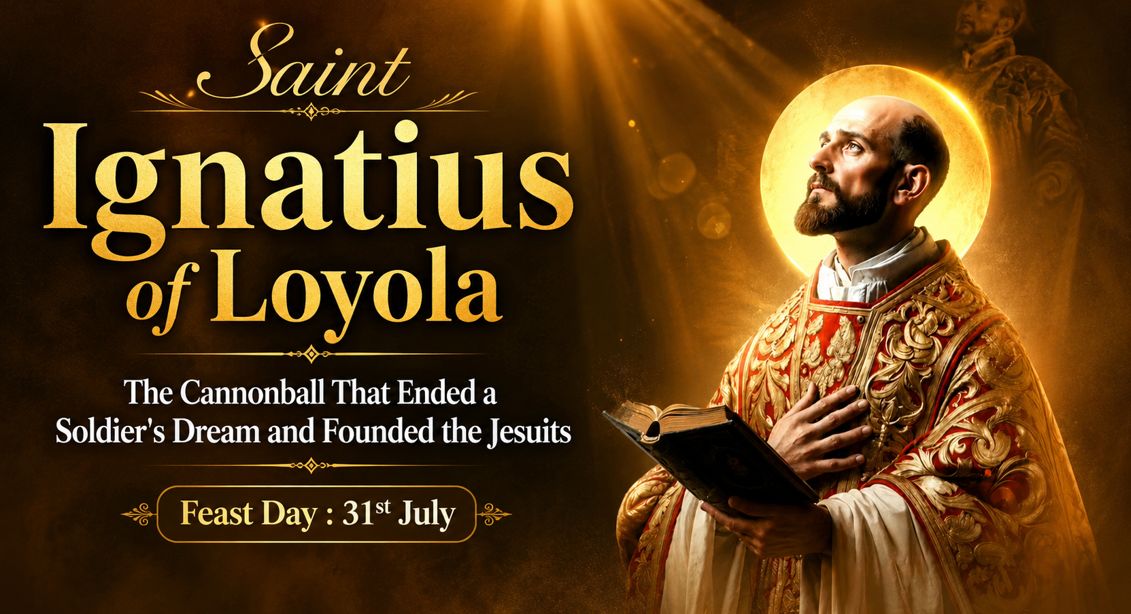
Loyola, Spain, July 31, 2026: Every year on 31 July, the Catholic Church celebrates Saint Ignatius of Loyola, the Spanish soldier-turned-saint whose dramatic conversion transformed not only his own life but also the future of the Catholic Church. As the founder of the Society of Jesus (Jesuits), his vision has shaped Catholic education, missionary work, and spirituality across the world—including India, where Jesuit priests established some of the country's most respected schools, colleges, universities, and missions.


Feast Day: 31 July
Born: 23 October 1491, Loyola, Basque Country, Spain
Died: 31 July 1556, Rome, Italy
Canonized: 12 March 1622 by Pope Gregory XV


Patron of: Spiritual retreats, soldiers, educators, the Society of Jesus (Jesuits), and those seeking discernment
Known For: Founding the Society of Jesus (Jesuits), writing the Spiritual Exercises, promoting discernment of spirits, and inspiring one of the greatest missionary movements in Church history.
Few saints have left a mark on the Catholic Church as profound as Saint Ignatius of Loyola.
Born into Spanish nobility and trained as a soldier, Ignatius spent his youth chasing military glory and earthly honor. But one life-changing injury led him to discover a far greater purpose—to serve Jesus Christ with the same courage he once devoted to battle.
His conversion eventually gave birth to the Society of Jesus, popularly known as the Jesuits, whose priests and brothers have carried the Gospel to every continent. In India, Jesuits have played an extraordinary role in spreading the good word, education, and social service for more than four centuries, making Saint Ignatius a beloved spiritual father for countless Catholics.
Born as Íñigo López de Loyola on 23 October 1491, Ignatius grew up in the family castle in Loyola in Spain's Basque region.
Like many young noblemen of his time, he admired knights, military victories, and royal courts. Courageous and ambitious, he longed to win fame on the battlefield rather than live a quiet life of prayer.
That dream came to an abrupt end in 1521 during the Battle of Pamplona, when a cannonball shattered one of his legs.
The injury would become the turning point that changed Christian history.
(CLICK HERE to follow Catholic Connect and to stay updated with Catholic News & Content)
Confined to bed for months, Ignatius hoped to read exciting stories about knights and warfare.
Instead, the only books available were a Life of Christ and biographies of the saints.
At first disappointed, he slowly became captivated by the courage, sacrifice, and holiness of those who had given everything for Christ.
He noticed something remarkable.
Dreams of worldly success left him restless and empty, but thoughts of following Jesus filled him with lasting peace.
That simple discovery became the beginning of his lifelong teaching on discernment of spirits—learning to recognize whether our thoughts lead us closer to God or further away.
After recovering, Ignatius travelled to the famous shrine of Montserrat, where he spent an entire night in prayer before the Blessed Virgin Mary.
There he laid down his sword and military clothing, symbolically surrendering his old life.
Exchanging the garments of a nobleman for those of a poor pilgrim, he dedicated himself completely to Christ.
He later spent months in the nearby town of Manresa, praying, fasting, and reflecting deeply on God's call.
Those months would shape Christian spirituality for centuries to come.
While praying at Manresa, Ignatius began writing notes about his spiritual experiences.
These reflections eventually became the Spiritual Exercises, one of the most influential works of Catholic spirituality ever written.
Rather than being simply a book, the Spiritual Exercises are a practical guide that helps people deepen their relationship with Christ through prayer, self-examination, discernment, and generous service.
Even today, priests, religious, seminarians, and lay Catholics around the world make Ignatian retreats using these timeless exercises.
Realizing that he needed a proper education before preaching, Ignatius studied in Spain before continuing at the University of Paris.
There he met several companions, including Saint Francis Xavier and Saint Peter Faber.
Together, they made vows of poverty, chastity, and missionary service on 15 August 1534, promising to go wherever the Pope sent them.
In 1540, Pope Paul III officially approved the Society of Jesus.
The Jesuits quickly became known for their disciplined spirituality, intellectual excellence, missionary zeal, and unwavering loyalty to the Church.
For Indian Catholics, the story of Saint Ignatius is deeply connected with the arrival of the Jesuits in India.
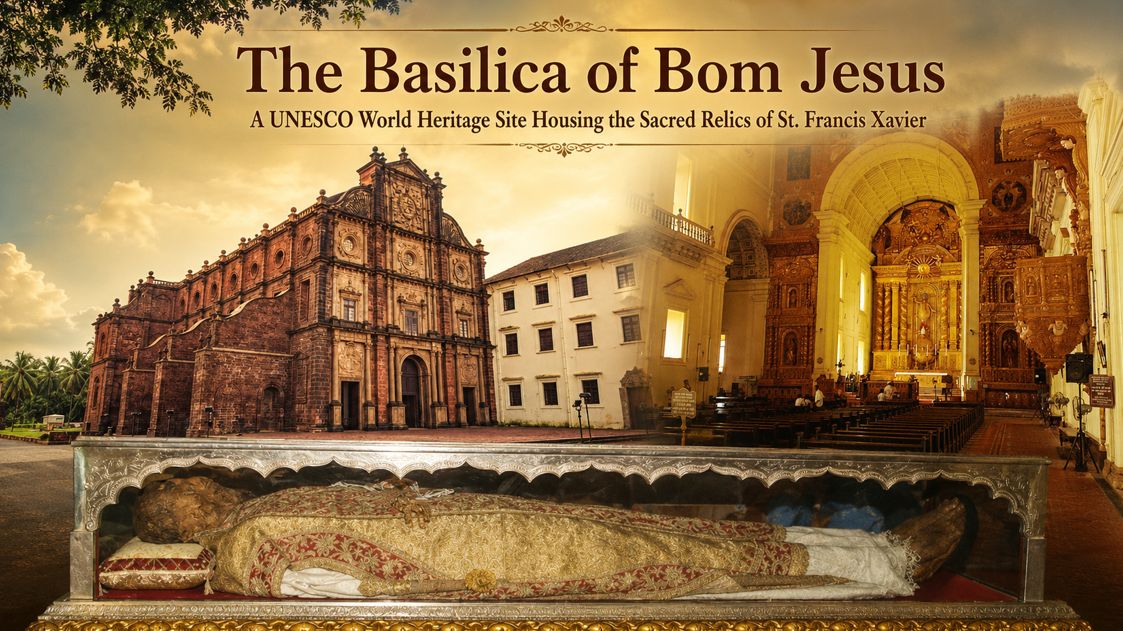
Only a few years after the Society of Jesus was founded, Saint Francis Xavier arrived in Goa in 1542, becoming one of the greatest missionaries in Asian history. From there, Jesuit missionaries spread across the subcontinent, establishing churches, schools, colleges, seminaries, and centres of learning that continue to serve millions of people regardless of religion or background.
Today, many of India's most respected educational institutions trace their roots to the vision of Saint Ignatius, whose belief that faith and learning should go hand in hand continues to inspire Jesuit ministries throughout the country.
Although missionaries travelled across Europe, Asia, Africa, and the Americas, Ignatius himself remained in Rome, guiding the rapidly growing Society through prayer, letters, and wise leadership.
Despite declining health, he continued encouraging missionaries and strengthening the young order until his death on 31 July 1556.
In 1622, Pope Gregory XV canonized him alongside several great saints, including Saint Francis Xavier, Saint Teresa of Ávila, Saint Philip Neri, and Saint Isidore the Farmer.
Saint Ignatius gave the Church more than a religious order.
He offered a way of living that teaches Christians to seek "the greater glory of God" (Ad Majorem Dei Gloriam), to find God in everyday life, and to make important decisions through prayerful discernment.
His spirituality continues to shape Jesuit schools, universities, retreat centres, seminaries, and missionary communities across the globe.
More than 450 years after his death, his influence remains as vibrant as ever.
The life of Saint Ignatius continues to inspire believers in every generation.
His example reminds us to:
His life teaches that holiness begins when we surrender our own plans and allow God to lead us.
From a wounded soldier in a castle in Spain to the founder of one of the most influential religious orders in history, Saint Ignatius of Loyola's journey is a powerful reminder that God can transform even life's greatest setbacks into extraordinary blessings.
His vision continues to shape the Catholic Church through education, missionary work, spiritual retreats, and pastoral ministry. In India especially, where generations have studied in Jesuit institutions and encountered the Gospel through Jesuit missionaries, his legacy remains alive in classrooms, parishes, universities, and communities of service.
As Catholics celebrate his feast on 31 July, Saint Ignatius invites every believer to ask the same question that changed his own life:
"Lord, what do You want me to do?"
For when every ambition is surrendered to Christ, God can accomplish far more than we could ever imagine.
To know about more saints please visit the spiritual section.
By Catholic Connect Reporter
Saint Ignatius of Loyola, Saint Ignatius feast day, founder of the Jesuits, Society of Jesus, Jesuits in India, Jesuit schools India, Spiritual Exercises, Catholic saints, Saint Ignatius biography, discernment of spirits, Saint Francis Xavier, Catholic education, Counter-Reformation saints, Ad Majorem Dei Gloriam, July feast days, Ignatian spirituality, Catholic Connect, Jesuit missions India


© 2026 CATHOLIC CONNECT POWERED BY ATCONLINE LLP