- 20 October, 2026

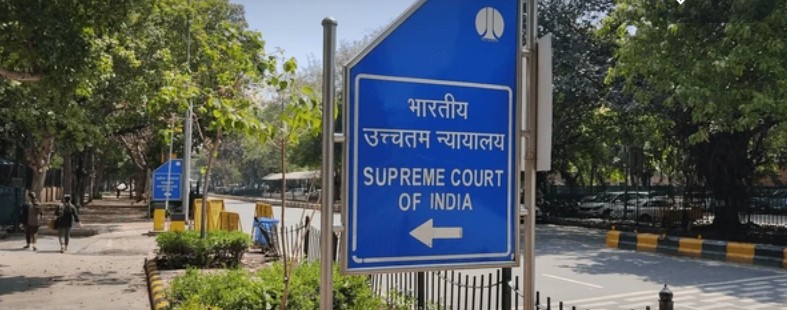
New Delhi | February 2, 2026: The Supreme Court on Monday referred a batch of petitions challenging the constitutional validity of anti-conversion laws enacted by at least 12 states to a three-judge bench, citing the importance and wide implications of the matter. The Court also issued fresh notices to the Centre and the concerned states, seeking their responses within four weeks.



The order was passed by a bench comprising Chief Justice Surya Kant and Justice Joymalya Bagchi after hearing senior advocate Meenakshi Arora, appearing for the National Council of Churches in India (NCCI), and Solicitor General Tushar Mehta, representing the Centre and some of the states. “Having regard to the importance of the matter, let it be placed before a three-judge bench,” Chief Justice Kant observed.
Fresh notices were issued to Rajasthan, Uttar Pradesh, Odisha, Chhattisgarh, Arunachal Pradesh, Gujarat, Jharkhand, Uttarakhand, Haryana, Madhya Pradesh, Karnataka, and Himachal Pradesh. The Court directed the Centre and the states to file a common counter affidavit within four weeks and also ordered that copies of the petitions be served on the advocate generals of the respective states.
During the hearing, Meenakshi Arora contended that the anti-conversion laws “incentivise vigilante groups” and are being misused to harass individuals who choose to convert to another religion. She further pointed out that Odisha and Rajasthan had enacted separate laws, while amendments in other related Acts had also come into force, some of which were not covered in earlier petitions.
Solicitor General Tushar Mehta informed the Court that both the Centre and the states were prepared with their responses and would be filing them shortly.
The batch of petitions challenging the anti-conversion laws has been pending before the apex court since 2020, without any substantive hearing. The delay, the Court noted earlier, was partly due to the Covid-19 pandemic and constraints faced by successive Chief Justices.
Previously, the Supreme Court had issued notices on similar petitions filed by Citizens for Justice and Peace, Jamiat-Ulema-i-Hind, and other organisations and individuals from various states. The petitioners had sought a stay on the laws, alleging that they were being used to target inter-religious marriages and curtail religious freedom.
In a related challenge, the Association for Protection of Civil Rights (APCR), through M. Huzaifa and John Dayal, has questioned the constitutionality of key provisions of the Rajasthan Prohibition of Unlawful Conversion of Religion Act, 2025. The petition challenges stringent penalties, including forfeiture, confiscation, and demolition of properties, arguing that such provisions violate the Supreme Court’s 2024 judgment prohibiting demolition of properties without due notice and opportunity to be heard.
The matter will now be placed before a three-judge bench for further consideration, a move seen as significant in addressing concerns related to religious freedom, personal liberty, and constitutional safeguards.

© 2026 CATHOLIC CONNECT POWERED BY ATCONLINE LLP