- 22 September, 2026

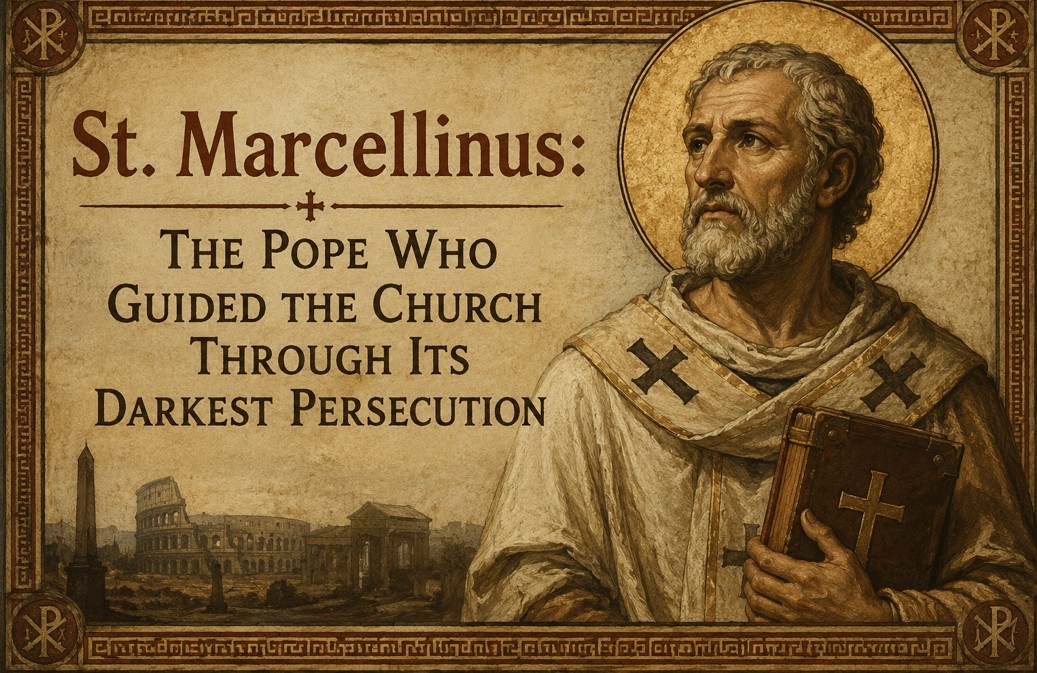
June 27, 2026: St. Marcellinus, the twenty-ninth successor of Saint Peter, served as pope during one of the most difficult chapters in early Christian history—the beginning of the Great Persecution under Emperor Diocletian. His papacy witnessed both the rapid growth of Christianity and the severe attempts of the Roman Empire to suppress it. Though historical records surrounding his final years remain debated, Marcellinus is remembered as a shepherd who led the Church during a time of extraordinary trial.


What happens when a leader must guide a community through its greatest crisis?
For Pope Marcellinus, this question became a reality. His leadership began during a peaceful period for Christians but ended as the Roman Empire launched its most severe persecution against the Church. His story reflects the struggles of early Christians who had to choose between personal safety and faithfulness to Christ.

Very little is known about Marcellinus’ early life. He was likely born in Rome and became part of the Christian community there during the third century.
By this time, Christianity had grown significantly throughout the Roman Empire. Christian communities had established places of worship, organised leadership, and charitable ministries, despite remaining an officially unrecognised religion.
(CLICK HERE to follow Catholic Connect for regular News and Content)
Marcellinus was elected Bishop of Rome in 296 AD following the death of Pope Caius.
During the early years of his papacy, Christians enjoyed relative peace. Churches operated openly, and the faith continued to spread. However, this period of stability would soon come to an end.
The greatest event of Marcellinus’ papacy was the beginning of the Diocletian persecution.
In 303 AD, Diocletian issued decrees ordering the destruction of Christian churches and sacred texts and demanding sacrifices to Roman gods.
Although records of Marcellinus’ leadership are limited, his papacy remains significant:
His greatest contribution was guiding Christians through one of history’s most dangerous moments for the faith.
Marcellinus is remembered for:
His life reflects the struggles of leaders who must serve during times of uncertainty.
The most debated aspect of Marcellinus’ papacy concerns accusations that he may have offered incense to Roman gods during the persecution.
Ancient sources provide conflicting accounts. Some traditions accused him of weakness, while others defended his faithfulness and later honoured him as a martyr.
The historical evidence remains uncertain, but the controversy highlights the intense pressure faced by Christians during Diocletian’s persecution.
The life of Marcellinus offers a powerful lesson: Faith is tested most deeply when the cost of remaining faithful is highest.
Marcellinus is honoured as a saint in the Catholic Church.
Although some traditions describe him as a martyr, historians continue to debate the exact circumstances of his death.
Why does St. Marcellinus matter today?
His legacy continues through the life of the Church today, carried forward by his successors.
To know more about the previous Popes, click here
By Catholic Connect Reporter
St. Marcellinus, Pope Marcellinus biography, twenty-ninth pope Catholic Church, Diocletian persecution, early Catholic martyrs, Pope Marcellinus controversy, Roman Empire Christianity, Catholic Church history, apostolic succession, Great Persecution

© 2026 CATHOLIC CONNECT POWERED BY ATCONLINE LLP