- 27 October, 2026
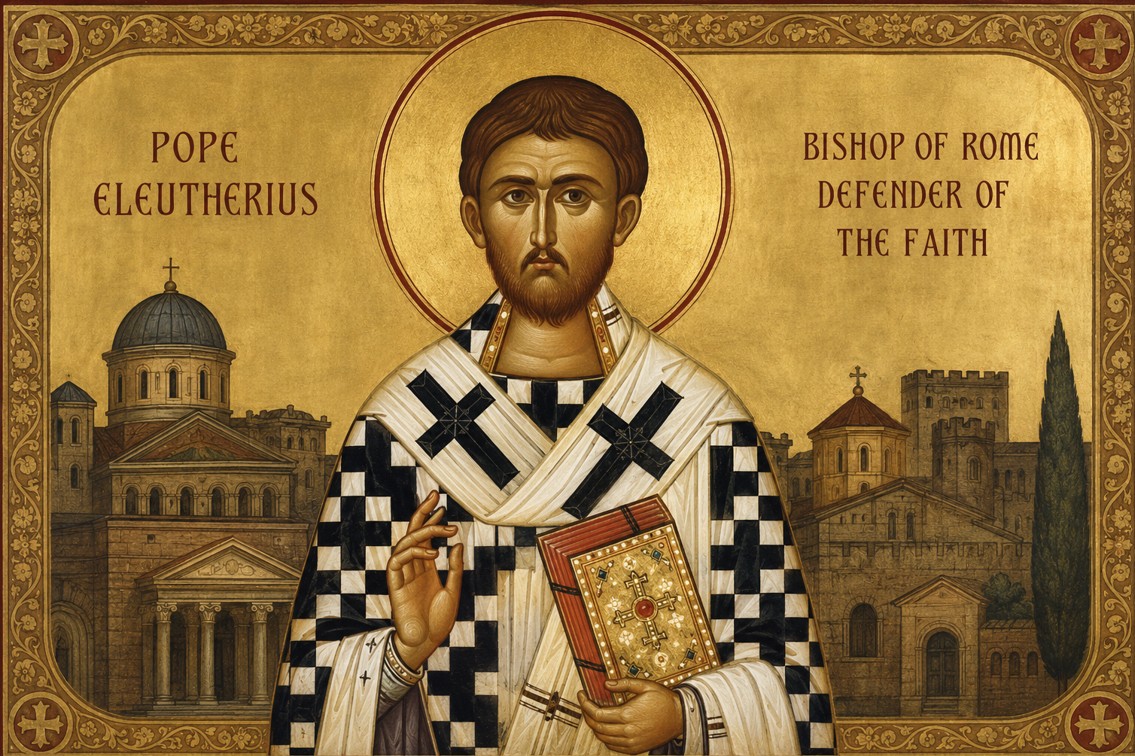
Pope Eleutherius, the thirteenth successor of Saint Peter, guided the Church during a crucial period of theological confusion and growing Christian expansion. His papacy is remembered for defending unity and discernment at a time when emotional religious movements threatened to divide believers.


Pope Eleutherius served during a period when Christianity was slowly gaining stability in some parts of the Roman Empire while still facing suspicion and theological division.
What happens when spiritual passion becomes disconnected from truth?
That question defined much of Eleutherius’ papacy. While the Church continued to grow, new movements claiming fresh revelations and prophetic authority began spreading among Christians. Eleutherius faced the difficult task of protecting authentic Christian teaching while preserving unity within the Church.
Pope Eleutherius served around 174 AD to 189 AD. He is best known for addressing the challenge of Montanism, an early movement that emphasized ecstatic prophecy and claimed new revelations beyond apostolic teaching.
According to early Church tradition, Eleutherius was born in Nicopolis in Epirus, a Greek-speaking region of the Roman Empire. Before becoming pope, he served as a deacon under Pope Anicetus and later under Pope Soter. This long period of service gave him valuable experience in Church leadership and pastoral care.
Following the death of Pope Soter, Eleutherius was elected Bishop of Rome around 174 AD. His papacy would become one of the longest among the early popes, helping provide stability during a formative era of Church history.
Eleutherius led the Church during the reigns of Roman emperors including Marcus Aurelius and Commodus.
One of the greatest challenges of his papacy was the spread of Montanism, a movement originating in Asia Minor that emphasized visions, prophecy, and strict spiritual discipline.
Eleutherius is remembered for helping the Church respond carefully to doctrinal confusion:
Tradition also attributes to him a decree affirming that Christians should not reject foods created by God simply because of ritual restrictions. This reflected the Church’s movement away from older ceremonial divisions and certain extreme ascetic practices.
These contributions mattered because they helped establish balance within Christianity—encouraging spiritual devotion without abandoning doctrinal stability.
Eleutherius is remembered for:
His spirituality reflects wisdom and moderation during emotionally charged debates.
Eleutherius faced several major difficulties:
Some historical traditions suggest he initially showed openness toward Montanist leaders before ultimately rejecting the movement. This reflects the complexity of the issue facing the early Church.
(CLICK HERE to follow Catholic Connect for regular Catholic Content)
Though no direct writings survive, his leadership offers a lasting lesson: Spiritual passion must always remain rooted in truth.
Eleutherius is honored as a saint in the Catholic Church.
While some traditions describe him as a martyr, historical evidence remains uncertain.
St. Eleutherius represents:
His leadership helped the Church navigate emotional and theological tensions without losing unity.
Why does St. Eleutherius matter today?
His legacy continues through the life of the Church today, carried forward by his successors.
To know more about the previous Popes, click here
By Catholic Connect Reporter
________________________
St. Eleutherius, Pope Eleutherius biography, thirteenth pope Catholic Church, Montanism controversy, early Catholic popes, Catholic Church history, apostolic succession, Pope Eleutherius facts, early Church heresies, history of papacy




© 2026 CATHOLIC CONNECT POWERED BY ATCONLINE LLP