- 01 July, 2026
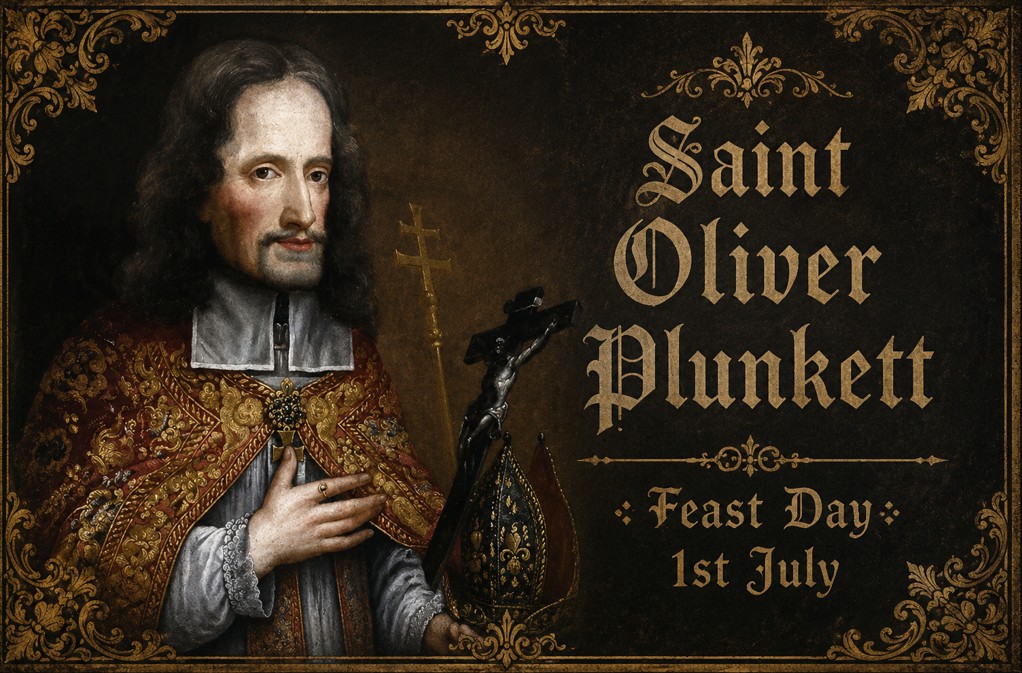
Ireland, July 12, 2026: Why is Saint Oliver Plunkett remembered as one of Ireland’s greatest martyrs? Discover the extraordinary story of the Archbishop of Armagh who worked for Church reform, served Catholics during a time of persecution, endured false accusations, forgave his enemies, and gave his life for Christ with remarkable courage.
Feast Day: 1 July
Born: 1 November 1625, Loughcrew, County Meath, Ireland
Died: 1 July 1681, Tyburn, London, England
Canonized: 12 October 1975 by Pope Paul VI


Patron of: Peace and reconciliation, Ireland, and those facing persecution for their faith
Known For: Being the last Catholic martyr executed in England, serving as Archbishop of Armagh, defending the Catholic faith, and forgiving those who falsely accused him
Title: Martyr Archbishop of Armagh
Few saints represent courage and forgiveness as powerfully as Saint Oliver Plunkett.
Born in Ireland during a period of intense religious conflict, he became a priest, bishop, and reformer who dedicated his life to serving the Catholic people of Ireland.
As Archbishop of Armagh, he worked to restore discipline among clergy, strengthen Catholic communities, and bring peace during a dangerous time.
Despite facing persecution, imprisonment, and false accusations, he remained faithful to Christ and forgave those who caused his suffering.
His martyrdom became one of the most powerful examples of Christian courage in Irish history.
Oliver Plunkett was born on 1 November 1625 in Loughcrew, County Meath, Ireland, into a Catholic family.
He grew up during a difficult period when Catholics in Ireland faced political and religious restrictions.
From an early age, Oliver showed intelligence, devotion, and a desire to serve the Church.
He studied theology and eventually travelled to Rome because Catholic education was restricted in Ireland.
There he prepared for the priesthood and developed a deep understanding of theology and Church leadership.
(CLICK HERE to follow Catholic Connect for regular News and Content)
Oliver Plunkett studied at the Pontifical Irish College, where many Irish priests received their formation during times when Catholic institutions in Ireland were limited.
He was ordained a priest in 1654.
For several years, he remained in Rome as a teacher of theology and gained a reputation as a skilled scholar and dedicated priest.
His life changed dramatically in 1669 when he was appointed Archbishop of Armagh, the highest-ranking Catholic position in Ireland.
When Oliver returned to Ireland as Archbishop, he found a Catholic Church facing many challenges.
Years of persecution had weakened religious structures.
Many priests lacked proper formation, and Catholic communities struggled to practise their faith openly.
Plunkett immediately began working to rebuild the Church.
He:
His leadership brought hope to many believers.
He served during a period of political tension between Catholics and Protestants in Ireland and England.
Catholics faced restrictions, suspicion, and discrimination.
Despite these difficulties, Plunkett remained committed to peace.
He refused to encourage violence and insisted that the Church’s mission was spiritual, not political.
His goal was to strengthen faith and serve his people, even when doing so placed his own life at risk.
In the late 1670s, anti-Catholic fears increased in England and Ireland.
Oliver Plunkett became the victim of false accusations connected to the so-called Popish Plot.
He was accused of involvement in a supposed Catholic conspiracy against the English government.
Despite the lack of reliable evidence, he was arrested in 1679.
After spending years imprisoned, he was transferred to England for trial.
Saint Oliver Plunkett’s trial took place at Westminster Hall in 1681.
The proceedings were widely considered unjust, and key witnesses against him later became known for dishonesty.
Nevertheless, Plunkett accepted his suffering with remarkable peace.
When condemned to death, he prayed for his accusers and forgave those responsible for his conviction.
His words and actions showed the forgiveness of Christ even in the face of injustice.
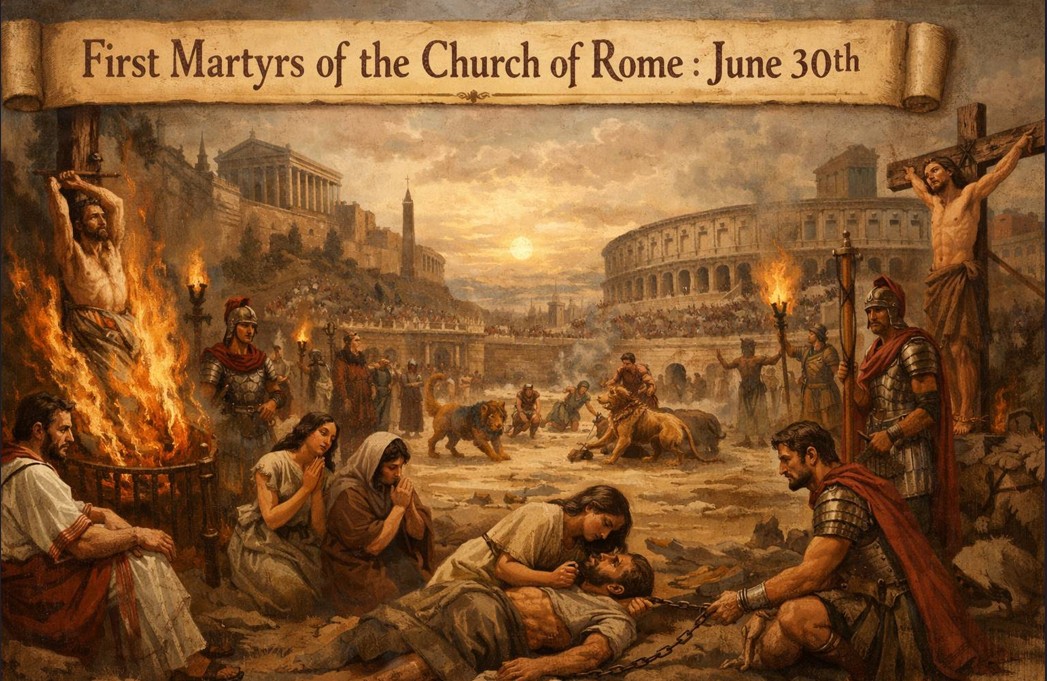
On 1 July 1681, Oliver Plunkett was executed at Tyburn.
He became the last Catholic martyr to be executed in England.
Before his death, he forgave his enemies, prayed for the Church, and proclaimed his faith in Christ.
His final moments became a powerful witness of courage, humility, and forgiveness.
After his martyrdom, devotion to Oliver Plunkett spread throughout Ireland and beyond.
His remains became a place of pilgrimage and prayer.
He was beatified in 1920 by Pope Benedict XV.
On 12 October 1975, he was canonized by Pope Paul VI, becoming the first new Irish saint in several centuries.
Although Saint Oliver Plunkett suffered because of religious conflict, his message was not one of hatred or revenge.
He became a symbol of forgiveness and reconciliation.
His life showed that Christian witness is not measured by power or victory over opponents but by faithfulness, love, and trust in God.
Today, many people remember him as a model for overcoming division through forgiveness.
Saint Oliver Plunkett’s influence continues especially in Ireland, where he is honoured as one of the country’s most beloved saints.
Churches, schools, and communities bear his name.
His shrine at St Peter's Church, Drogheda attracts pilgrims who come to pray and remember his witness.
His life remains a reminder that truth and faith can endure even during times of suffering.
The life of Saint Oliver Plunkett teaches important lessons:
Saint Oliver shows that holiness is revealed not only in success but also in perseverance.
More than three centuries after his death, Saint Oliver Plunkett remains a powerful witness of Christian courage.
He was a bishop who cared for his people, a reformer who strengthened the Church, and a martyr who forgave his enemies.
From the churches of Ireland to Catholics around the world, his story continues to inspire those who face hardship because of their beliefs.
Saint Oliver Plunkett teaches a timeless truth:
Faith may be tested by suffering, but love and forgiveness can overcome even the greatest injustice.
To know about more saints please visit the spiritual section.
By Catholic Connect Reporter
Saint Oliver Plunkett, Saint Oliver Plunkett feast day, Irish saints, Archbishop of Armagh, Catholic martyrs, Tyburn martyrs, Irish Catholic history, July saints, Christian persecution, Catholic Church Ireland, saints of Ireland, martyrs of faith, forgiveness and reconciliation
© 2026 CATHOLIC CONNECT POWERED BY ATCONLINE LLP