- 01 September, 2026

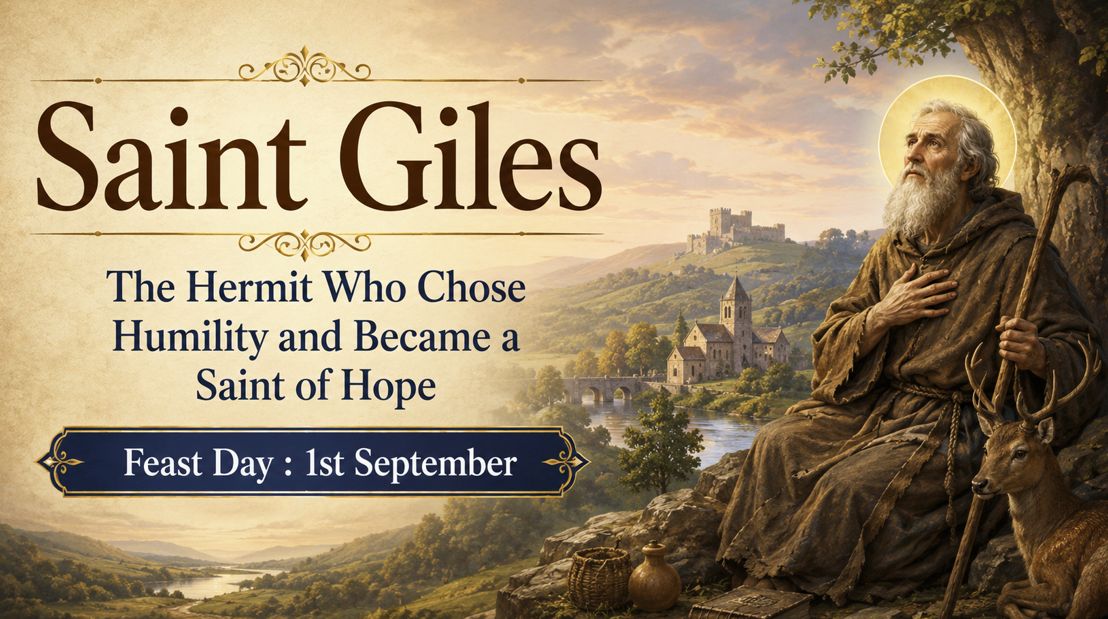
September 1, 2026: Why is Saint Giles remembered as one of the most beloved hermit saints of the Middle Ages and as a patron of those who suffer? Discover the inspiring story of the holy man who left behind wealth and recognition, embraced a life of solitude and prayer, and became a symbol of humility, compassion and trust in God.


Feast Day: 1 September
Born: Traditionally believed to have been born in Athens, Greece, in the seventh century
Died: Early eighth century, southern France
Also Known As: Aegidius, Gilles and Egidio


Religious Life: Hermit and Abbot
Known For: Prayer, humility, solitude and compassion
Patron of: Beggars, the poor, people with disabilities and those who suffer
Symbol: A hind or deer
Title: Abbot and Hermit
Saint Giles is remembered as a man who deliberately turned away from fame and worldly recognition in order to seek God in silence.
According to ancient tradition, Giles was born into a noble family in Athens. Although he was respected for his holiness, he did not desire public admiration. He eventually left his homeland and travelled to southern France, where he sought a life of solitude and prayer.
Giles first lived in isolated places near the Rhône and River Gard before withdrawing further into the forests near Nîmes.
There, tradition tells us, he spent years in prayer, fasting and contemplation. His desire was simple: to live quietly in the presence of God.
One of the most famous traditions associated with Saint Giles tells of a hind, or deer, that became his companion. The animal is therefore often shown beside him in religious art.
According to the popular legend, royal hunters pursued the deer into the forest where Saint Giles lived.
When the hunters attempted to shoot the animal, Giles was accidentally struck and wounded.
The king, impressed by the hermit's holiness and humility, wished to honour and reward him.
Giles, however, did not seek wealth or recognition.
Instead, his quiet life eventually attracted followers, and a monastery was established near his hermitage. Giles became its abbot, guiding others towards a life centred on prayer and God.
After his death, devotion to Saint Giles spread widely throughout Europe.
His shrine became an important place of pilgrimage during the Middle Ages, while churches and monasteries were dedicated to him in France, Germany, Poland, Hungary and the British Isles.
He became especially associated with people who were poor, sick, disabled or marginalised.
Saint Giles teaches that holiness does not require public recognition.
His life reminds us of the importance of humility, silence and prayer in a world often focused on success and attention.
He also reminds Christians to show compassion towards those who suffer and to recognise the dignity of people who may be forgotten or excluded.
Saint Giles remains a powerful example of a life centred on God.
The hermit who sought only solitude eventually inspired countless people across Europe.
His message remains simple and meaningful: Seek God with humility, care for those who suffer, and remember that a hidden life of faith can leave an extraordinary mark on the world.
To know about more saints please visit the spiritual section.
By Catholic Connect Reporter
Saint Giles, Saint Giles feast day, September 1 feast day, Saint Giles biography, Aegidius, Saint Giles the Hermit, Catholic saints, hermit saints, Catholic abbots, patron saint of the disabled, patron saint of beggars, patron saint of the poor, Fourteen Holy Helpers, Saint Giles monastery, Saint-Gilles-du-Gard, Catholic feast days.








© 2026 CATHOLIC CONNECT POWERED BY ATCONLINE LLP