- 18 July, 2026

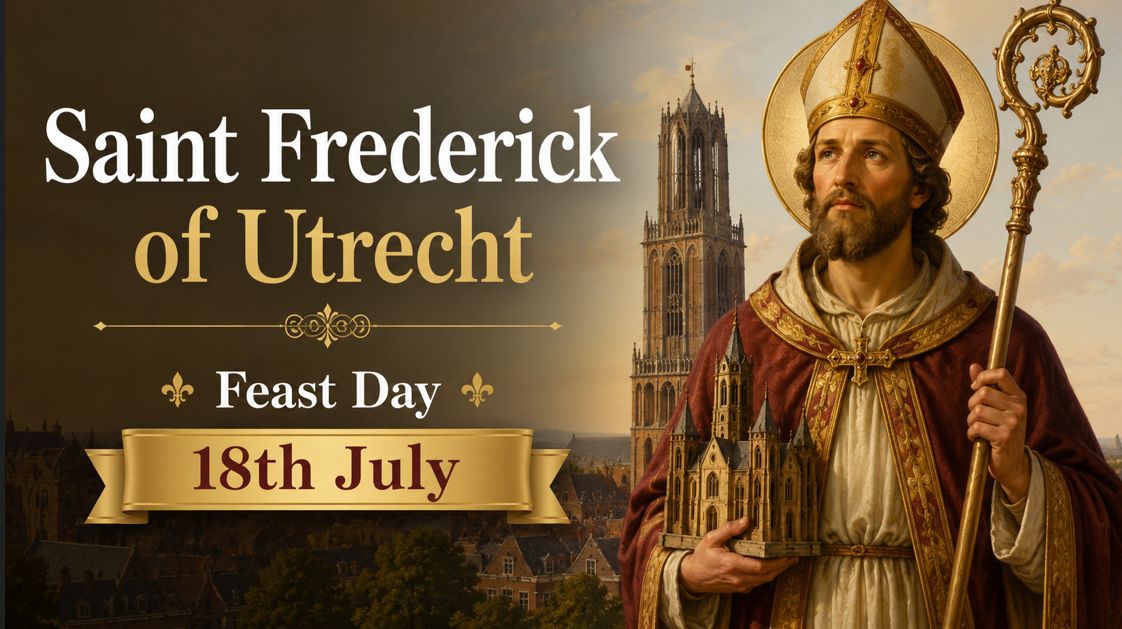
Netherlands, July 18, 2026: Why is Saint Frederick of Utrecht remembered as a fearless bishop and martyr for the faith? Discover the inspiring story of the ninth-century bishop who boldly preached the Gospel, worked tirelessly to strengthen the Church in the Netherlands, corrected both rulers and ordinary believers with charity, and ultimately gave his life in faithful service to Christ.


Feast Day: 18 July
Born: c. 780, Frisia (present-day Netherlands)
Died: 18 July 838, Utrecht, Netherlands
Canonized: Recognized as a saint by early Church tradition (pre-congregation canonization)


Patron of: The Archdiocese of Utrecht, missionaries, bishops, and those who courageously defend the faith
Known For: Bishop of Utrecht, missionary work among the Frisians, fearless preaching, Church reform, and martyrdom
Title: Bishop and Martyr
Throughout Christian history, many saints have shown that genuine love sometimes requires speaking difficult truths.
Saint Frederick of Utrecht was one such shepherd.
As bishop during a challenging period in the Church's history, Frederick devoted himself to preaching the Gospel, strengthening Christian communities, and calling people to lives of holiness.
His fearless commitment to truth won the admiration of the faithful—but also earned him powerful enemies.
His life remains a timeless reminder that fidelity to Christ often demands courage, perseverance, and sacrifice.
Frederick was born around the year 780 in Frisia, in what is now the Netherlands.
According to tradition, he came from a noble Christian family and received an excellent education under the guidance of respected clergy.
From an early age, he demonstrated a love for Sacred Scripture, prayer, and learning.
Recognizing his gifts, Church leaders prepared him for the priesthood, where he became known for both his wisdom and his deep pastoral concern.
His reputation for holiness eventually led to his appointment as Bishop of Utrecht.
As Bishop of Utrecht, Frederick inherited the difficult task of strengthening Christianity in regions where the faith was still taking root.
Many communities had only recently embraced Christianity, while remnants of pagan customs continued to influence daily life.
Frederick traveled extensively throughout his diocese, preaching the Gospel, instructing converts, celebrating the sacraments, and encouraging believers to remain faithful to Christ.
His patient missionary work helped deepen the faith of countless Christians.
Frederick believed that bishops must proclaim the truth without fear or favoritism.
He openly challenged moral abuses wherever they appeared, calling both ordinary believers and influential leaders to repentance.
According to long-standing tradition, he courageously criticized the conduct of powerful members of the imperial court, including matters relating to marriage and Christian morality.
Although such honesty placed him at great personal risk, Frederick refused to compromise the teachings of the Gospel for the sake of popularity or political advantage.
Despite his firmness in defending Christian truth, Frederick was also remembered for his kindness and pastoral care.
He sought to correct sinners not with harshness but with genuine concern for their salvation.
His sermons emphasized repentance, mercy, forgiveness, and faithful discipleship.
He believed that true reform always begins with personal conversion and a deeper relationship with Christ.
His combination of courage and compassion earned him the respect of clergy and faithful alike.
According to ancient tradition, Saint Frederick's fearless preaching eventually provoked those who opposed his ministry.
On 18 July 838, shortly after celebrating Mass in Utrecht, he was attacked by assassins inside or near the church.
Although seriously wounded, Frederick reportedly forgave his attackers and entrusted himself completely to God before dying from his injuries.
His death was soon honored as the martyrdom of a bishop who had remained faithful to Christ until the very end.
Following his death, devotion to Saint Frederick spread throughout the Low Countries.
He became honored as both a courageous bishop and a martyr who gave his life while carrying out his sacred ministry.
Churches were dedicated in his honor, and generations of Christians looked to his example when facing opposition for living according to the Gospel.
His witness continues to inspire bishops, priests, missionaries, and lay faithful alike.
Saint Frederick is especially remembered as a model for Church leaders who must faithfully proclaim the truth despite opposition.
His life demonstrates that authentic leadership is rooted not in seeking approval but in serving Christ with integrity.
His example also encourages all Christians to defend their faith with both conviction and charity.
The life of Saint Frederick offers lasting lessons for every believer:
His witness reminds Christians that genuine holiness often requires perseverance in difficult circumstances.
More than eleven centuries after his martyrdom, Saint Frederick remains a powerful example of courageous Christian leadership.
He was a missionary who strengthened the faith, a bishop who defended truth without fear, and a martyr who remained faithful until his final breath.
From the churches of ninth-century Utrecht to Christian communities around the world today, his life proclaims a timeless truth:
The courage to proclaim God's truth with love is one of the greatest acts of service a Christian can offer the world.
Saint Frederick's legacy continues to inspire believers to stand firm in faith, trusting that Christ always strengthens those who remain faithful to Him.
To know about more saints please visit the spiritual section.
By Catholic Connect Reporter
Saint Frederick of Utrecht, Saint Frederick feast day, Saint Frederick biography, Bishop of Utrecht, Catholic martyrs, missionary saints, Dutch saints, Frisia saints, medieval bishops, Catholic Church history, Christian courage, July saints, patron saint of Utrecht, Catholic saints, Saint Frederick martyr

© 2026 CATHOLIC CONNECT POWERED BY ATCONLINE LLP