- 10 September, 2026

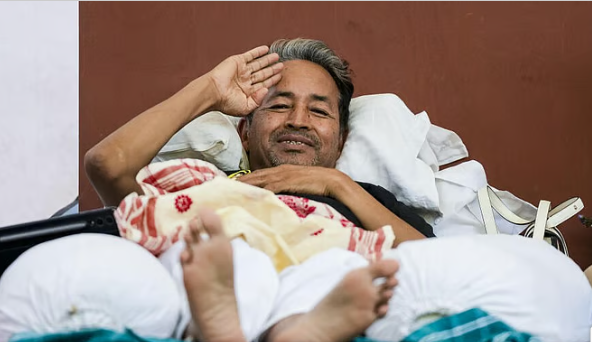
New Delhi, July 9, 2026 :For 21 days and counting, engineer, education reformer and climate activist Sonam Wangchuk has remained on an indefinite hunger strike at Delhi's Jantar Mantar, surviving only on water and salt as he demands accountability from the Union government. What began as a protest over alleged irregularities in the NEET-UG medical entrance examination has evolved into a broader campaign highlighting India's education system, transparency in public institutions, and long-standing concerns over Ladakh's future.


From the NEET controversy to calls for education reform and Ladakh's future, the engineer-turned-activist's protest has become one of the country's most closely watched movements.
As the fast enters its third week, concerns over Wangchuk's deteriorating health have intensified. Doctors have warned of the medical risks associated with prolonged fasting, while supporters continue to press the government to engage with his demands. As of publication, the Union government has not publicly responded to the key demands raised by Wangchuk and the protesters, leaving the future of the agitation uncertain.
Wangchuk launched his indefinite fast on June 28, 2026, joining a protest organised by the youth-led Cockroach Janta Party (CJP) at Jantar Mantar.

The immediate demand was the resignation of Union Education Minister Dharmendra Pradhan following allegations of widespread irregularities, paper leaks and administrative failures in the NEET-UG examination, which determines admission to medical colleges across India.
The protesters argued that repeated controversies surrounding competitive examinations had shattered the confidence of millions of students who dedicate years preparing for these high-stakes tests.
For Wangchuk, however, the issue extends beyond a single examination.
He has argued that the country needs structural reforms in education, greater transparency in examination systems, and stronger accountability from institutions responsible for conducting national entrance tests.
The activist has also used the platform to once again draw national attention to the unresolved demands of Ladakh, particularly issues relating to constitutional safeguards, environmental protection and democratic representation.
This is not the first time Wangchuk has resorted to fasting as a form of peaceful protest.
The education innovator, best known internationally for inspiring the character played by Aamir Khan in the film 3 Idiots, has spent years campaigning for sustainable development in Ladakh and constitutional protection for the ecologically fragile Himalayan region.
Following the reorganisation of Jammu and Kashmir in 2019, Wangchuk emerged as one of the most prominent voices demanding statehood for Ladakh, constitutional safeguards under the Sixth Schedule, protection of tribal rights and greater local participation in governance.
His latest hunger strike combines these longstanding regional concerns with the immediate issue of educational reforms, reflecting what he describes as a larger struggle for justice, transparency and accountability.
Wangchuk began his indefinite fast at Jantar Mantar, consuming only water and salt. Hundreds of students, youth organisations and civil society groups gathered to express solidarity.
The protest gained momentum as students affected by examination controversies joined demonstrations. Public discussions increasingly focused on alleged paper leaks, examination integrity and reforms needed within India's education system.
As the fast entered its second week, Wangchuk's physical condition visibly weakened. Medical teams regularly examined him while supporters continued round-the-clock demonstrations.
Political leaders, education activists and social organisations appealed to the government to engage in dialogue with the protesters.
As Wangchuk completed 21 days of fasting, concerns over his health continued to mount. Medical experts have repeatedly warned that prolonged fasting carries significant health risks, and supporters have urged the government to engage in dialogue before his condition worsens further.
At the time of publication, Wangchuk's indefinite hunger strike continues, with no official indication of when it may end. The Union government has not publicly responded to the protesters' principal demands, leaving the next phase of the agitation uncertain.
Medical experts have warned that fasting beyond two weeks can pose serious health risks.
According to physicians, the body initially consumes stored glucose before relying on fat reserves for energy. As fasting continues, muscle tissue begins to break down, leading to weakness, dizziness and rapid weight loss.
Extended fasting can also affect heart rhythm, kidney function, electrolyte balance and immune response. Doctors note that prolonged nutritional deprivation increases the risk of organ failure if not medically supervised.
With Wangchuk now completing three weeks on water and salt alone, medical monitoring and timely intervention become increasingly important as the risks associated with prolonged fasting continue to rise.
As of publication, the Union government has not publicly accepted the protesters' principal demand for the resignation of Union Education Minister Dharmendra Pradhan, nor has it announced any formal engagement with Wangchuk over the issues raised during the hunger strike.
While officials have previously said efforts are being made to strengthen examination systems and prevent irregularities, there has been no official response addressing Wangchuk's ongoing fast or indicating whether talks with the protesters are likely.
Throughout the hunger strike, Wangchuk has received support from students, educators, environmental groups, civil society organisations and activists from various parts of India.
Many view his protest as symbolic of broader concerns affecting young people, particularly the credibility of competitive examinations that shape educational and career opportunities.
Supporters have also praised his commitment to non-violent protest, noting that fasting has long been used in India as a moral appeal to those in authority.
The immediate future of Wangchuk's hunger strike remains uncertain.
With no official response from the Union government to the protesters' key demands, it is unclear how long the indefinite fast will continue or whether negotiations will take place. Supporters continue to call for dialogue, while medical experts warn that each passing day increases the health risks associated with prolonged fasting.
Whether the government chooses to engage with the protesters or maintain its current position could shape the next phase of the movement, but for now, both the protest and the uncertainty surrounding it continue.
Sonam Wangchuk's hunger strike has become more than an act of personal sacrifice. It has evolved into a platform connecting concerns over examination integrity, student welfare, governance, environmental protection and democratic participation.
As the protest enters its twenty-first day, the central questions remain unresolved. With no official response from the government and Wangchuk continuing his indefinite fast, attention is increasingly focused on whether dialogue will begin before the health risks become more severe.
Whatever the eventual outcome, the protest has already reignited a national conversation about accountability, education reform and Ladakh's future. Until there is a response from the government or a change in Wangchuk's course of action, the hunger strike remains an evolving story, watched closely by supporters, students and political observers across the country.
By Catholic Connect Reporter
Photo Courtesy : PTI





© 2026 CATHOLIC CONNECT POWERED BY ATCONLINE LLP