- 14 July, 2026
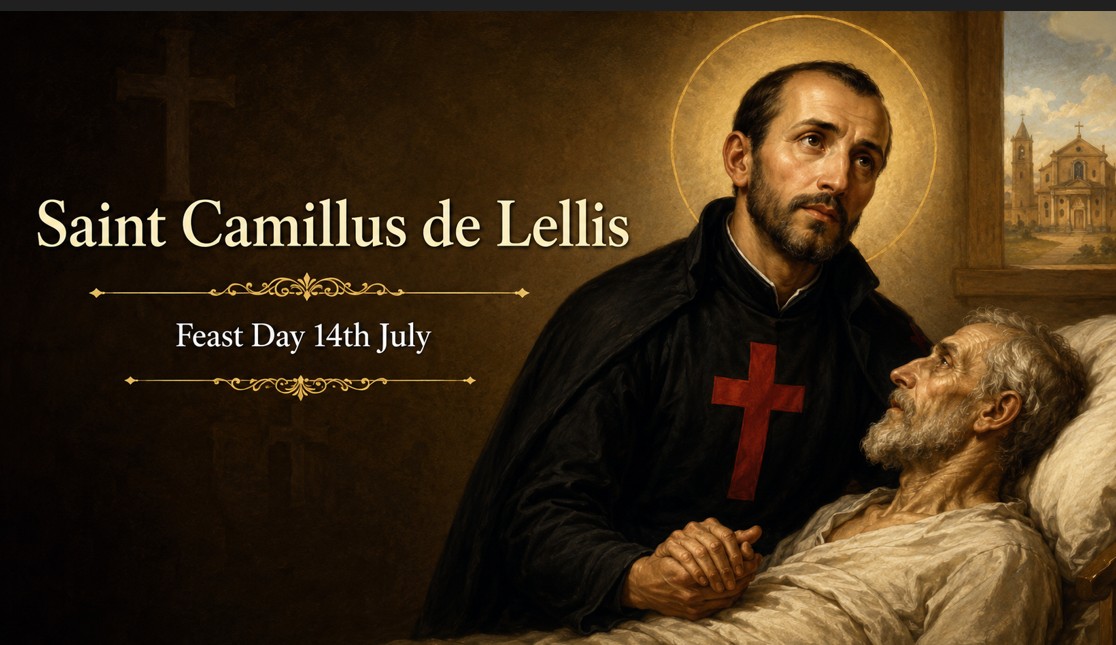
Italy, July 14, 2026: Why is Saint Camillus de Lellis honored as the patron saint of the sick, hospitals, nurses, and healthcare workers? Discover the extraordinary story of the towering soldier whose dramatic conversion led him from a life of gambling and hardship to founding a religious order dedicated to serving the sick with compassion, dignity, and Christ-like love.


Feast Day: 14 July
Born: 25 May 1550, Bucchianico, Kingdom of Naples (present-day Italy)
Died: 14 July 1614, Rome, Italy
Canonized: 1746 by Pope Benedict XIV


Patron of: The sick, hospitals, nurses, healthcare workers, physicians, and those suffering from illness
Known For: Founder of the Camillians (Ministers of the Sick), reforming hospital care, serving plague victims, and promoting compassionate healthcare rooted in Christian charity
Title: Founder
Few saints have transformed the care of the sick as profoundly as Saint Camillus de Lellis.
Long before modern hospitals emphasized compassionate patient care, Camillus taught that every sick person should be treated with the same love and reverence shown to Christ Himself.
His life was one of remarkable transformation. A reckless soldier and compulsive gambler became one of the Church's greatest servants of the suffering, dedicating every remaining year of his life to caring for the poor, the dying, and victims of disease.
More than four centuries after his death, his example continues to inspire healthcare professionals and caregivers around the world.
(CLICK HERE to follow Catholic Connect for regular News and Content)
Camillus was born on 25 May 1550 in Bucchianico, Italy.
His father was a military officer, and as a young man Camillus followed him into military service.
Standing over six feet tall, he was known for his strength and courage. Yet beneath his impressive appearance lay a restless heart.
He developed a serious gambling addiction that repeatedly left him penniless. Combined with an unhealed wound on his leg, his reckless lifestyle eventually reduced him to poverty.
After losing everything, Camillus found himself homeless and searching for meaning.
In 1575, while working with Capuchin friars, Camillus experienced a profound conversion.
He realized that God was calling him to abandon his former life and dedicate himself completely to Christ.
Determined never to return to his old habits, he embraced prayer, repentance, and a life of service.
Although his chronic leg wound prevented him from joining the Capuchins, God had prepared another mission for him—one that would forever change healthcare in the Church.
Camillus began working at the Hospital of San Giacomo in Rome, where he witnessed the harsh conditions endured by patients.
Many hospitals of the time were overcrowded, unsanitary, and lacking genuine compassion.
The sick were often neglected, especially the poor and those nearing death.
Deeply moved, Camillus believed that medical treatment alone was not enough.
Patients also deserved kindness, dignity, prayer, and loving attention.
He famously encouraged his companions to care for every patient "as a mother cares for her only sick child."
Recognizing the need for a dedicated community, Camillus founded the Order of the Ministers of the Sick, commonly known as the Camillians, in 1582.
The order received papal approval in 1591.
Its members took the traditional religious vows of poverty, chastity, and obedience, along with a unique fourth vow:
To serve the sick, even at the risk of their own lives.
The Camillians became easily recognizable by the large red cross sewn onto their black religious habit—a symbol that would later influence humanitarian medical service throughout the world.
Saint Camillus and his companions never fled during times of disease.
Instead, they courageously entered hospitals, plague-stricken towns, battlefields, and homes where others feared to go.
They cared for victims of epidemics, cleaned wounds, comforted the dying, and ensured that patients received both medical assistance and the sacraments.
Many Camillians sacrificed their own lives while serving contagious patients.
Their heroic witness demonstrated that Christian charity often requires great personal sacrifice.
Camillus believed that every patient possessed God-given dignity.
He introduced practical improvements that transformed hospital care, including:
His emphasis on compassionate, holistic care anticipated many principles embraced by modern healthcare.
Although widely admired, Camillus never considered himself important.
Despite enduring severe health problems—including the painful leg wound that never fully healed—he continued visiting hospitals and caring for patients whenever possible.
Even in old age, he encouraged his brothers to serve with joy, humility, and unwavering charity.
His greatest desire was simply to help others encounter Christ during moments of suffering.
Saint Camillus de Lellis died in Rome on 14 July 1614 at the age of sixty-four.
His reputation for holiness spread rapidly throughout Italy and beyond.
In 1746, Pope Benedict XIV canonized him, recognizing his extraordinary life of charity and service.
In 1886, Pope Leo XIII declared him the Patron Saint of the Sick and Hospitals.
Later, in 1930, Pope Pius XI named him, together with Saint John of God, the Patron of Nurses and Healthcare Workers.
Today, the Camillian Order serves in hospitals, nursing homes, hospices, disaster relief missions, and healthcare ministries across the world.
Faithful to Saint Camillus' vision, they continue bringing healing, hope, and compassionate care to those who suffer physically, emotionally, and spiritually.
His life remains a powerful reminder that healthcare is not merely a profession but also a ministry of mercy.
The life of Saint Camillus teaches timeless lessons:
His witness encourages believers to see Christ in every person who is sick, lonely, or in need.
More than four hundred years after his death, Saint Camillus continues to inspire healthcare professionals, caregivers, chaplains, and volunteers throughout the world.
He was a soldier who became a servant, a gambler who became a saint, and a man whose compassion revolutionized Christian healthcare.
From the hospitals of Renaissance Rome to modern medical centers across the globe, his life proclaims a timeless truth:
When care is offered with faith, compassion, and selfless love, every hospital room becomes a place where Christ's healing presence can be encountered.
To know about more saints please visit the spiritual section.
By Catholic Connect Reporter
Saint Camillus de Lellis, Saint Camillus feast day, Saint Camillus biography, patron saint of nurses, patron saint of hospitals, patron saint of the sick, Camillians, Ministers of the Sick, Catholic healthcare saints, Saint Camillus miracles, Christian charity, July saints, healthcare workers patron saint, Catholic saints, compassionate care
© 2026 CATHOLIC CONNECT POWERED BY ATCONLINE LLP