- 13 October, 2026

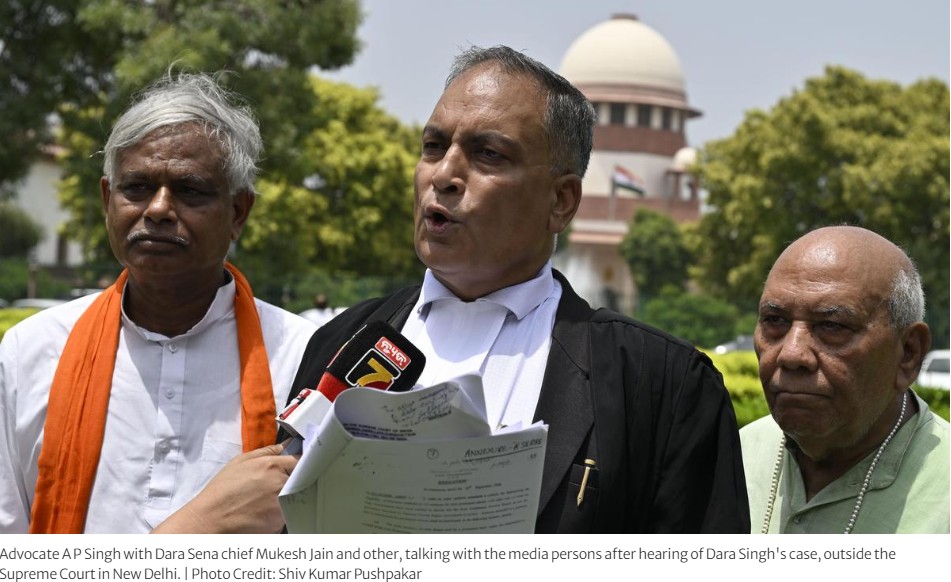
Bhubaneswar, July 15, 2026: Dara Singh, the principal convict in the 1999 murder of Australian Christian missionary Graham Staines and his two young sons, is set to be released from prison after serving more than 25 years, a decision that has reignited debate over one of India's most shocking incidents of anti-Christian violence.



The Odisha government approved Singh's premature release after the State Sentence Review Board recommended remission under the state's prison policy. Officials said the decision was taken in accordance with legal provisions governing the release of life convicts who have completed the required period of imprisonment and met eligibility criteria.
Singh, whose real name is Rabindra Kumar Pal, was convicted for leading a mob that set fire to a station wagon in Manoharpur village in present-day Odisha on the night of January 22, 1999. Graham Staines, who had devoted more than three decades to serving people affected by leprosy in Odisha, and his sons Philip, 10, and Timothy, 6, were trapped inside the vehicle and burnt alive. The killings drew worldwide condemnation and focused international attention on violence against Christians in India.
A trial court sentenced Singh to death in 2003, but the Orissa High Court commuted the sentence to life imprisonment in 2005. The Supreme Court upheld the life sentence in 2011, observing that while the crime was horrific, the evidence did not justify restoring the death penalty.
The release has prompted mixed reactions. Supporters of the remission have argued that Singh has completed the required period of incarceration under the law. However, Christian leaders, human rights advocates and sections of civil society have expressed concern that the decision could deepen the sense of injustice felt by religious minorities and the family of the victims.
The 1999 murders remain one of the most significant episodes of religious violence in modern India. Graham Staines had worked extensively among people with leprosy and tribal communities in Odisha since 1965. Following the tragedy, his widow, Gladys Staines, publicly forgave those responsible for the killings and continued her humanitarian work in India for several years, earning widespread admiration for her witness of Christian forgiveness and reconciliation.
The case continues to occupy an important place in discussions on religious freedom, communal harmony, and the protection of minority communities in India. Singh's release is expected to renew public debate over justice, reconciliation, and the state's responsibility to safeguard vulnerable communities while adhering to established legal provisions governing remission.
Courtesy The Hindu
Photo Credit: Shiv Kumar Pushpakar


© 2026 CATHOLIC CONNECT POWERED BY ATCONLINE LLP