- 27 April, 2026

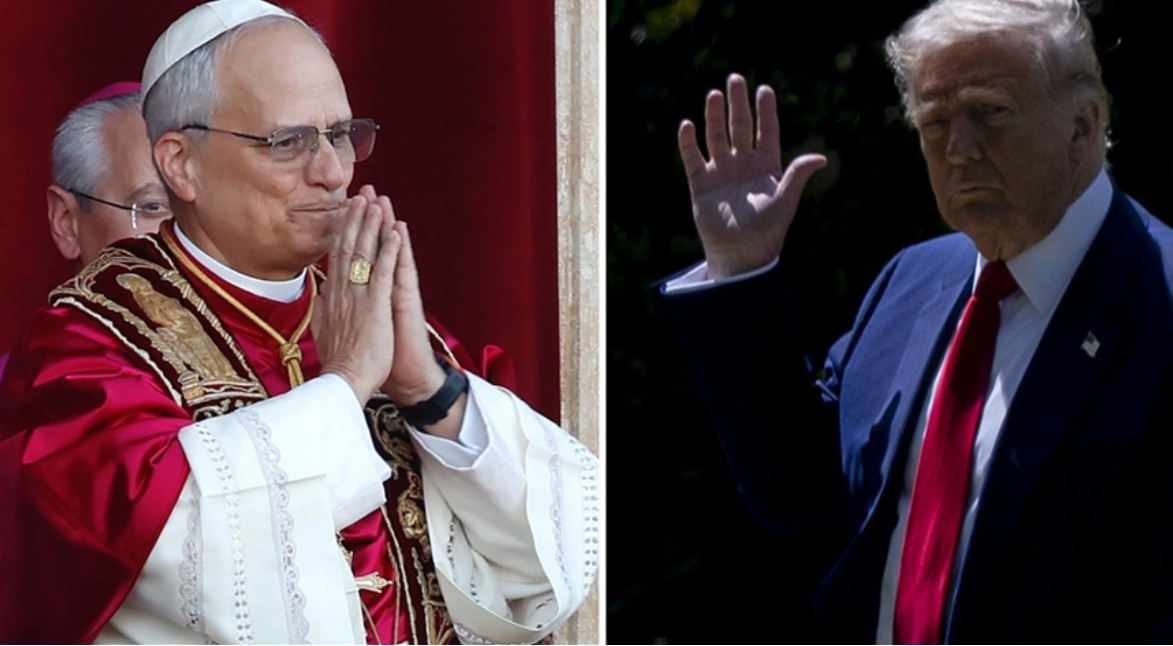
Vatican City, April 26, 2026: Fresh concerns over the relationship between global political power and religious authority have emerged following a report alleging that the United States has intensified intelligence activities targeting Pope Leo XIV and the Holy See. The claims come in the wake of sharp criticism directed at the Pope by former US President Donald Trump.

According to an investigative report by independent journalist Ken Klippenstein, American intelligence agencies have for years monitored Vatican affairs, but such surveillance has reportedly intensified after Trump publicly described Pope Leo XIV as “terrible on foreign policy” and “weak on crime.” Sources cited in the report suggest that these remarks were interpreted within intelligence circles as a signal to elevate the priority of gathering information related to the Vatican.
The report claims that agencies such as the Central Intelligence Agency and the National Security Agency have been involved in intercepting communications, including emails and phone data linked to Vatican operations. It further alleges that human intelligence sources have been cultivated within the administrative structures of the Holy See. Meanwhile, the Federal Bureau of Investigation is said to monitor legal matters involving Vatican-linked individuals, while the United States Department of State tracks developments in papal diplomacy.


Klippenstein’s findings point to what he describes as a “longstanding and quietly extensive” relationship between Washington and the Vatican—one that blends cooperation with intelligence-gathering. Historically, both entities have collaborated on issues such as cybersecurity, human trafficking, financial crimes, and diplomatic mediation. However, the report suggests that such cooperation may also provide cover for deeper surveillance activities.
The developments come amid heightened tensions between the Vatican and Trump. Earlier this month, the president criticized Pope Leo XIV’s positions on global conflicts, including the war involving Iran, and objected to the pontiff’s remarks on US foreign policy. In response to criticism and broader geopolitical developments, the Pope has repeatedly called for restraint, denouncing what he termed the “delusion of omnipotence” and urging an end to war and violence.
Pope Leo XIV has also warned against the misuse of power and the manipulation of information. In a previous address to intelligence officials, he stressed that surveillance activities must respect human dignity, freedom of conscience, and the rule of law. He cautioned against the use of confidential data to intimidate or discredit individuals, including religious leaders and civil society actors.
The report further highlights how the Pope’s communication style may be contributing to the growing friction. Unlike some of his predecessors, Pope Leo XIV is noted for his direct and fluent engagement in English, particularly on issues concerning the United States. Scholars suggest that this clarity leaves little room for reinterpretation, making his statements more impactful—and at times more controversial—in political discourse.
Experts also point to the broader geopolitical significance of the Vatican. As the spiritual center for over a billion Catholics worldwide, the Holy See carries considerable moral and diplomatic influence. Its positions on war, migration, and human rights often resonate globally, sometimes placing it at odds with national governments.
While US authorities have not officially confirmed the surveillance claims, the report has sparked debate about the ethical boundaries of intelligence operations, especially when they involve religious institutions. It also raises questions about the balance between national security interests and respect for spiritual leadership.
Historically, relations between the United States and the Vatican have included both cooperation and tension—from Cold War alliances to modern diplomatic engagement. However, the current situation appears to mark a new phase, where criticism from political leadership may be shaping intelligence priorities in unprecedented ways.
The unfolding developments underscore a complex reality: the intersection of faith, politics, and global power. As the situation evolves, it remains to be seen how both Washington and the Vatican will navigate this delicate relationship, and whether dialogue can prevail over distrust in a time of increasing geopolitical strain.
Courtesy
a) The Cradle

© 2026 CATHOLIC CONNECT POWERED BY ATCONLINE LLP