- 11 September, 2026


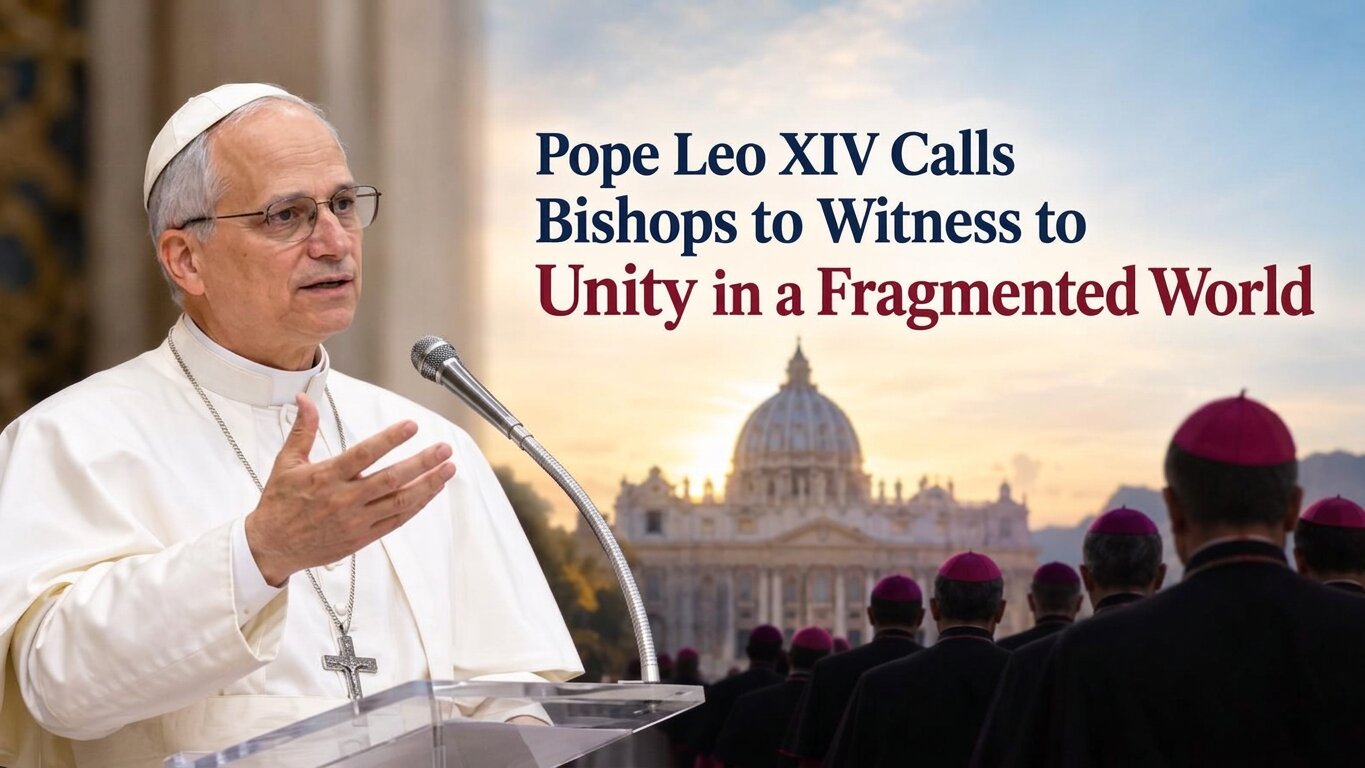
Vatican City, September 10, 2026: When a Church in crisis is thousands of miles from Rome, the instinctive solution is often for the pope to intervene directly. Pope Leo XIV has chosen a different approach.


A different way of handling Church crises
Through the motu proprio Mutua concordia, issued on 29 August 2026, Leo amended the Code of Canons of the Eastern Churches to give synods of bishops greater authority to address serious failures in the leadership of their own patriarchal and major archiepiscopal Churches.
The change is significant because it shifts the emphasis from Roman intervention to local responsibility. Rather than solving every crisis from Rome, the new legislation gives Eastern Catholic Churches a stronger mechanism to resolve their own internal disputes.

Churches that govern themselves
The Catholic Church includes 23 Eastern Catholic Churches in full communion with the Bishop of Rome. Six are headed by patriarchs: the Coptic, Syriac, Melkite Greek, Maronite, Chaldean and Armenian Catholic Churches. Four others — the Syro-Malabar, Syro-Malankara, Ukrainian Greek Catholic and Romanian Greek Catholic Churches — are headed by major archbishops.
These Churches are not simply parts of the Latin Church with different liturgical traditions. They possess their own synods, canonical traditions and systems of governance.
The principle of this autonomy is recognised in the Code of Canons of the Eastern Churches, promulgated in 1990. Yet there was a significant limitation: the Roman Pontiff alone had the authority to judge a patriarch.
That created a difficult contradiction. A Church could govern itself, but when relations between its patriarch and bishops reached breaking point, the ultimate authority remained in Rome.
The gap that Leo has addressed
The new legislation attempts to close that gap.
Under the amended provisions, a synod can begin proceedings to remove its patriarch when it considers that there is a grave cause. The patriarch is first asked to resign. If he refuses, the synod can proceed to consider his removal.
Importantly, the patriarch cannot simply prevent the process by refusing to convene the synod. If necessary, the bishop senior in episcopal ordination among those entitled to a deliberative vote can lawfully convene it.
The process also includes safeguards. The patriarch has the right to defend himself, while removal requires a secret ballot supported by at least two-thirds of the members entitled to a deliberative vote.
Only after the synod has reached its decision does the matter return to Rome. The Roman Pontiff must give his assent before the patriarchal see becomes vacant.
Why the papal assent matters
At first sight, retaining papal assent might appear to undermine the very autonomy the reform seeks to strengthen.
However, the legislation presents the pope's role differently. His assent is intended to protect the freedom of the synod and ensure that its decision genuinely reflects the will of the bishops rather than pressure from internal factions or outside authorities.
That distinction is central to Leo's approach. Rome retains a final safeguard, but the responsibility for recognising and addressing a crisis lies principally with the Church experiencing it.
A test for synodality
The reform is therefore about more than canon law. It provides a practical test of what synodality means when authority, disagreement and accountability collide.
Some Eastern clergy and canonists may still worry that Rome retains too much influence, particularly because the requirement of papal assent leaves the pope with the final formal role.
Yet the legislation clearly moves responsibility towards the Eastern Churches themselves. It recognises that communion with Rome does not require every serious internal problem to be solved in Rome.
For Leo XIV, this may prove to be one of the clearest expressions of his understanding of the Church: unity does not have to mean centralisation.
The instinctive response to a distant Church in crisis is to reach in and settle the problem. Pope Leo has instead chosen a more demanding path — giving Eastern Catholic Churches the authority and responsibility to confront their own crises, while Rome remains a guardian of communion rather than the manager of every dispute.
Courtesy : Pillar Catholic





© 2026 CATHOLIC CONNECT POWERED BY ATCONLINE LLP