- 10 September, 2026
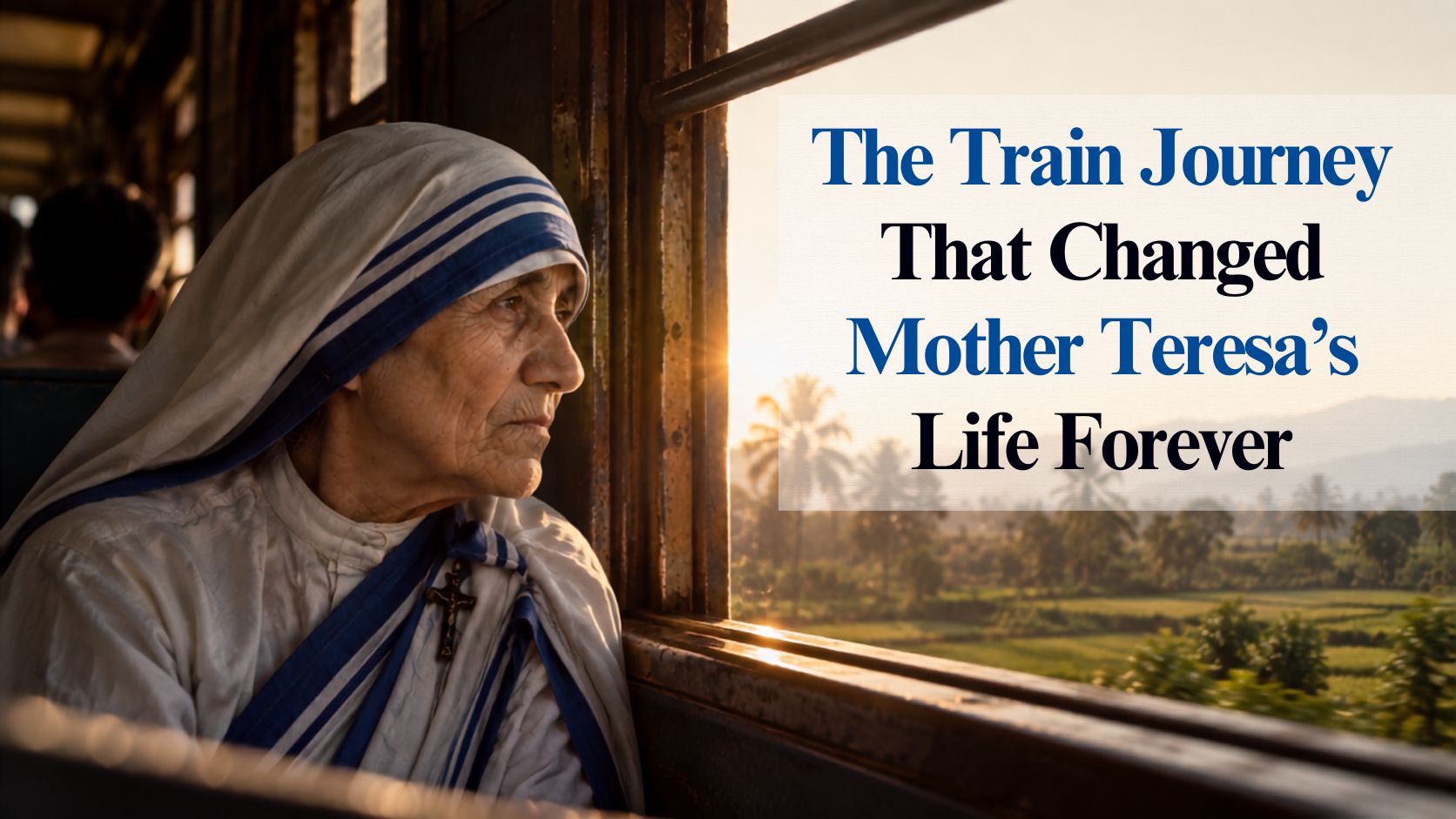
Sep 10, 2026: On September 10, 1946, while travelling by train from Calcutta to Darjeeling, Mother Teresa experienced what she later called her “call within a call.” She became deeply aware of Christ’s thirst for love and souls and understood that He was calling her to serve Him among the poorest of the poor.


That thirst would become the heart of her vocation: “I thirst.”
In the months that followed, through interior locutions and visions, she came to understand the call more clearly. Years later, she would place “I Thirst” beside the crucifix in the chapels of the Missionaries of Charity — a reminder that Christ’s thirst was to be answered by love and service.

What began as a journey to a retreat became a journey into a lifetime of love.
What was Jesus thirsting for?
Mother Teresa understood Christ’s words from the Cross as more than a reference to physical thirst. For her, “I thirst” expressed Christ’s thirst for love and for souls. Responding to that thirst became central to the vocation she would spend the rest of her life fulfilling.
That conviction changed the way she looked at those around her. The hungry. The dying. The abandoned. Those whom society had forgotten.
For Mother Teresa, they were not simply people in need of help. They were people in whom she believed she could encounter Christ.
At her beatification in 2003, Pope St. John Paul II highlighted this profound connection between Mother Teresa’s service and her faith, recalling her conviction that Christ could be encountered in the suffering and the poor.
Why “I Thirst” is beside the crucifix
There is a deeply symbolic detail in the spirituality of the Missionaries of Charity.
The words “I Thirst” are displayed beside the crucifix in their houses and chapels, serving as a constant reminder of the vocation to which the sisters have given their lives. Cardinal Pietro Parolin referred to this tradition during a Mass following Mother Teresa’s canonisation.
The message is simple but demanding.
The sisters look upon Christ crucified. “I thirst.” Then they go out to seek Him among the suffering.
A call that demanded an answer
The experience of September 10 did not mean Mother Teresa immediately abandoned her religious life. A period of discernment followed before she received permission to begin her new mission.
On August 17, 1948, she left the Loreto congregation and began her life among the poor. The Missionaries of Charity were formally established in 1950.
A train journey had become the beginning of a vocation.
“I thirst” was never meant to remain on a wall
Perhaps this is what makes Mother Teresa’s September 10 experience so challenging. “I thirst” was not simply a phrase she contemplated. She spent her life trying to answer it.
And the thirst she encountered was not always physical. She saw people thirsting for dignity, companionship, mercy, forgiveness and love.
That makes September 10 more than a date in Mother Teresa’s story.
It leaves each of us with a question: If Christ’s “I thirst” is still heard through the suffering person before us, how will we answer?
Click Here to explore books on Mother Teresa
By Catholic Connect Reporter


© 2026 CATHOLIC CONNECT POWERED BY ATCONLINE LLP