- 22 July, 2026


New Delhi, July 21, 2026: The Union Government's newly notified Foreign Contribution (Regulation) Amendment Rules, 2026 have triggered widespread debate over whether the latest compliance requirements strike the right balance between financial transparency and the functioning of charitable and religious organisations.


Although Parliament is yet to pass the proposed amendments to the Foreign Contribution (Regulation) Act (FCRA), the Ministry of Home Affairs notified the new Rules on 22 June 2026, prompting thousands of organisations receiving foreign contributions to begin complying with the revised framework.
The proposed amendments are expected to come before Parliament during the ongoing Monsoon Session after having earlier been referred to a Joint Parliamentary Committee (JPC) following objections from several political parties.
The new Rules introduce significantly stricter reporting and operational requirements for organisations receiving foreign funds.


Among the most debated provisions is Rule 14A, which requires organisations to spend at least ₹10 lakh in foreign contributions over two financial years. Failure to meet this threshold could result in cancellation or non-renewal of an organisation's FCRA registration.
Organisations are also required to disclose all their websites, social media accounts, publications, blogs and writings authored by office bearers. In addition, charities must specify the exact states and activities for which foreign funds will be used, with any subsequent changes requiring fresh government approval.
The Rules further prohibit the use of foreign contributions for "proselytisation", although the term has not been explicitly defined in the regulations.
The Union Government has defended the amendments as necessary measures to strengthen transparency, improve financial accountability and safeguard national security.
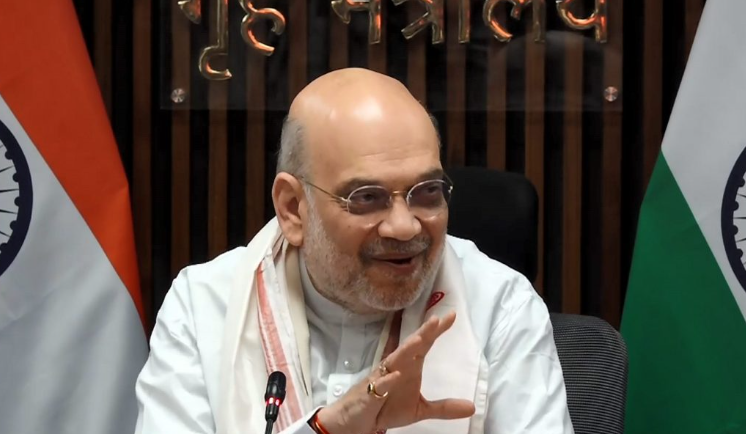
Home Minister Amit Shah recently assured the Catholic Bishops' Conference of India (CBCI) that the amendments are religion-neutral, do not specifically target Christian institutions and will not be applied retrospectively.
The government maintains that every sovereign nation has the authority to regulate foreign funding and that the Supreme Court has consistently held that receiving foreign contributions is a statutory privilege rather than a fundamental right.
Christian organisations are expected to be among the institutions most significantly impacted by the new framework.
Across India, churches, dioceses, schools, hospitals, orphanages and charitable trusts have historically relied on overseas support from missionary societies and international Church agencies to sustain educational, healthcare and humanitarian services, particularly in remote and underserved regions.
Many of these institutions have already begun implementing the revised disclosure requirements even before Parliament formally debates the proposed legislation.
Supporters of Christian institutions argue that these organisations have served Indian society for generations, providing education, healthcare and relief irrespective of religion or caste, and should not face disproportionate compliance burdens because of their historic funding patterns.
Several legal experts and civil society organisations believe the Rules may disproportionately affect smaller charities and grassroots organisations.
Unlike larger dioceses or national institutions with dedicated legal and compliance teams, small parish trusts, rural missions and tribal charities often operate with limited administrative resources.
Critics argue that imposing identical compliance standards on organisations regardless of their size or risk profile may place an excessive administrative burden on legitimate charitable work.
Another area of concern is what some describe as the "asset lock-in" effect. Organisations wishing to voluntarily exit the FCRA framework may face legal difficulties in retaining assets previously acquired through foreign contributions, potentially encouraging indefinite licence renewals.
Perhaps the most debated provision is the prohibition on using foreign contributions for "proselytisation."
While Indian law already prohibits religious conversion through force, fraud or material inducement in several states, the new Rules do not define what constitutes proselytisation.
Legal observers warn that the absence of a precise definition could lead to differing administrative interpretations.
For many Christian institutions, ordinary pastoral activities such as catechism classes, youth ministry, parish counselling or charitable outreach could potentially be interpreted differently by different authorities, creating uncertainty over compliance.
The discussion surrounding the amendments extends beyond financial regulation into broader constitutional questions.
Article 25 of the Constitution guarantees the freedom to profess, practise and propagate religion, while numerous religious communities express their faith through schools, hospitals, orphanages and social service institutions.
Critics argue that when financial regulation significantly affects these institutions, it inevitably raises questions about the practical exercise of religious freedom and the autonomy of civil society organisations.
Supporters of the amendments, however, maintain that financial oversight should not be viewed as interference with religious practice but as a legitimate exercise of governmental regulation over foreign funding.
As Parliament prepares to debate the proposed amendments, legislators are expected to examine whether the new Rules represent a proportionate response to concerns over transparency and national security.
Several observers have called for a more risk-based approach, where organisations with long records of lawful compliance face lighter regulatory burdens than those under credible investigation.
Others have urged Parliament to provide clearer legal definitions, particularly regarding "proselytisation", and to strengthen independent appellate mechanisms to ensure disputes are resolved through transparent legal processes rather than administrative discretion.
The debate over the FCRA amendments is therefore likely to extend beyond technical compliance requirements, touching upon broader questions of constitutional liberty, civil society, religious freedom and the role of charitable institutions in India's development.
Courtesy : The Wire
Photo Credit: PTI
© 2026 CATHOLIC CONNECT POWERED BY ATCONLINE LLP