- 24 October, 2026

Kerala, July 22, 2026:: The Kerala Catholic Bishops’ Council (KCBC) has said that its concerns over the proposed Foreign Contribution (Regulation) Amendment Bill, 2026 remain unresolved, alleging that assurances given by Bharatiya Janata Party (BJP) leaders before the Kerala Assembly elections were never followed up after the polls.



KCBC says no follow-up came after Kerala elections as Parliament prepares to debate the controversial FCRA Amendment Bill
The statement comes as the FCRA Amendment Bill is expected to be taken up during the ongoing Monsoon Session of Parliament, with Christian institutions across the country closely watching developments that could significantly affect churches, schools, hospitals and charitable organisations.
KCBC says BJP leaders did not follow up after elections
According to KCBC spokesperson Fr. Thomas Tharayil, BJP leaders in Kerala had indicated during the Assembly election campaign that they would intervene to address concerns raised by the Church regarding the proposed legislation.
However, Fr Tharayil said no BJP leader contacted the Church leadership once the elections concluded.
"After the Assembly election, no BJP leader in Kerala contacted the Church leadership on the issue," he said.
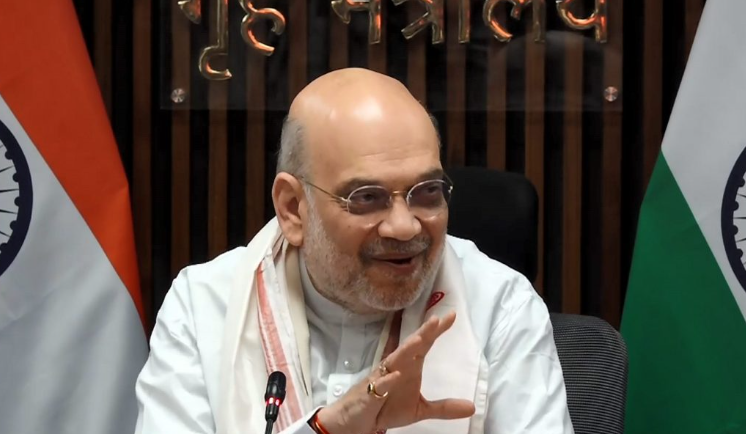
He referred to the recent meeting between representatives of the Catholic Bishops’ Conference of India (CBCI) and Union Home Minister Amit Shah, where the minister reportedly assured Church leaders that the proposed amendments would not have retrospective effect.
"We do not know how that assurance will work, and we will get the details only after the original content of the Bill is out," Fr Tharayil said.
Church questions need for stricter provisions
The KCBC maintained that existing legal mechanisms already provide adequate oversight of foreign contributions received by religious and charitable institutions.
According to Fr Tharayil, Church organisations do not receive foreign contributions through personal accounts, but through authorised banking channels monitored by the Reserve Bank of India.
"The reality is that the Church is not receiving foreign funds in any personal accounts. All funds are received through the RBI's special branch in New Delhi," he explained.
He added that organisations receiving foreign contributions are already required to submit detailed utilisation reports and annual income tax returns, enabling the government to verify how every contribution is spent.
"The government can easily verify the utilisation and details of the total money received through income tax return verification," he said.
Property clause raises serious concerns
One of the Church's strongest objections relates to provisions concerning assets created using foreign contributions.
According to the KCBC, the proposed Bill states that if an organisation stops receiving foreign contributions or fails to comply with reporting requirements, properties constructed using such funds could be transferred to the government.
Fr Tharayil argued that such a provision does not reflect how charitable institutions are actually funded.
He noted that schools, hospitals and similar institutions are typically built primarily through local resources, with only a small proportion coming from overseas donations.
"For the construction of hospitals or schools, around 80 per cent of the funding comes from local resources, while only the remaining 20 per cent is supported by foreign funds. Yet the Bill recommends taking over such properties. These provisions are raising serious concerns," he said.
CBCI had earlier sought withdrawal of the Bill
Earlier this month, a delegation of the Catholic Bishops’ Conference of India (CBCI) met Union Home Minister Amit Shah and submitted a memorandum requesting the withdrawal of both the proposed FCRA Amendment Bill, 2026 and the newly notified FCRA Rules.
The bishops urged the government to redraft both the Bill and the Rules, arguing that several proposed amendments could adversely affect Christian charitable institutions that have served poor and vulnerable communities for decades.
Following the meeting, Shah reportedly assured the delegation that the proposed amendments were not directed against the Christian community and would not operate retrospectively.
Political debate continues
The assurances, however, have not ended the political debate surrounding the proposed legislation.
Congress leader and Lok Sabha MP K.C. Venugopal criticised the government's position after the meeting, accusing the Home Minister of misleading Church leaders regarding the implications of the proposed amendments.
Meanwhile, Christian organisations continue to seek greater clarity as Parliament prepares to debate the legislation.
For many Church-run institutions involved in education, healthcare, social welfare and humanitarian work, the outcome of the parliamentary discussions could have significant implications for how they receive, utilise and manage foreign contributions in the years ahead.
Courtesy The Wire
Photo Credit : PTI/File



© 2026 CATHOLIC CONNECT POWERED BY ATCONLINE LLP