- 27 August, 2026

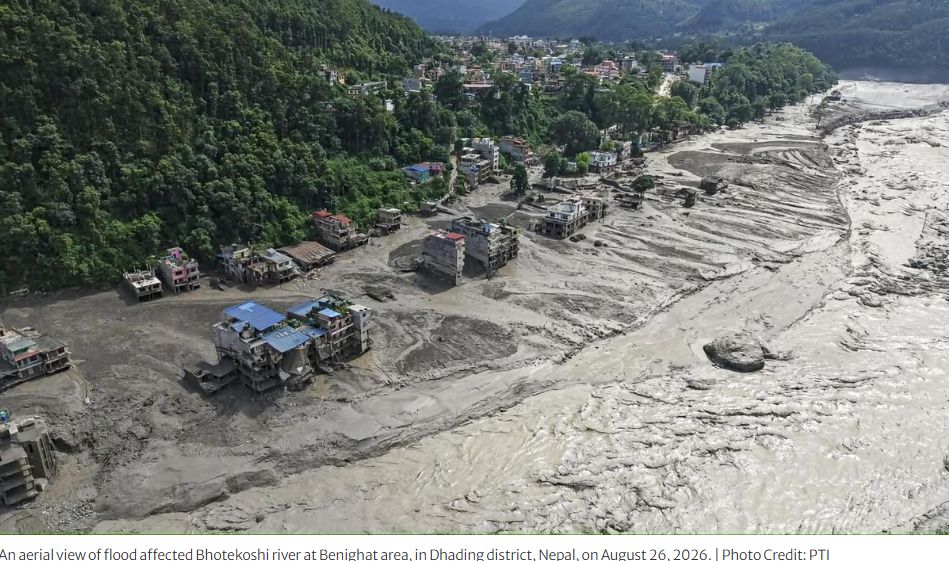
Kathmandu/New Delhi, August 27, 2026: At least 133 Indian nationals are among hundreds of people missing after devastating flash floods swept through Nepal’s Rasuwa district and adjoining areas along the Nepal-Tibet border, prompting an urgent search-and-rescue operation and a major humanitarian response from India.


The death toll in Nepal has risen to at least 157, according to the latest reports, while hundreds remain unaccounted for. The situation remains fluid, with rescue teams continuing to search areas cut off by mudslides, damaged roads and destroyed bridges.
Indians among those missing
A large number of those missing are foreign tourists and pilgrims travelling through Nepal towards Mount Kailash and Lake Manasarovar. The Nepal Tourism Board has reported Indian nationals among the largest identified groups of missing foreign travellers.


The disaster struck the Rasuwa region near the Nepal-Tibet border, inundating settlements and destroying roads, bridges, vehicles and critical infrastructure. The area is an important transit route for pilgrims travelling towards Tibet for the Kailash Manasarovar pilgrimage.
Initial reports indicated that more than 400 people were missing, while subsequent assessments have produced substantially higher figures as authorities continue to reconcile reports from different locations. The number of missing people is therefore expected to change as communications are restored and rescue teams reach isolated areas.
Kailash pilgrimage route severely affected
The floods have severely disrupted one of the principal routes used by pilgrims travelling towards Mount Kailash. Several pilgrims lost contact with their families after the disaster struck the mountainous border region.
Rescue operations have been complicated by the rugged terrain and the destruction of transport and communication links. Roads have been washed away, bridges damaged and several settlements isolated, making it difficult for emergency teams to reach those who may be stranded.
Reports indicate that foreign nationals from several countries, including the United States, Britain, Australia and Canada, are also among those missing.
India launches emergency assistance
India has moved swiftly to support Nepal’s relief and rescue efforts and to locate its citizens affected by the disaster.
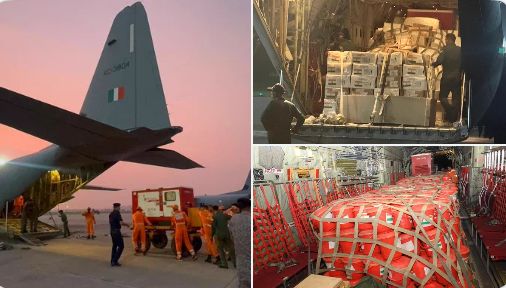
Prime Minister Narendra Modi spoke with Nepalese Prime Minister Balendra Shah and conveyed condolences over the loss of life while assuring Nepal of India’s readiness to provide humanitarian assistance. India subsequently dispatched about 10 tonnes of humanitarian assistance and disaster-relief material to Nepal aboard an Indian Air Force C-130J transport aircraft.
The consignment includes temporary shelters, blankets, hygiene kits, solar lamps and essential medicines. Additional aircraft, including C-17 and C-130 transport planes, are available if further relief supplies are required.
The Indian response comes as Nepal faces an increasingly complex rescue operation involving its security forces and emergency agencies.
Embassy coordinates efforts to trace Indians
The Indian Embassy in Kathmandu is coordinating with Nepalese authorities to locate and assist Indian nationals affected by the floods.
The immediate priority is to establish contact with those who have become stranded or separated from their groups, verify the whereabouts of those reported missing and facilitate rescue wherever access is possible.
The embassy has advised affected families to rely on official information and maintain contact with authorities rather than depending solely on unverified reports circulating on social media.
Emergency helplines issued
The Embassy of India in Kathmandu has issued emergency contact numbers for Indian nationals affected by the floods and families seeking information about missing relatives:
+977 985 131 6807
+977 970 910 7500
Both numbers are available for assistance and information concerning Indian nationals stranded, missing or otherwise affected by the disaster.
Families attempting to trace a missing person should be prepared to provide identifying details such as the person’s full name, age, passport information, telephone number, travel itinerary, tour operator and last known location.
Rescue operation faces major challenges
The scale of destruction has made the search operation particularly difficult. Mud, debris and damaged infrastructure have blocked access to several affected areas, while communications remain disrupted.
The disaster is believed to have been triggered by a glacial collapse or ice-rock avalanche in the Himalayan region, sending enormous volumes of water, rock and debris through valleys and downstream communities. Reuters reported that the flooding affected both Nepal and Tibet and caused extensive destruction along the border.
Authorities continue to search for survivors and recover bodies while assessing the full extent of the destruction.
Families wait for news
For families across India whose relatives remain unaccounted for, the continuing rescue operation has brought an agonising period of uncertainty.
Officials caution that missing-person figures remain provisional and may change as survivors are located and communication networks are restored. For many families, the immediate hope is that those who have lost contact are stranded in remote areas and will be found alive.
The disaster has highlighted once again the vulnerability of communities and travellers in the rapidly changing Himalayan environment. For rescue teams, the immediate priorities remain clear: locate the missing, evacuate those stranded, restore communication and provide urgent assistance to communities devastated by the floods.
Courtesy : The Hindu


© 2026 CATHOLIC CONNECT POWERED BY ATCONLINE LLP