- 18 September, 2026
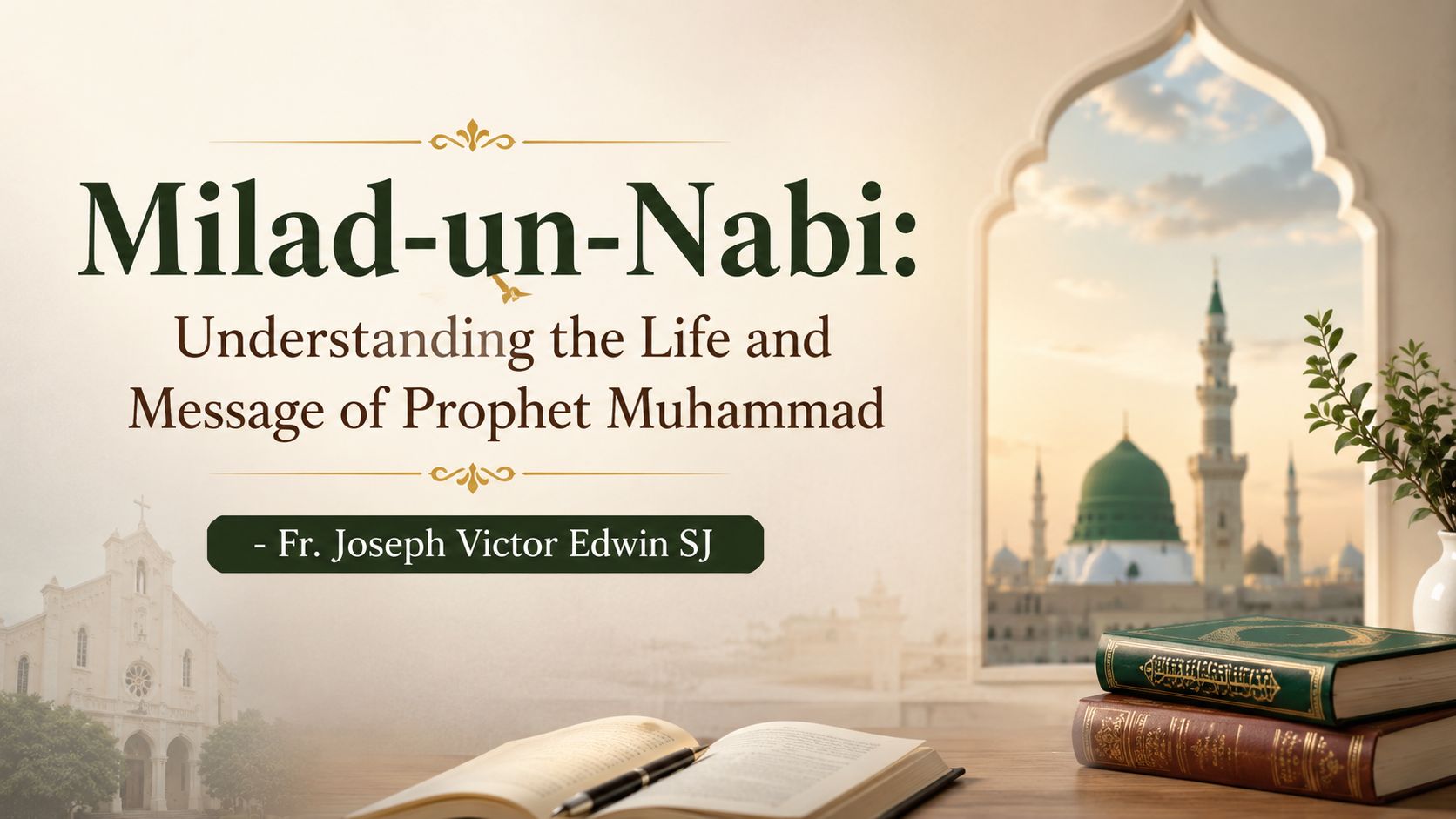
August 26, 2026: In Hyderabad, the celebration of Milad-un-Nabi is taking place today, a feast that celebrates the birthday of Prophet Muhammad. This significant event takes place on the 12th of Rabi Al Awwal, the third month of the Islamic calendar, which this year falls on August 26, 2026. Various activities can be seen around the town, including charitable activities and gatherings of Islamic scholars from different sects and schools of thought who come together to discuss the life and teachings of the Prophet.

While some Muslims may consider these celebrations un-Islamic, many others embrace the celebration with great enthusiasm. They view the observance as a heartfelt expression of love and gratitude towards Prophet Muhammad. Those who celebrate often emphasise that the focus is on honouring his life and character. Many scholars agree that when these festivities prioritise activities such as reciting poetry in homage to the Prophet, learning about Islamic history, and engaging in charitable acts, they become not just cultural expressions but also enriching spiritual experiences.
Many Christians may not be very familiar with Muhammad, the Prophet of Islam. Furthermore, their perceptions are often shaped by the perspectives of Christian writers who adopted a confrontational stance toward Islam and its prophet. These writers primarily aimed to guide Christians of their times in their arguments against Muslims. Today, however, we find ourselves in a time that calls for dialogue rather than polemics. This era encourages a more conciliatory approach, one that promotes conversations focused on learning and mutual enrichment.

This article aims to introduce Christian readers to Muhammad’s significance in Muslim religious and spiritual thought as the celebration of Milad-un-Nabi takes place. It invites them to learn about and respect a figure who lies at the heart of Islamic faith, alongside the Holy Qur’an, which represents the word of God for Muslims.
Muhammad, at the age of forty, according to Islamic tradition, withdrew to a lonely place to live there in solitude. He was drawn to give himself up to contemplation by a desire for the religious life. There Muhammad received this call to a prophetic vocation: iqra! – proclaim! (or read!) in the name of the Lord and Cherisher (Q. 96.1). A Muslim friend pointed out to me that the term iqra expresses an essential characteristic of Muhammad’s self-understanding and his task, as to “arise and deliver thy warning” (Q. 74.2). However, Muhammad considered himself a mortal like others: “Say: I am but a man like yourselves, (but) the inspiration has come to me, that your God is one God” (Q. 18.110). My friend continued that God authenticated the mission of Muhammad, which is the Qur’an itself: “And is it not enough for them that We have sent down to thee the Book which is rehearsed to them? Verily, in it is Mercy and a Reminder to those who believe” (Q. 29.51).
The core of his message consisted of a call to faith in one God, who is the creator and judge of all humanity. While the fellow citizens of his town rejected him, Muhammad remained unshaken, as the revelation affirmed: “And We certainly know that there are amongst you those that reject (it). But truly (Revelation) is a cause of sorrow for the Unbelievers. But verily it is Truth of assured certainty. So, glorify the name of thy Lord Most High” (Q. 69.49-52).
Our Muslim friends remind us that their prophet saw himself and his message as being in continuity with the Biblical tradition, as the holy Scriptures of the Jews (Torah) and Christians (Injil) are considered in Islam as sent down by God upon Moses (Torah) and Jesus (Gospels), so Jews and Christians are called “People of the Book”.
For Muslims, Muhammad ranks second after the Qur’an, and millions of Muslims commemorate the birthday of Muhammad. For many pious Muslims, Muhammad, the messenger, and the Qur’an, the message, are surrounded by light, guiding humanity from darkness into the light of God. It is believed that his birth was surrounded by apparitions of light, just as the night in which the Qur’an was revealed. For most Muslims, their relationship to Muhammad is so close that he is not dead but alive, appearing to them in their dreams and guiding them in a way that a non-Muslim can hardly imagine. Accordingly, he is greatly venerated.
The teaching of “Muhammad’s light” took root in Islamic theology, drawing on the Qur’anic verse that calls Muhammad “a lamp spreading light” (Q. 33:46). The concept of Muhammad’s primeval light, the first that God created, appears as early as the end of the 8th century and again in the 9th, an expression that is not Qur’anic and has been handed down, saying: “If there had not been you, I would not have created the worlds!” Thus, Muhammad increasingly becomes the one towards whom Muslim faith is oriented.
In the Middle Ages, Islamic mysticism was significantly shaped by Ibn al-Arabi (d. 1240), a Sufi mystic, poet, and philosopher from al-Andalus. He regarded Muhammad as the “perfect human being” (al-insan al-Kamil), believing that in Muhammad lies the essence of all created possibilities. For mystics, the ultimate goal was to connect with this ideal figure. This perspective gave rise to the belief that God has manifested Himself through the creation of Muhammad’s light.
Mystical writings emerging after the 13th century detail a structured hierarchy of the levels through which divine reality reveals itself. This journey starts from the level of unity, represented by a dot, to deeper unity symbolised by the letter Alif (the first letter of the Urdu alphabet), a vertical line that makes a circle, and finally to the diversity that we perceive through our senses. In this predominant tradition, the mystics’ task is to ascend through the various stages associated with the individual Qur’anic prophets. If successful, their ultimate achievement is to unite with the haqiqa muhammadiyya, or the Muhammad-reality, representing the archetype of Muhammad.
In everyday life, countless Muslims try to imitate their beloved prophet, Muhammad. In mystical poetry and literature, countless mystics over the centuries have taken the mystical path and believed that they would finally find peace through union with the haqiqa muhammadiyya, the primaeval Muhammad principle. A festival like this offers a unique opportunity for Christians to learn about the rich traditions and expressions of Muslim devotion to the Prophet Muhammad.
By Fr. Joseph Victor Edwin SJ

© 2026 CATHOLIC CONNECT POWERED BY ATCONLINE LLP