- 21 April, 2026

Manipur, April 21, 2026: A tragic incident that occurred earlier this month continues to cast a long shadow over the state, as public anger and unrest show little sign of subsiding. The suspected rocket strike on a residential home in Bishnupur district, which claimed the lives of a 5-year-old boy and his 6-month-old sister, has become a focal point for widespread grief, outrage, and renewed calls for accountability. Their mother, who sustained injuries in the attack, is currently recovering, according to local reports.

The killings, which took place on April 7 in Tronglaobi village, have had a profound emotional impact across communities. The deaths of the two young children have been widely condemned, with many residents describing the incident as a heartbreaking reminder of the human cost of ongoing unrest. Candlelight vigils, mourning gatherings, and protest marches have since been organised across multiple districts.
This latest wave of protests and violence has its roots in deeper, long-standing tensions. While the April 7 attack acted as an immediate trigger, it also reignited the ethnic conflict between the Meitei community and the Kuki-Zo tribal groups that has persisted since 2023. The fragile peace in the region has been repeatedly tested over the past three years, and the recent tragedy has once again brought these divisions to the forefront, intensifying mistrust and fear among communities.


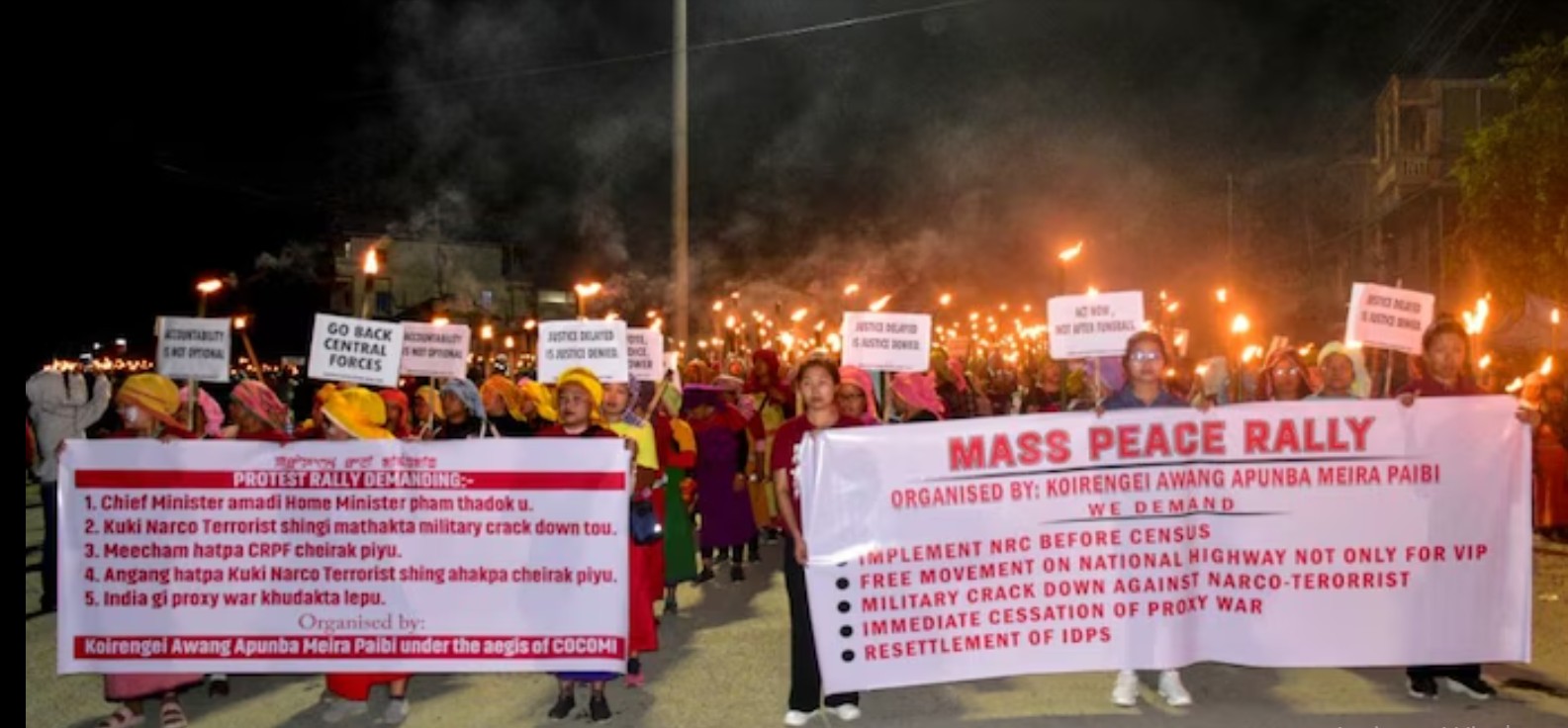
Nearly two weeks after the attack, protests remain active and, in some areas, increasingly volatile. Demonstrations that intensified between April 18 and April 20 in Imphal West district saw significant clashes between protestors and security forces. What initially began as peaceful torch rallies and solidarity marches gradually escalated into confrontations, reflecting the depth of public anger and frustration.
According to official accounts, some groups of demonstrators resorted to stone-pelting and the use of petrol bombs, targeting both security personnel and infrastructure. Vehicles belonging to the Central Reserve Police Force (CRPF) were vandalised during these clashes, and at least three personnel from the 232 Battalion sustained serious injuries. The situation prompted authorities to respond with crowd-control measures, including the use of tear gas shells and reinforced deployments across key locations.
Law enforcement agencies have since stepped up efforts to restore order. As of April 21, at least 21 individuals have been arrested for their alleged involvement in the violence. Police officials have indicated that further arrests are likely as investigations continue. Authorities also confirmed action against an accused of circulating provocative content on social media, which officials believe may have contributed to inflaming tensions and encouraging unrest.
The protests have not been confined to a single district. Demonstrations have been reported across multiple areas, including Imphal East district and Kakching district, where large groups of residents have participated in rallies, sit-ins, and night marches. In several localities, community members have gathered to hold candlelight vigils in memory of the children, blending mourning with protest.
Observers note that the sustained nature of the demonstrations highlights broader concerns beyond the immediate tragedy. For many residents, the incident has come to symbolise ongoing security challenges and a perceived lack of sufficient protection for civilians in vulnerable areas. This has led to increasing demands for accountability, not only for those directly responsible for the attack but also for systemic measures to ensure long-term peace.
Authorities, meanwhile, have reiterated their commitment to addressing the situation. Security has been tightened in sensitive areas, with additional personnel deployed to prevent further escalation. Officials have emphasised that maintaining public order remains a top priority, while also assuring that investigations into the April 7 attack are being pursued with urgency.
Government representatives have also appealed to the public to remain calm and avoid actions that could further destabilise the situation. Community leaders have echoed similar sentiments, urging protestors to pursue peaceful means of expression while continuing to press for justice.
Despite these appeals, tensions remain high. The combination of grief, anger, and uncertainty has created a fragile atmosphere, where even minor incidents risk triggering further unrest. Analysts suggest that without visible progress in the investigation and tangible steps toward reconciliation, the situation could remain volatile in the near term.
At the same time, there have been calls from various quarters for dialogue and engagement between stakeholders. Civil society groups have emphasised the importance of addressing underlying issues that contribute to recurring tensions in the region. They argue that while immediate law enforcement responses are necessary, long-term solutions will require sustained political and social efforts.
The tragedy has also drawn attention to the human cost of ongoing instability. The loss of two young lives has become a powerful symbol of the urgent need to prioritise civilian safety and prevent further escalation. For many families across the state, the incident serves as a stark reminder of the risks posed by continued unrest.
As of April 21, the situation in Manipur remains tense but under close watch by authorities. Security forces continue to maintain a strong presence in key areas, while investigations into both the initial attack and subsequent violence are ongoing. Officials have reiterated that those found responsible—whether for the deadly strike or for inciting unrest—will face strict legal action.
In the days ahead, the focus is likely to remain on balancing law enforcement with efforts to rebuild trust and restore a sense of normalcy. Whether through justice, dialogue, or policy measures, the path forward will be critical in determining how the state moves beyond this latest crisis.
For now, the memory of the two children continues to resonate deeply, shaping both the public response and the urgency of calls for peace.
By Catholic Connect Reporter
© 2026 CATHOLIC CONNECT POWERED BY ATCONLINE LLP