- 02 April, 2026


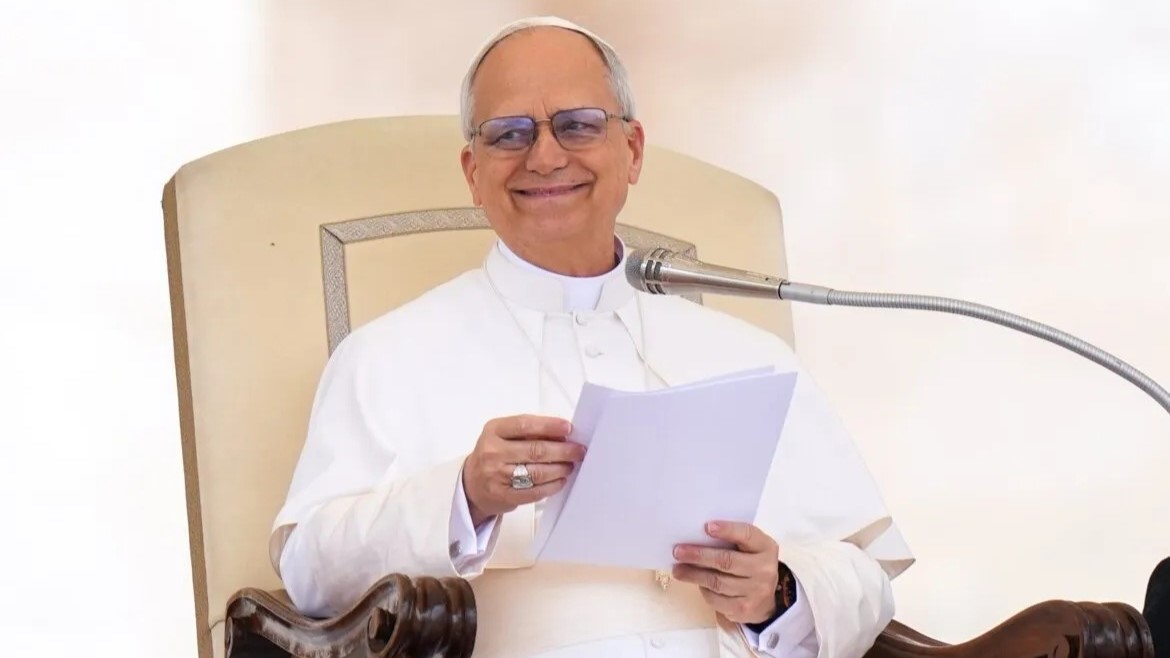
Bangalore, December 24, 2025 — Christmas proclaims a central Christian truth: unconditional love has become human. God does not remain distant from human suffering but enters fully into it. This mystery of divine closeness finds a clear reflection in Dilexi Te (“I Have Loved You”), the first Apostolic Exhortation of Pope Leo, which echoes the heart of the Christmas message through its emphasis on love, poverty, mercy and justice.

The Exhortation mirrors the Christmas mystery in three interconnected ways: the revelation of God’s heart reaching out to the poor and forgotten, the path of Jesus as the Incarnate Lord who became poor for humanity’s sake, and the mission of the Church as a living witness of mercy and justice. As Pope Leo writes, “God’s heart has a special place for the poor, for the entire history of our redemption is marked by the presence of the poor” (n. 17).
From its opening lines, Dilexi Te recalls that the Christian story begins with God’s descent into human reality, the same descent celebrated at Bethlehem. “God turned to his creatures and thus took care of their poverty” (n. 16). The manger symbolises a God who draws near. To say “I have loved you” is to say “I have come close”. The poor are not problems to be solved but persons to be embraced.


The Pope highlights the radical poverty revealed in the Incarnation. “By his Incarnation, he emptied himself, taking the form of a slave, being born in human likeness (…) His was a radical poverty” (n. 18). Christ’s birth is not only a miracle of divinity assuming humanity but a profound expression of humility. God enters history as a helpless child, choosing poverty as the path of redemption and calling His followers to simplicity.
Mercy, the Exhortation insists, lies at the heart of the Church’s identity. “There is an inseparable bond between our faith and the poor” (n. 36). God’s kingdom begins where love is lived as justice and compassion. Pope Leo calls the Church to make “a decisive and radical choice in favour of the weakest” (n. 16), reflecting the humility of the Incarnation in daily life.
The Christmas story also speaks to displacement and exclusion. Mary and Joseph experienced rejection, and the Child they carried became a refugee. Drawing a parallel with today’s migrants, the Pope writes: “Each person in difficulty should be able to hear individually, ‘I have loved you’” (n. 4), recalling Jesus’ words: “Just as you did it to one of the least of these… you did it to me” (Mt 25:40; cited in n. 5).
Christian love, the Pope stresses, must lead to justice. “Christian love breaks down every barrier” and calls the Church to love without limits (n. 120). The Child of Bethlehem continues to suffer in the hungry, the imprisoned and the forgotten (n. 110). To honour Him truly is to seek justice in His name.
Dilexi Te concludes with a vision of a Church shaped by love in action, where every poor person hears the words, “I have loved you” (n. 121). This, Pope Leo affirms, is the true meaning of Christmas.
Fr. Vivek Lionel Basu
Commission for Theology & Doctrine
Archdiocese of Bangalore
Download Catholic Connect App for Daily News Updates:
Android: Click here to download
Continue Reading on Catholic Connect App
Get access to exclusive news articles & more.



© 2026 CATHOLIC CONNECT POWERED BY ATCONLINE LLP