- 04 June, 2026

Arunachal Pradesh, June 4, 2026: A law passed nearly five decades ago has once again become the center of public debate in Arunachal Pradesh.


A Dormant Law Returns to the Spotlight
The Arunachal Pradesh Freedom of Religion Act (APFRA), enacted in 1978 but never implemented due to the absence of operational rules, has resurfaced following a 2024 Gauhati High Court directive asking the state government to frame and notify the necessary regulations.
The development has generated significant concern among Christian communities in the northeastern state. The Arunachal Christian Forum (ACF), the apex body representing Christians in Arunachal Pradesh, has strongly opposed the move and has urged the state government to halt the rule-framing process. The issue has reopened discussions about religious freedom, constitutional rights, and the delicate balance between preserving indigenous traditions and protecting individual freedom of belief.


What Is the Arunachal Pradesh Freedom of Religion Act?
The APFRA was enacted in 1978 with the stated objective of preventing religious conversions carried out through force, fraud, or inducement. Similar legislation exists in several Indian states, often referred to as anti-conversion or freedom of religion laws.
However, unlike comparable laws elsewhere, the Arunachal Pradesh legislation remained inactive for decades because successive governments never framed the rules required for its implementation. As a result, the law existed on paper but was never enforced.
That situation changed in September 2024 when the Gauhati High Court directed the state government to complete the rule-making process, effectively reviving a law that many believed had been consigned to history.
Why Are Christians Opposing the Move?
Christians constitute a significant portion of Arunachal Pradesh's population and have expressed fears that the implementation of the APFRA could adversely affect their constitutional rights and religious practices.
The Arunachal Christian Forum has argued that the law is discriminatory and may create an atmosphere of suspicion around legitimate religious activities. According to the organization, the proposed implementation could affect the freedom to profess, practice, and propagate religion as guaranteed under Article 25 of the Indian Constitution.
The Forum has also criticized what it describes as the "undue haste" shown by the committee tasked with framing the rules. It has called for broader consultations involving religious leaders, civil society groups, tribal organizations, and legal experts before any final decision is taken.
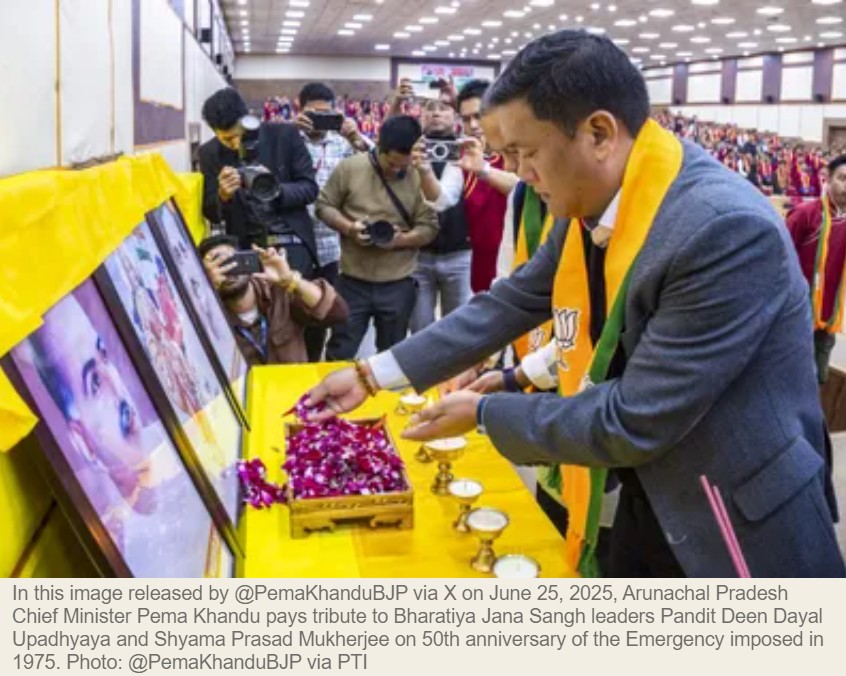
To emphasize its concerns, the ACF has submitted a memorandum to Chief Minister Pema Khandu and issued a 15-day deadline for the government to reconsider the process, warning of peaceful democratic protests if its demands are not addressed.
The Government's Perspective
Supporters of the legislation argue that the law is intended to protect vulnerable communities from coercive or fraudulent conversions rather than restrict genuine religious freedom.
Many proponents believe that Arunachal Pradesh's unique tribal heritage and indigenous faith traditions require legal safeguards. They contend that the law seeks to ensure that any change of religion occurs voluntarily and without undue influence.
The state government has so far maintained that it is complying with a judicial directive rather than introducing a new law. Officials have indicated that the exercise currently underway focuses on framing rules for an already existing Act.
Nevertheless, the government's challenge lies in addressing concerns from all sections of society while maintaining social harmony.
The Larger Question of Religious Freedom
The controversy surrounding the APFRA reflects a broader national debate about anti-conversion laws and their impact on religious liberty.
Supporters of such laws view them as necessary protections against exploitation and forced conversions. Critics argue that these laws can be misused to target minority communities and discourage legitimate religious activities.
In Arunachal Pradesh, where diverse tribal, indigenous, Christian, Hindu, and Buddhist communities have coexisted for generations, the debate carries particular sensitivity. Many community leaders fear that any perception of discrimination could strain relationships that have long been characterized by peaceful coexistence.
For this reason, several observers have called for dialogue rather than confrontation. They argue that meaningful consultation can help address concerns while ensuring that constitutional protections remain intact.
The Importance of Social Harmony
Arunachal Pradesh has often been cited as an example of religious coexistence despite its ethnic and cultural diversity. Maintaining that harmony is now viewed as one of the most important responsibilities facing both community leaders and policymakers.
Religious freedom and cultural preservation need not be competing goals. Many experts believe that policies can be crafted in a manner that protects indigenous traditions while also safeguarding the fundamental rights of all citizens.
The current debate presents an opportunity for constructive engagement among different communities rather than deepening divisions.
Choosing Dialogue Over Division
The renewed focus on the Arunachal Pradesh Freedom of Religion Act has raised legitimate questions about religious liberty, constitutional rights, and cultural identity. While opinions differ sharply on the law's future, there is broad agreement on one point: the state's long-standing social harmony must be preserved.
As discussions continue, all stakeholders—including the government, religious organizations, tribal bodies, and civil society groups—have an opportunity to engage in sincere dialogue. Decisions affecting faith and freedom should be guided by consultation, transparency, and respect for constitutional values.
The path forward may not be easy, but it offers a chance to strengthen mutual trust and understanding. By choosing dialogue over division, Arunachal Pradesh can continue to serve as a model of peaceful coexistence where diverse communities live, worship, and thrive together with dignity and respect.
Courtesy : The Wire
Photo Courtesy : PemaKhanduBJP via X
© 2026 CATHOLIC CONNECT POWERED BY ATCONLINE LLP