- 04 June, 2026

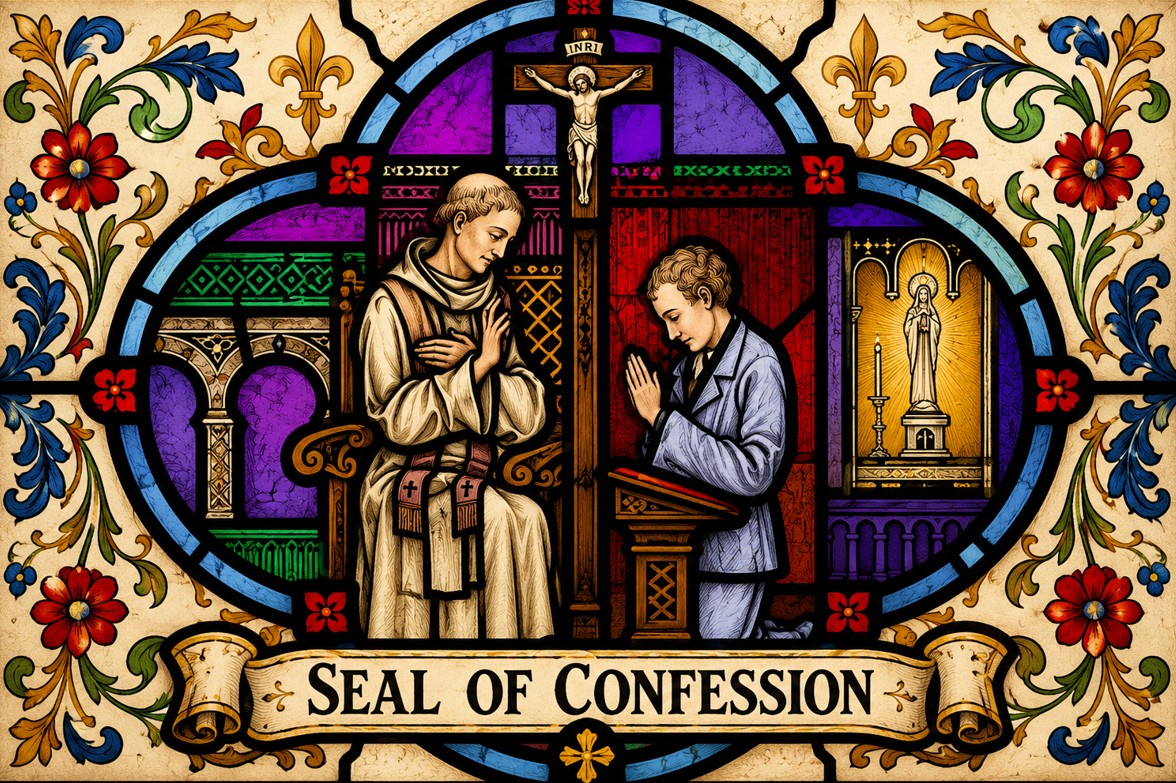
France, June 4, 2026: A fresh debate in France has reignited one of the most sensitive questions facing the Catholic Church in the modern world: Can a priest ever reveal what is heard in confession?


The controversy emerged during discussions surrounding the so-called “Bétharram” bill, legislation designed to strengthen protections for children and prevent abuse in schools and educational institutions. Some lawmakers proposed provisions that would have required priests to report knowledge of sexual abuse against minors even if that information was obtained during sacramental confession. The proposal triggered immediate concern among French bishops, who warned that such a measure would strike at the heart of Catholic religious freedom and the sacrament of reconciliation. Although the most controversial provision was ultimately removed from the bill before its passage in the National Assembly, the debate has exposed a growing tension between state authority and religious liberty.
For Catholics, the seal of confession is absolute. A priest who hears a confession is forbidden under Church law from revealing anything he has learned through that sacrament. The obligation is so serious that violating the seal carries the Church's most severe penalties.
The seal exists not to protect criminals but to protect the sacred encounter between God and the penitent. Catholics believe that in confession the priest acts in the person of Christ, and therefore the conversation belongs to God, not to the priest.


For centuries, priests have chosen imprisonment, exile, and even death rather than reveal what was confessed to them.
The French government's motivation is rooted primarily in child protection rather than opposition to Catholic doctrine.
The proposed changes emerged after investigations into abuse allegations linked to the Notre-Dame de Bétharram school scandal. Lawmakers argued that every possible avenue should be explored to prevent abuse and ensure that crimes against children are reported to authorities. Supporters of the proposal contend that no form of confidentiality should override the protection of minors.
Critics, however, argue that the proposal misunderstands how confession works. French bishops note that direct confessions of abuse are rare and that priests already encourage victims and offenders to approach civil authorities outside the sacramental setting. They maintain that abolishing the seal would neither prevent crimes nor generate meaningful evidence while severely damaging religious freedom.
The current debate recalls several historical and literary examples of clergy who faced immense pressure to reveal confidential confessions.
One of the most famous cases is that of Fr. Henry Garnet S.J. He learned details connected to the Gunpowder Plot through confession. Although he opposed the conspiracy and attempted to prevent it, he refused to disclose what he had heard sacramentally. He was eventually executed by the English authorities in 1606.
For Catholics, Garnet remains a powerful example of fidelity to conscience and sacramental duty even in the face of death.
Another famous figure is St. John of Nepomuk. Tradition holds that he was tortured and killed after refusing to reveal the confession of the Queen of Bohemia to King Wenceslaus IV. Whether every detail of the story is historically certain, he became one of the Church's enduring symbols of priestly secrecy and integrity.
Modern literature has also explored this dilemma. In the novel The Confession, a dying criminal reveals devastating truths while relying on religious confidentiality. The story illustrates the moral tension between justice, truth, and sacred trust that lies at the center of contemporary debates.
Many Catholics in France worry that the confession controversy cannot be separated from a broader climate of secular hostility.
In recent years, churches across France have faced vandalism, arson attacks, desecrations, thefts, and acts of anti-Christian violence. These incidents occur within a wider European context where religious practice continues to decline and tensions often arise between secular institutions and traditional religious communities.
However, it would be an oversimplification to conclude that the French government is engaged in a direct campaign against the Catholic Church. The immediate context of the proposed legislation is the country's determination to address abuse scandals and strengthen child protection measures. Nevertheless, many Catholics argue that the willingness to challenge the seal of confession reveals a lack of understanding of religious liberty and the unique nature of the sacrament.
The French debate ultimately raises profound questions that extend far beyond one country. How can societies protect vulnerable children while also safeguarding fundamental freedoms of conscience and worship? Can governments and religious institutions work together without compromising their deepest principles?
For Catholics, the answer lies not in confrontation but in cooperation. The Church has repeatedly affirmed the need to protect children, support victims, and ensure accountability. At the same time, it insists that the seal of confession is not negotiable because it belongs to the very essence of the sacrament.
The fact that the most controversial provision was removed from the final bill suggests that dialogue remains possible.
As France continues this conversation, Catholics around the world can pray for wisdom among lawmakers, courage among Church leaders, healing for victims of abuse, and mutual respect between faith communities and civil authorities. The future of this debate should not be a struggle between justice and faith, but a search for ways to uphold both.
Courtesy EWTN News





© 2026 CATHOLIC CONNECT POWERED BY ATCONLINE LLP