- 11 June, 2026
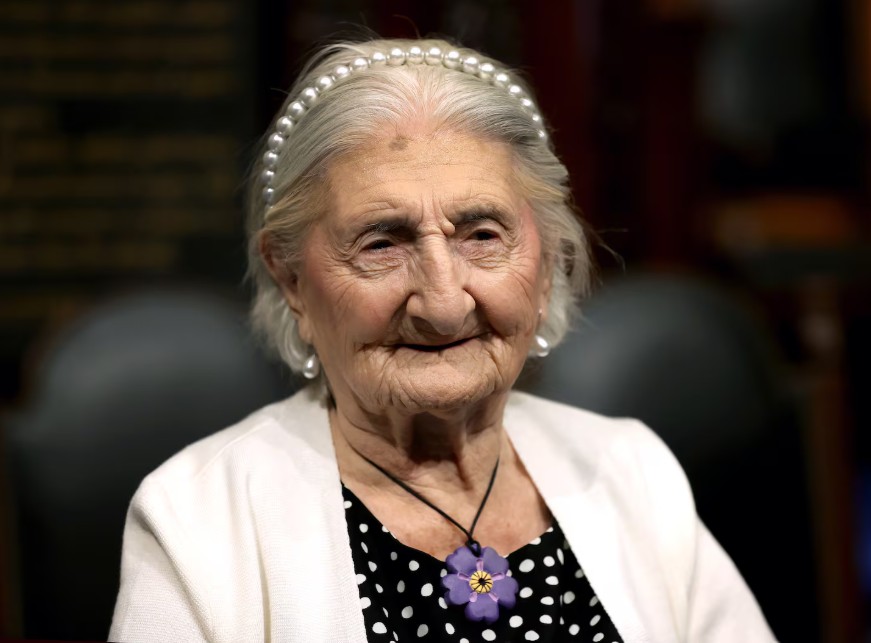
Jamaica Plain, Massachusetts, April 29, 2026: At 111 years old, Mary Vartanian is more than a remarkable centenarian—she is a living bridge between history and the present. Residing at the Armenian Nursing and Rehabilitation Center in Jamaica Plain, she is known for her warmth and gentle spirit, often greeting visitors with blown kisses. Yet behind that joy lies a life shaped by one of the darkest chapters of the 20th century: the Armenian Genocide.
Born in Aintab in 1914, Mary was just a child when the genocide unfolded. Between 1915 and 1923, approximately 1.5 million Armenians perished through massacres, forced marches, and starvation. Mary survived—a fact that today carries immense historical and moral weight. Her life stands as testimony not only to personal endurance but also to the suffering of an entire people.
After the turmoil of her early years, Mary built a new life. She married Hovhannes Vartanian, a violinist and composer, and lived in Aleppo and Beirut before eventually settling in Watertown in 1967. In the United States, she embraced a quiet yet meaningful life—working in a factory, raising her family, and remaining deeply involved in her church community.


Mary often credited her longevity to a life grounded in faith, routine, and service. Daily prayer, helping others, and finding joy in simple living became her guiding principles. Those who know her describe not just a survivor, but a woman who chose hope over bitterness—a powerful witness to the resilience of the human spirit.
In April 2024, at age 109, Mary was honored at the Massachusetts State House during a commemoration of the Armenian Genocide. Lawmakers and attendees gave her a standing ovation, recognizing both her personal story and her role in preserving the memory of a tragedy that must never be forgotten. Her presence transformed history from something distant into something deeply human and immediate.
Now, in 2026, Mary represents something increasingly rare: a direct, living connection to the past. As debates over the recognition of the Armenian Genocide continue—despite acknowledgment by countries like the United States—survivors like her stand as undeniable witnesses. Their lives challenge denial and remind the world that history is not merely written in books, but carried in the lives of those who endured it.
What does it mean that someone like Mary is still with us today? It means that memory is still alive. It means that the call to remember is not abstract, but personal. Her life invites reflection on resilience, faith, and the responsibility of future generations to preserve truth.
For younger generations, Mary’s story is both a gift and a responsibility. It urges us to listen, to learn, and to carry forward the stories of those who suffered. In her quiet way—through her smile, her faith, and her enduring presence—Mary Vartanian continues to speak, reminding the world that even in the face of unimaginable darkness, life, dignity, and hope can endure.
By Catholic Connect Reporter
© 2026 CATHOLIC CONNECT POWERED BY ATCONLINE LLP