- 06 October, 2026
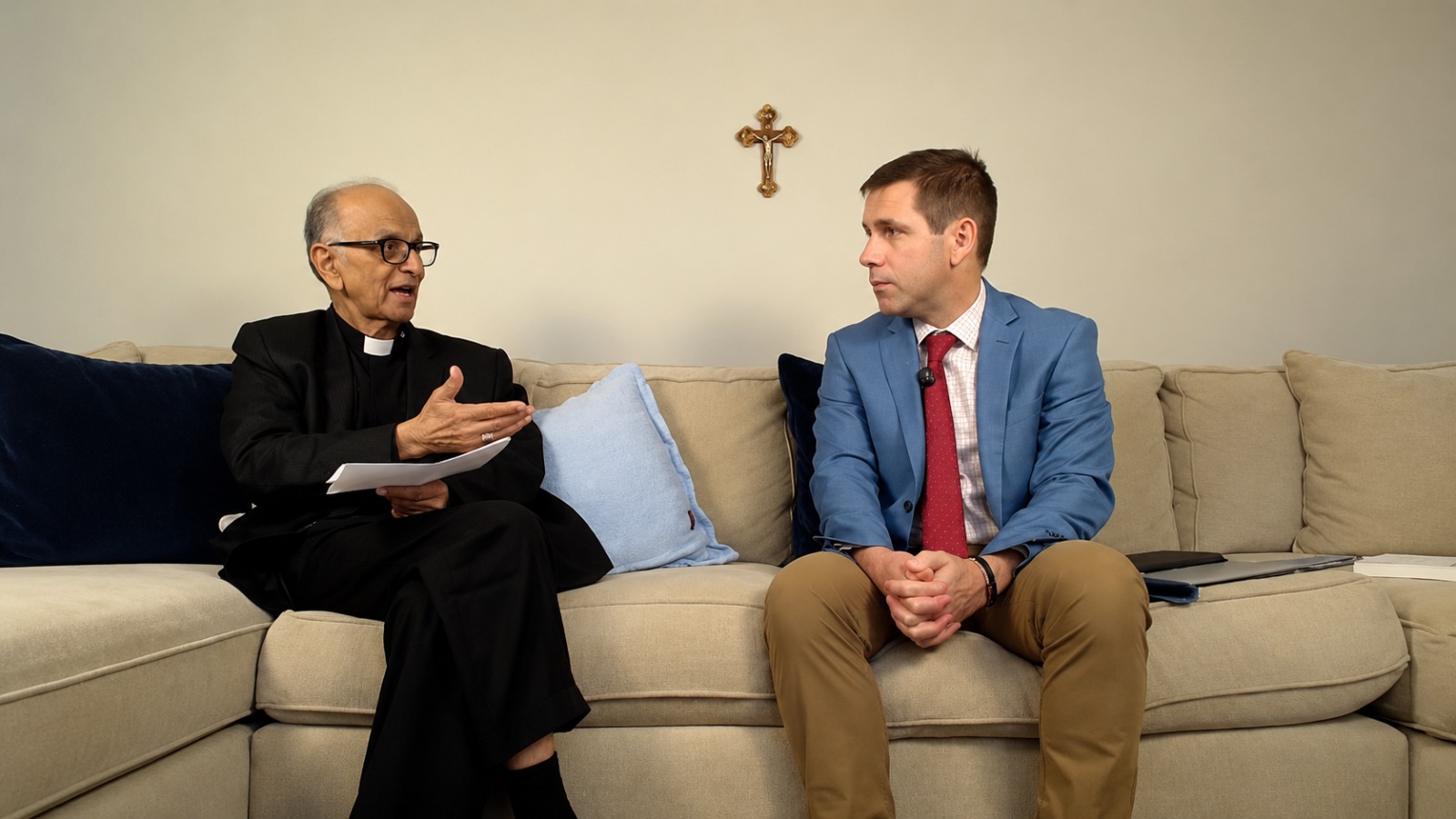
NEW DELHI, October 6, 2026: Peacemaking begins by understanding emotions, respecting grievances and refusing to humiliate the other side, Archbishop Thomas Menamparampil, said, drawing on decades of experience working with communities affected by ethnic conflict.


In a special interview with Catholic365, the Archbishop said his involvement in peacemaking was not planned. His early ministry was focused on education as a Salesian and later on evangelisation as a bishop, travelling to villages and remote areas.
His approach changed when his people became victims of a serious ethnic conflict in which hundreds were killed.
“I said, our people are suffering. I must do something even if I’m not an expert in peacemaking,” he recalled.
The experience convinced him that emotions are central to conflict resolution.
“We must know how to handle emotions,” he said, observing that leaders and communities can be driven by anger, fear and grievances.
“When the emotion is high, no use negotiation, no use talking about dialogue, no use even preaching,” he said.
The first task of a peacemaker, he explained, is therefore to lower the emotional temperature by showing sympathy and listening attentively and respectfully to people's grievances.
“When a leader and his team feel understood by a pro-peacemaking group, their anger comes down. When they feel respected, their grievances understood, their anger comes down,” he said.
Exaggeration fuels conflict
The Archbishop linked his approach to his book Exaggeration Invites Exaggeration, arguing that exaggerated claims by individuals, communities and nations often provoke similar responses from the other side.
“When they exaggerate and come to the point of threatening the other, the other side surely will exaggerate,” he said.
The same principle, he added, applies to ideological and theological disputes. Fanaticism and exaggerated positions can generate fanaticism in response.
“So we need to avoid exaggeration,” he said.
He urged ordinary citizens to contribute to public thinking through writing, personal relationships and conversations with people who influence decisions.
Rather than imposing solutions, people should present different possibilities and encourage others to examine their consequences.
“I can provoke thought, stimulate thinking and encourage sharing of ideas, but I will not dictate what is the answer,” he said.
He called this “collective thinking”, in which people remain open to perspectives and difficulties they may not have considered themselves.
Church must speak in today's language
Catholic universities, intellectuals and intellectually prepared clergy have a special responsibility to stimulate critical thinking and encourage self-correction, Archbishop Menamparampil said.
“Their role is to provoke thought — not provoke people but stimulate thought — and lead to self-correction,” he said.
Church teaching, including the teachings of the Pope and the Second Vatican Council, must also be communicated in “today's vocabulary” and in language that is meaningful within contemporary social contexts.
He recalled how presenting the message of Jesus in relation to the economy, parliament and the media had helped people understand its relevance to their everyday lives.
Mother Teresa's example
The Archbishop also recalled the influence of St Mother Teresa, whom he described as “amazingly human” in her dealings with people of different faiths.
“That is a strength of the peacemaker as well. Be human first of all, not a preacher, not an invader into their own personal beliefs,” he said.
Mother Teresa often communicated through her life, relationships and love rather than direct preaching, he said.
“She was preaching with her life and interaction, her love,” he recalled.
He said Mother Teresa also took an interest in his book Christ in the Villages, particularly his ministry among people in rural and remote areas. He sent her 400 copies, which she distributed in different parts of the world.
‘Never humiliate another’
The Archbishop strongly cautioned against humiliating individuals, communities or nations.
“Never humiliate an individual, a leader, a community, a country or a civilisation,” he said.
Dismissal of another community's history, achievements or contribution, he warned, can leave deep wounds.
Missionaries can help heal such wounds by acknowledging past mistakes, making amends and recognising the contribution of other cultures and communities.
For Archbishop Menamparampil, the goal should be more than simply ending conflicts. He spoke of building a “communion of civilisation” based on mutual dependence and recognition.
“Human beings — the moment I recognise I depend on you, I will not quarrel with you,” he said.
Even an enemy, he added, can become a friend when people recognise what they can learn from and receive from one another.
“He can become my friend,” he said.
“Our Christian message is precisely this communion of civilisation. We belong together,” he added.
Peace requires persistence
The Archbishop's approach is reflected in another of his books, Attempt the Impossible. Tasks such as evangelisation and peacemaking may appear impossible when approached in the wrong way, he said.
“Impossible if you approach in the wrong way. But if you approach in the right way, it is possible,” he said.
He cited St Thomas the Apostle, St John Bosco and Mother Teresa as examples of people who undertook seemingly impossible tasks through faith and perseverance.
For him, prayer provides the foundation for such persistence.
“When I am helpless, then the Lord helped me,” he said.
Peace efforts may fail repeatedly, he acknowledged, but failure should lead to a change of strategy rather than abandonment of the goal.
“Since you love peace, you don’t give up the work,” he said.
Prayer, he added, should be understood not merely as the repetition of words but as an ongoing relationship of faith and trust in God.
‘Whisper a good idea’
Archbishop Menamparampil stressed that ordinary people can influence society even without holding positions of authority.
“We can always whisper a good idea to anybody — even to the highest authority,” he said.
He described this as “whispering the Gospel to the soul of Asia” — communicating without coercion and helping people arrive at deeper awareness through personal relationships.
“When you become intimate to people, you can share something that is profound — some of your profound convictions,” he said.
He returned to emotion as a key element in peacemaking, saying it should not be ignored but guided towards healing and constructive action.
“I would not ignore emotion but intelligently guided emotion,” he said.
For Archbishop Menamparampil, the work of peace ultimately demands listening, respect, friendship, self-criticism and perseverance.
“We need to remain consistent. We need to remain committed. And people must see commitment in you,” he said.
Click here to watch the full interview.
By Catholic Connect Reporter


© 2026 CATHOLIC CONNECT POWERED BY ATCONLINE LLP