- 30 August, 2026
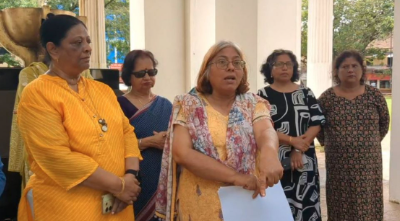
Panaji, August 30, 2026: A broad coalition of women’s organisations, activists, academics, professionals and former election candidates has urged the Goa government to take immediate steps to ensure 33 per cent reservation for women in the State Legislative Assembly.


The Coalition for Women’s Reservation with Inclusion and Federalism has called on the government to adopt a resolution during the upcoming Assembly session, scheduled from August 31 to September 2, urging the Centre to introduce a Constitutional Amendment that would enable the implementation of women’s reservation without waiting for a census, delimitation or expansion of legislative seats.
The coalition has argued that reservation can be implemented within Goa’s existing 40-member Assembly, allowing women to enter electoral politics without further delay.


Speaking at a press conference at Azad Maidan in Panaji, activist Auda Viegas drew attention to the obstacles women continue to face in electoral politics. Having contested municipal, Assembly and parliamentary elections, she said women often find it difficult to enter politics without reserved constituencies and adequate financial support.
Election funding, she said, remains an important factor for candidates seeking to compete effectively. Women candidates also frequently face personal attacks and character assassination during election campaigns, with criticism often extending beyond their political work and performance.
The coalition has therefore called for financial assistance and stronger institutional support for women candidates, particularly those belonging to vulnerable and marginalised communities.
The demand for reservation, the coalition said, must also ensure representation for women from diverse social, economic and cultural backgrounds.
Angela D’Souza raised concerns about women from marginalised Other Backward Classes and communities dependent on traditional fishing livelihoods. She pointed to the challenges faced by fishing communities because of changes to rivers, development activities near ports and the growing influence of large business interests.
The coalition has sought a 33 per cent sub-reservation within the OBC quota for OBC fisherwomen, including women from Kharvi and boat-owning fishing communities. It has also called for adequate representation for single women, women from Hindu and Muslim communities, women with disabilities, and transgender and queer persons.
Dr Radhika Desai said the presence of women in institutions where policies and public decisions are made was essential if their concerns were to receive meaningful attention.
She also expressed concern over the possible implications of future delimitation for Goa, a small state with limited parliamentary representation. The coalition maintained that decisions concerning the allocation of reserved constituencies should not be determined solely from New Delhi.
Instead, it has proposed a state-level mechanism involving representatives of the government and opposition, election authorities and women’s organisations, especially groups representing marginalised communities.
Advocate Caroline Colaco said the coalition had met almost all members of the Goa Legislative Assembly and circulated a draft resolution seeking the Constitutional Amendment required to de-link women’s reservation from the census, delimitation and expansion of legislative seats.
While procedural challenges remain, including the absence of a scheduled Private Members’ Day during the brief Assembly session, the coalition expressed hope that an alternative legislative mechanism could be found to move the proposal forward.
Advocate Albertina Almeida said legislators across political parties had broadly agreed on the need for greater representation of women. The coalition, however, insisted that Goa should not have to wait for its Assembly to expand from 40 to 60 seats before implementing the reservation.
The campaign has underlined a wider demand for inclusive democracy, arguing that political representation must reflect the diversity of society and include women whose voices have historically remained on the margins of electoral politics.
For the coalition, the central message remains urgent: women have waited long enough, and meaningful representation in Goa’s political institutions should begin without further delay.
Courtesy : The Goan

© 2026 CATHOLIC CONNECT POWERED BY ATCONLINE LLP