- 31 October, 2026
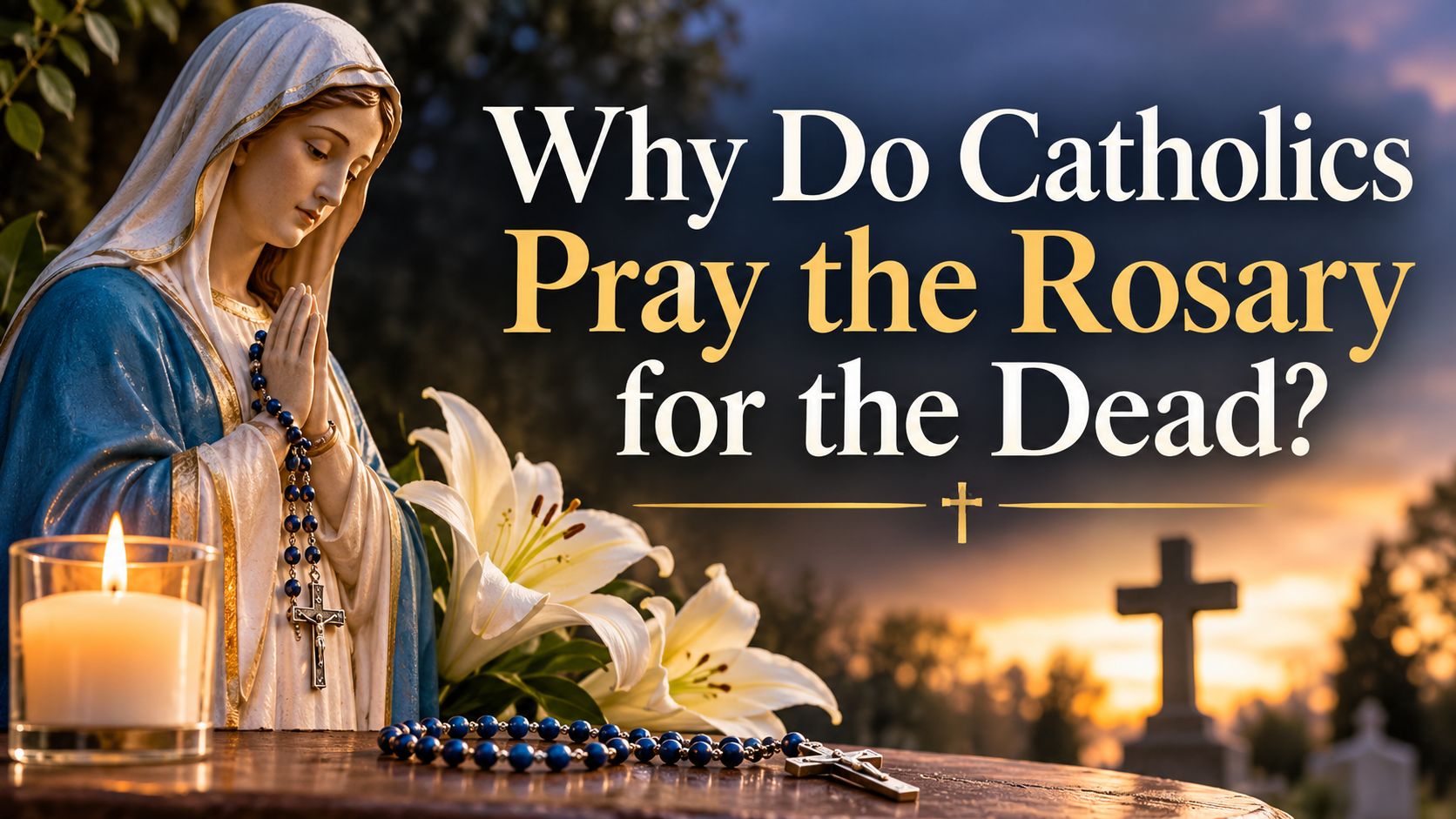
Oct 31, 2026: If someone you love has died, can your prayers still make a difference to them? For many Christians, death marks the moment when a person's earthly journey ends and their eternal destiny is determined. Yet Catholics continue to pray for the dead, sometimes for years after their passing. Every November, particularly on All Souls' Day, families gather in churches and cemeteries to remember the departed and pray the Rosary for them.



To someone unfamiliar with the practice, this raises an obvious question: if the dead are in God's hands, why pray for them at all? And why the Rosary, a devotion centred on Mary, when it is Jesus Christ who saves?
The answers lie in how the Catholic Church understands death, prayer and the hope of eternal life.
Catholic prayer for the dead is rooted in the belief that death does not sever the communion shared by those who belong to Christ. The Church teaches that those who die in God's grace and friendship, but still require purification, undergo purgatory before entering the fullness of heaven (Catechism of the Catholic Church, CCC 1030–1031).
Purgatory is not a second chance at salvation or an alternative to heaven. It is the final purification of those who are assured of eternal salvation but are not yet completely purified.
This understanding informs the Catholic practice of praying for the deceased. Rather than attempting to change God's judgement, Catholics entrust the departed to his mercy and ask that their prayers may assist those undergoing purification.
One biblical passage central to this belief is 2 Maccabees 12:44–46, where prayers and sacrifices are offered for deceased soldiers in the hope that they may be delivered from their sins. Catholics recognise this as a scriptural foundation for prayer for the dead, although Christians differ on whether this book belongs to the biblical canon.
The practice also reflects a broader Christian conviction: prayer is an expression of love and trust in God, not merely a response to needs that can be seen or measured.
The Rosary might seem an unusual choice for praying for the dead. Its repeated Hail Marys can be unfamiliar to Christians from traditions that do not practise Marian devotion. But at its heart, the Rosary is a meditation on the life of Jesus Christ.
Through its mysteries, believers reflect on Christ's birth, ministry, suffering, death and Resurrection. This makes it particularly meaningful in the face of death.
The Sorrowful Mysteries recall Christ's agony, scourging, crowning with thorns, carrying of the cross and crucifixion. They bring the reality of suffering into prayer, reminding Christians that even Jesus experienced anguish and death.
The Glorious Mysteries shift the focus towards the Resurrection and the promise of eternal life. The movement from Christ's suffering to his victory over death speaks directly to the grief experienced by those who have lost someone.
The Rosary does not guarantee a particular outcome for the deceased, nor does it replace the Mass, which holds a central place in Catholic prayer for the dead (CCC 1371). Rather, it gives families a way to remember their loved ones while placing their hope in Christ's victory over death.
For many Protestants, the question of Marian devotion is likely to be the most challenging aspect of the practice. Why ask Mary to pray when Christians can approach God directly through Jesus Christ?
Catholic teaching does not present Mary as a rival to Christ or as someone who independently grants salvation. Rather, Catholics believe that she intercedes for the faithful, just as Christians ask one another to pray for their needs. Her intercession depends entirely on Christ, the one mediator between God and humanity (1 Timothy 2:5).
The Hail Mary itself asks her to pray for the faithful "now and at the hour of our death". In the Rosary, this request is repeated while the mind reflects on the life of Christ. For Catholics, Marian devotion is therefore inseparable from their relationship with Jesus.
Christians may disagree about whether the saints in heaven intercede for those on earth, but understanding this distinction helps explain why Catholics do not consider asking Mary to pray for them a replacement for prayer to God.
The Catholic belief in the communion of saints holds that those who belong to Christ remain united in him, whether they are on earth, undergoing purification or already in heaven (CCC 954–958). This does not mean death ceases to hurt. It means that the Church's relationship with the departed is expressed through more than memory alone.
The Rosary is one expression of that relationship. It allows families to gather, remember and pray, especially when grief makes ordinary conversation difficult. It also invites reflection on how the living respond to the certainty of death: through reconciliation, compassion and a deeper appreciation of the time they have with one another.
Ultimately, Catholics pray the Rosary for the dead not because they believe its repetition can control eternity, but because they believe prayer remains meaningful within the communion of Christ.
For Catholics and Protestants alike, the Resurrection stands at the centre of Christian hope. The traditions differ on whether and how the living should pray for the departed, but the question behind the Rosary is one both can recognise: when someone dies, how do we entrust them to the mercy of God?
For Catholics, the answer includes prayer, the Eucharist and the Rosary, all grounded in the conviction that Christ's victory over death is greater than the grave.
By Catholic Connect Reporter
© 2026 CATHOLIC CONNECT POWERED BY ATCONLINE LLP