- 02 October, 2026

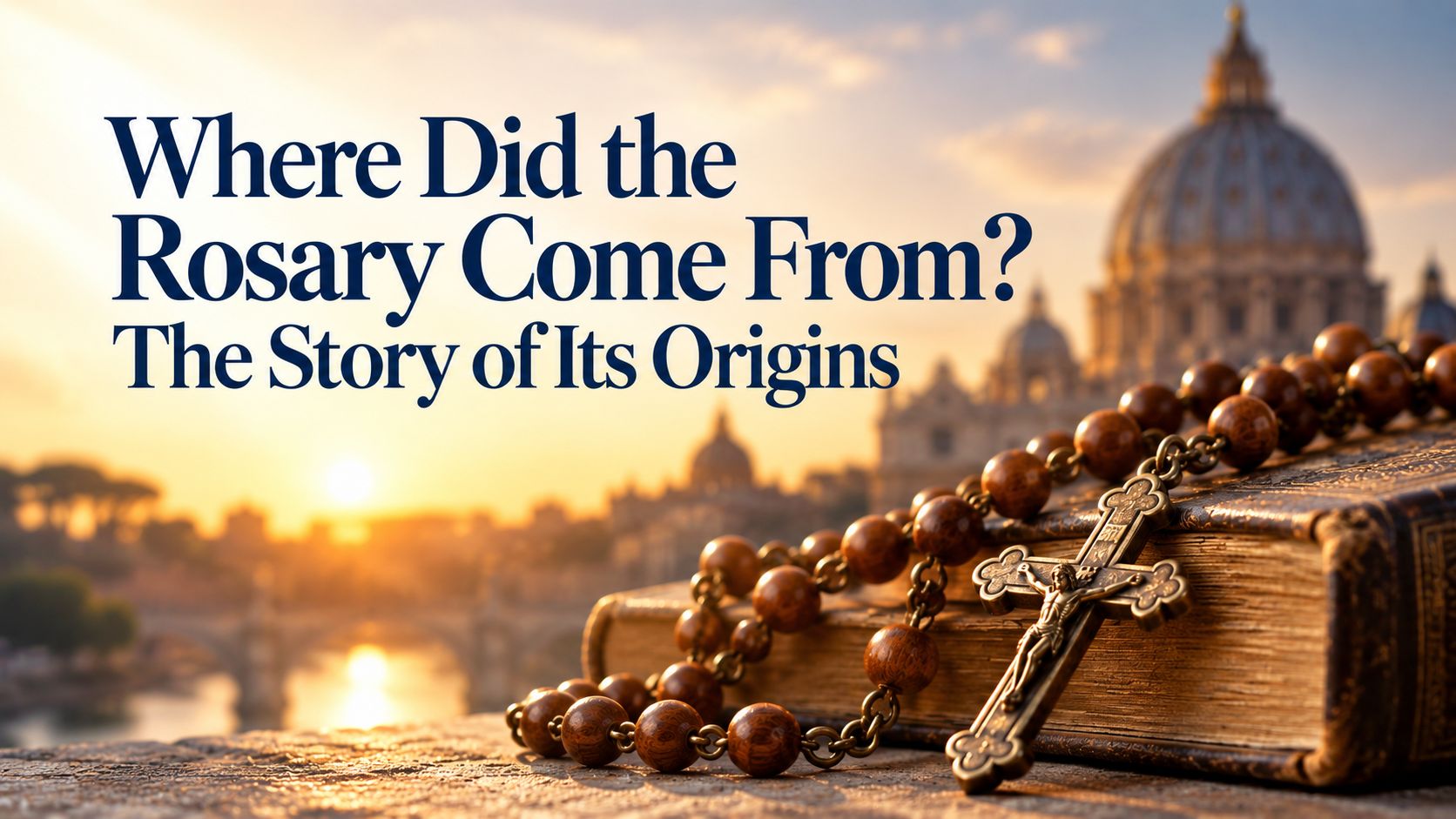
Oct 2, 2026: The Rosary is one of the most familiar Catholic prayers, but its history is more fascinating than the idea that it was simply invented on a particular day. Its familiar form emerged gradually through centuries of Christian prayer and meditation. At the same time, St Dominic has a special place in the tradition of the Rosary, particularly through his preaching and the role of the Dominican Order in spreading the devotion.


Before There Was a Rosary
One of the foundations of the Rosary was the medieval practice of counting prayers. Monks traditionally prayed the 150 Psalms of the Psalter, while Christians who could not follow the complete monastic cycle developed other forms of prayer to accompany their daily devotion.
The repetition of 150 Hail Marys eventually became known as the “Psalter of Mary”, reflecting the 150 Psalms prayed in the monastic tradition. The US Catholic Catechism for Adults explains that the Rosary grew from this desire among lay Christians to have a form of prayer corresponding to the Psalter.
What About St Dominic?
This is where the Rosary's history meets a longstanding Catholic tradition.
According to the traditional account, the Virgin Mary appeared to St Dominic and entrusted him with the Rosary, asking him to preach it. The story became closely associated with Dominic's preaching and with the Dominican Order, which later became one of the principal promoters of the devotion.
The tradition became particularly prominent through the Dominican friar Alan de la Roche in the 15th century, who strongly promoted the connection between St Dominic and the Rosary.
The Church has continued to recognise this Dominican tradition. Pope Leo XIII, one of the great papal promoters of the Rosary, referred to Dominic's role in introducing and spreading the devotion. In 1892, he described the Rosary as a devotion that tradition associated with the Mother of God teaching it to St Dominic.
A Tradition That Grew Over Time
Recognising St Dominic's importance does not mean that every element of the Rosary appeared in its final form during his lifetime.
The prayer itself continued to develop. Different forms of repeating the Hail Mary existed, and the practice of connecting the prayers with meditation on episodes from the lives of Jesus and Mary gradually became more structured.
Pope Paul VI acknowledged this development in Marialis Cultus in 1974. He described the Rosary as a devotion whose form developed over time and specifically noted that the sons of St Dominic were, “by tradition, the guardians and promoters” of the Rosary.
Thus, St Dominic's place in the story is not simply that of someone who supposedly “invented” a finished prayer. He and the Dominican tradition became intimately connected with preaching, promoting and spreading the Rosary.
From 150 Prayers to the Familiar Decades
The original association with the 150 Psalms explains why the Rosary was once structured around 150 Hail Marys.
Over time, the shorter form of 50 Hail Marys, divided into five groups of ten, became the familiar five-decade Rosary. The beads provided a simple way to keep count while allowing the person praying to concentrate on the accompanying meditation.
By the 16th century, the Rosary had taken a recognisable structure. In 1569, Pope St Pius V formally described the devotion as 150 Hail Marys, with the Our Father at each decade, accompanied by meditation on mysteries concerning the life of Christ.
The Mysteries Turned Counting Into Meditation
This development is central to understanding what makes the Rosary different from simply repeating a prayer 50 times.
The Hail Marys became a kind of rhythm accompanying contemplation. The person praying moved through events such as the Annunciation, the Nativity, the Crucifixion and the Resurrection while repeating the prayers.
The traditional mysteries eventually became three groups: Joyful, Sorrowful and Glorious.
Then Came Five More Mysteries
For centuries, those three groups remained the standard structure. Then, in 2002, Pope John Paul II introduced the Luminous Mysteries, focusing on significant moments from Christ's public ministry.
They include his Baptism in the Jordan, the wedding at Cana, the proclamation of the Kingdom of God, the Transfiguration and the institution of the Eucharist.
With their addition, the Rosary came to contain 20 mysteries.
A Prayer Shaped by Centuries
The Rosary, therefore, has a history that combines tradition and gradual development. Its roots reach back to medieval practices of counting prayers and the desire to mirror the 150 Psalms. St Dominic and the Dominican tradition became strongly associated with its preaching and promotion, while popes across the centuries helped establish and shape its form.
What Catholics hold today is the result of that long history: beads for counting, familiar prayers, and mysteries that guide meditation through the life of Christ and his Mother.
By Catholic Connect Reporter
Know more about the rosary:
Why Does October Belong to the Rosary? The Story Behind the Church’s Marian Month


© 2026 CATHOLIC CONNECT POWERED BY ATCONLINE LLP