- 02 October, 2026

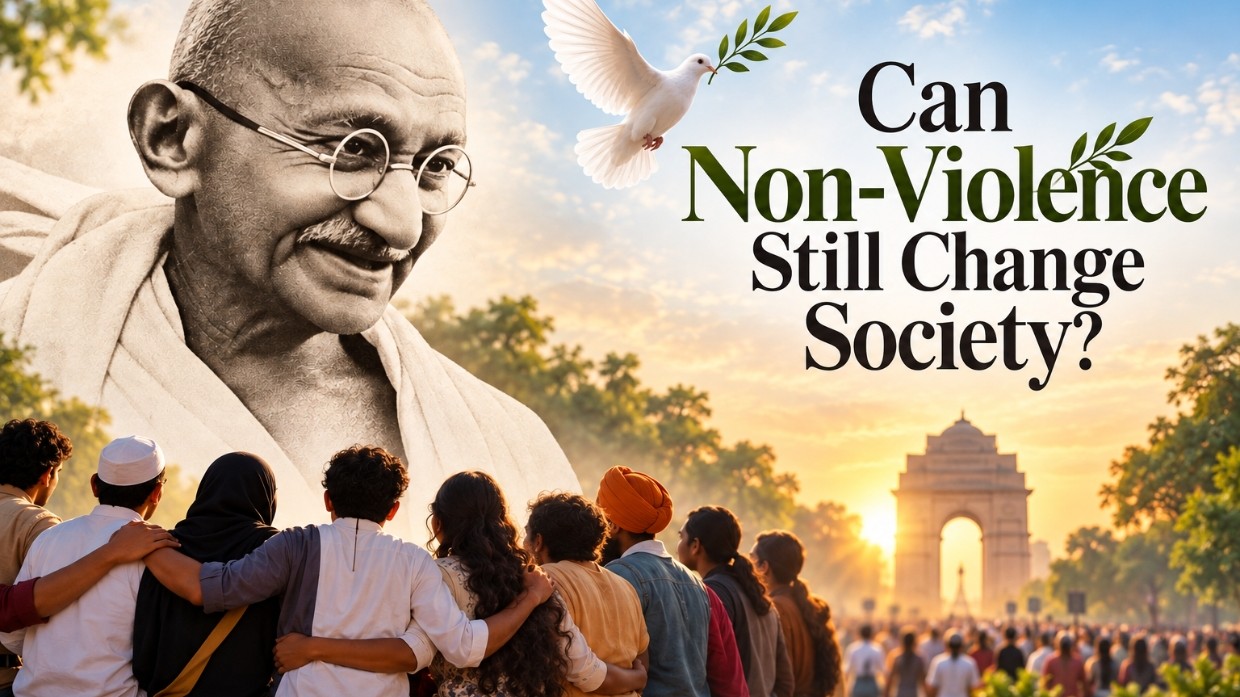
October 4, 2026: As violence, conflict and division continue to shape headlines, can non-violence still change society? On October 2, as the world marks the International Day of Non-Violence and India observes Gandhi Jayanti, the question remains deeply relevant.


In India, the question carries another dimension. At a time when Christians and other religious minorities continue to raise concerns about discrimination, attacks and restrictions on religious freedom, what does it mean to respond to hostility without allowing hatred to dictate our response?
When Peace Is Put to the Test
The United Nations observes October 2, the birth anniversary of Mahatma Gandhi, as the International Day of Non-Violence. The day was established by the UN General Assembly in 2007 to spread the message of non-violence through education and public awareness and to promote a culture of peace, tolerance and understanding.
For Gandhi, non-violence was not simply the absence of physical violence. It was a way of confronting injustice without hatred. Through peaceful resistance, civil disobedience and dialogue, he demonstrated that social and political change could be pursued without resorting to violence. His approach went on to inspire movements for civil rights and social change across the world.
India's Freedom Struggle and the Power of Peace
Gandhi's legacy is particularly significant in India, where non-violence became a defining element of the struggle against British rule. The Salt March and other campaigns demonstrated how mass participation, civil disobedience and non-cooperation could challenge an established system without turning to armed violence. The United Nations continues to cite Gandhi's approach as an example of non-violent resistance that rejects passivity while also rejecting physical violence.
His message, however, was never simply about avoiding confrontation. Non-violence can involve protest, resistance and the refusal to cooperate with injustice. The challenge is to oppose what is wrong without allowing the struggle itself to become another source of hatred.
When Christians Face Persecution
That distinction carries particular significance for Christians in India.
In recent years, Christian organisations and Church leaders have raised concerns over incidents of violence, discrimination and restrictions affecting religious freedom. In February 2026, the Church in India called for the repeal of anti-conversion laws in 12 states, saying the laws were being abused and raising concerns about constitutional guarantees of religious freedom.
The experience of persecution can naturally produce fear, anger and a desire to respond. Yet the Christian response to injustice cannot be reduced to either silence or retaliation.
Non-violence does not ask victims of injustice to pretend that injustice does not exist. It asks a more difficult question: How can injustice be confronted without hatred consuming the person who confronts it?
Non-Violence Is Not Passive
The United Nations describes non-violent resistance as a means of pursuing social or political change without physical violence. It includes protest and persuasion, non-cooperation and other forms of non-violent action.
In other words, non-violence is not the same as doing nothing.
A person can speak against injustice. A community can peacefully protest. Citizens can demand accountability. Religious communities can defend their rights. People can refuse to participate in discrimination. None of these actions require hatred or violence.
Gandhi's Message in a Divided India
The relevance of this message extends beyond persecution.
India's diversity brings together people of different religions, languages, cultures and traditions. When differences are turned into suspicion or hostility, dialogue becomes more difficult and communities become increasingly divided.
This is why non-violence is also about the everyday choices that shape society: how we speak about another community, how we respond to disagreement, whether we listen before judging and whether we recognise the dignity of someone who does not share our beliefs.
What Does Peace Look Like Today?
In his 2026 message for the International Day of Non-Violence, UN Secretary-General António Guterres said Gandhi showed how dialogue and non-violence can counter discrimination and oppression, build bridges of understanding, uphold dignity and create lasting change. He called for genuine dialogue and diplomacy to heal divisions and reduce suffering.
For Christians, this call to peace also carries a deeply Gospel-centred meaning.
Jesus did not teach His followers to respond to hatred with hatred. The Christian call to love one's enemies, forgive and work for peace does not erase the reality of injustice. Rather, it offers a different way of confronting it: one that seeks truth without vengeance, justice without hatred and courage without cruelty.
Can Non-Violence Still Change Society?
Perhaps the more difficult question is not whether non-violence can change society, but whether we are willing to practise it when we ourselves are hurt, threatened or treated unjustly.
In a world where violence can quickly deepen divisions, October 2 offers more than an opportunity to remember Gandhi's legacy. It invites us to examine how we respond to conflict in our homes, communities and society.
Non-violence may not provide an easy answer to every conflict. But it reminds us that the way we pursue change matters.
A peaceful society is not built merely by ending violence. It is built when people choose, again and again, dialogue over hatred, dignity over dehumanisation, and justice without vengeance.
Continue Reading on Catholic Connect App
Get access to exclusive news articles & more.

© 2026 CATHOLIC CONNECT POWERED BY ATCONLINE LLP