- 18 June, 2026

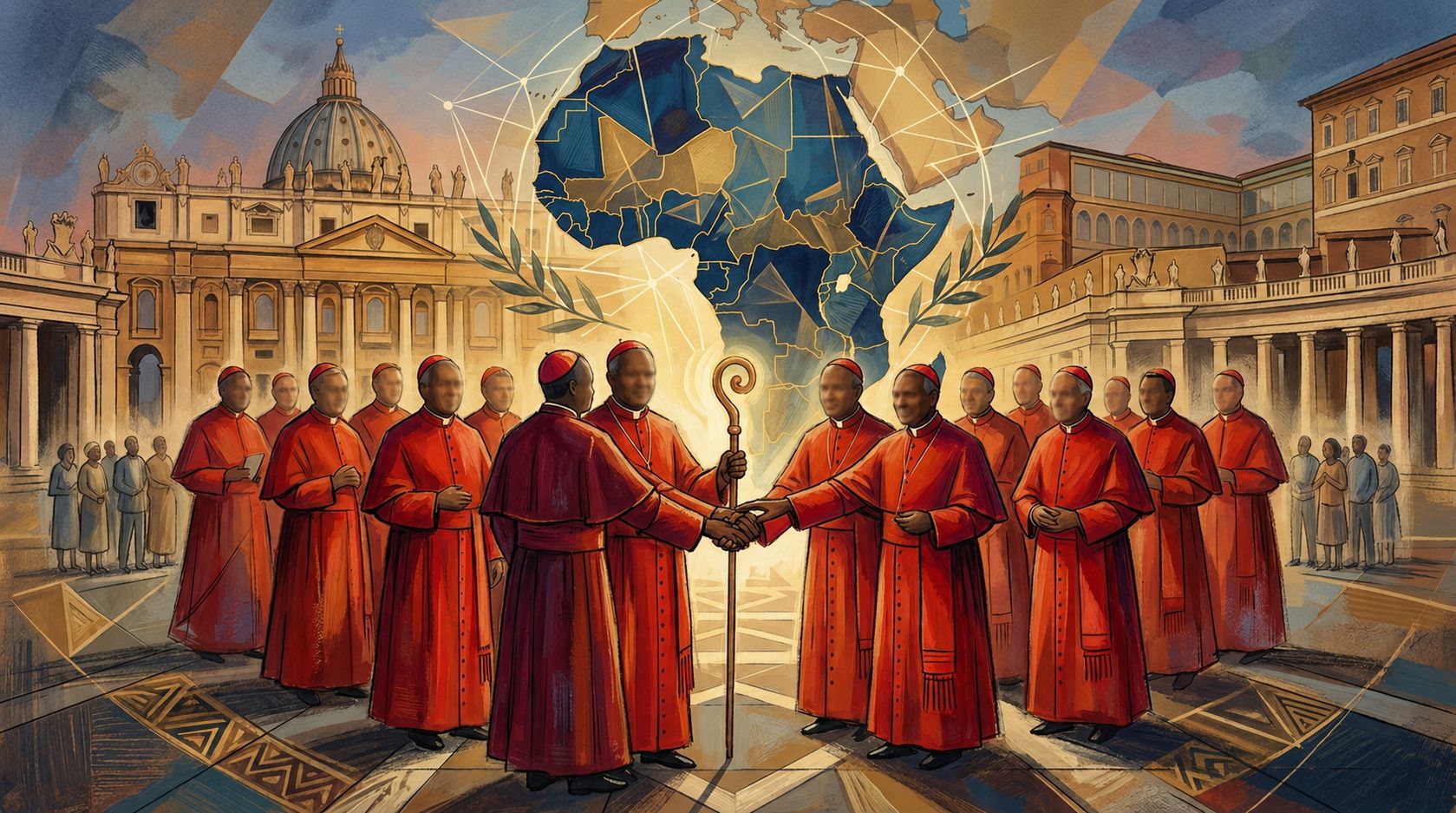
Vatican, April 25, 2026: The Catholic Church in Africa is currently experiencing its most significant era of influence in its 2,000-year history. Although the continent was home to some of the Church’s earliest theologians and three early Popes, African representation in the College of Cardinals remained absent for centuries.


For much of the second millennium, the College of Cardinals was almost entirely European. African voices were not formally included in the Church’s highest advisory and electoral body until the mid-20th century, during the period of global decolonization.
First African Cardinal in the Modern Era
A major turning point came in 1960, when Pope John XXIII appointed Laurean Rugambwa of Tanganyika, now Tanzania, as the first native-born African cardinal of the modern era. This appointment marked the beginning of Africa’s formal representation in the College of Cardinals.


Post–Vatican II Expansion
Following the Second Vatican Council (1962–1965), the expansion of African representation accelerated. Subsequent Popes, especially Paul VI and John Paul II, advanced the internationalisation of the College, recognising that the Church’s future growth was increasingly centred in the Global South.
Current Representation in 2026
As of April 2026, the African continent holds a significant place within the College of Cardinals. There are approximately 30 to 32 African cardinals in total. Among them, 18 are cardinal electors, meaning they are under the age of 80 and eligible to vote in a Papal Conclave. These electors represent roughly 13 to 15 per cent of the total voting body of the Church.
The African cardinals come from a broad range of countries, including Nigeria, the Democratic Republic of the Congo, Ghana, South Sudan, Ivory Coast, and the Central African Republic, reflecting the continent’s growing presence in global Church governance.
Key African Cardinals in Leadership
Several African cardinals currently hold influential leadership positions. Cardinal Fridolin Ambongo Besungu of the Democratic Republic of the Congo serves as the Archbishop of Kinshasa and President of the Symposium of Episcopal Conferences of Africa and Madagascar (SECAM), coordinating the Church across the continent.
Cardinal Peter Turkson of Ghana, a veteran of the Roman Curia, serves as Chancellor of the Pontifical Academy of Sciences and the Pontifical Academy of Social Sciences.
Cardinal Stephen Ameyu Martin Mulla of South Sudan, elevated in late 2023, has become a central figure in the Church’s diplomatic efforts for peace and reconciliation in East Africa.
Cardinal Dieudonné Nzapalainga of the Central African Republic, appointed in 2016 as the first cardinal from his country, remains one of the youngest members of the College and is known for his advocacy of interfaith dialogue.
Demographic Significance of Africa
The growing significance of African cardinals is closely linked to the continent’s demographic importance within the Catholic Church. Africa is currently the fastest-growing region for Catholicism, with the highest rates of baptisms and priestly vocations worldwide.
Theological Identity and Inculturation
The African cardinalate is also recognised for its emphasis on inculturation, integrating African cultural traditions into Catholic liturgy, while maintaining strong adherence to traditional Church teachings on social and moral issues.
As the Church moves further into the 21st century, the presence of 18 African cardinal electors ensures that the concerns and perspectives of the African faithful remain central in the election of future Popes.
By Catholic Connect Reporter
© 2026 CATHOLIC CONNECT POWERED BY ATCONLINE LLP