- 22 May, 2026

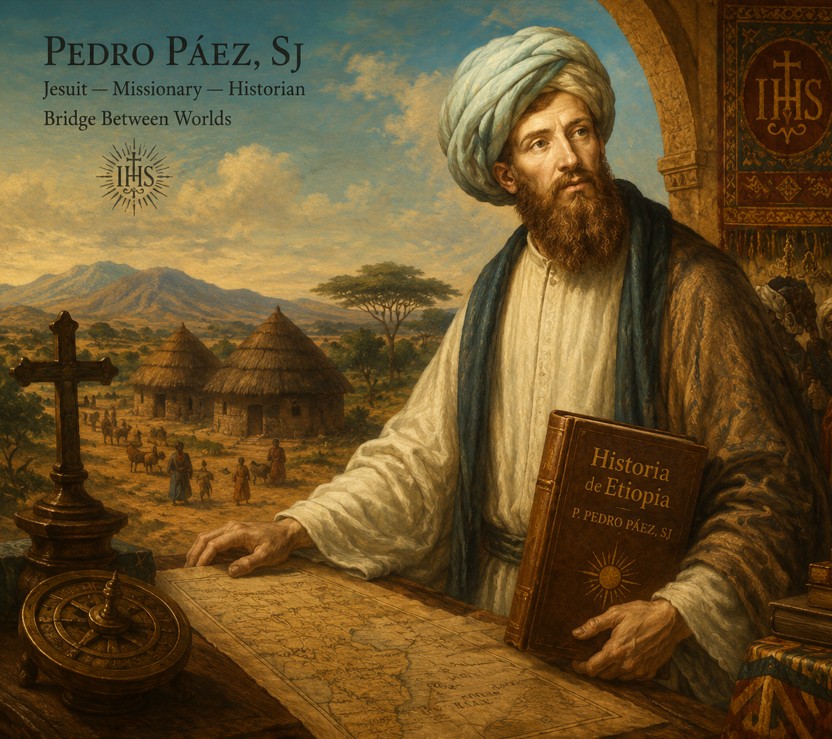
May 22, 2026: Long before modern explorers mapped the mysteries of Africa, a courageous Jesuit missionary journeyed through prisons, slavery, betrayal, and unimaginable hardship to uncover one of the world’s greatest geographical wonders — the source of the Blue Nile. On May 22, 1622, Pedro Páez died in Gorgora, Ethiopia, leaving behind a legacy far greater than exploration. Four centuries later, his remarkable story continues to inspire historians, missionaries, and adventurers alike.


Born in 1564 in Olmeda de las Fuentes near Madrid, Spain, Pedro Páez entered the Jesuit order at a young age with a burning desire to serve in distant lands. His dream led him to India, where he travelled from Lisbon to Goa in 1588 as a missionary.
But his journey soon turned into a nightmare.
While attempting to reach Ethiopia to support isolated Christians, Páez and fellow Jesuit Antoni Monserrat were betrayed by a pilot and captured by pirates near Oman in 1590. The missionaries spent nearly six years imprisoned in Yemen, enduring suffering, humiliation, and even forced labour as galley slaves.
Many would have abandoned their mission. Páez did not.


After being rescued and returning to Goa, Páez resumed his studies and ministry in parts of present-day Maharashtra and Gujarat. Yet his heart remained fixed on Ethiopia.
In 1603, disguised as an Armenian merchant, he made a second daring attempt to reach the African kingdom. This time, after a dangerous voyage through Turkish-controlled territories, he finally arrived in Ethiopia.
There, he found a struggling Catholic community on the brink of collapse. Through patience, wisdom, and deep cultural understanding, Páez gradually earned the trust of Emperor Susenyos and became one of the most influential figures in the Ethiopian court.
On April 21, 1618, Páez achieved what many explorers had only dreamed of — he became the first European to document and describe the source of the Blue Nile in the Ethiopian Highlands near Gish Abay.
His detailed writings not only described the river but also recorded the traditions, beliefs, and sacred customs of local communities who revered the waters.
Ironically, history later credited Scottish explorer James Bruce with the “discovery” in the 18th century, overshadowing Páez’s earlier achievement for many years.
Pedro Páez was not merely an explorer. He was a scholar, architect, priest, and bridge-builder between cultures. He authored a monumental History of Ethiopia, constructed churches and palaces, and engaged respectfully with Ethiopian traditions and religious leaders.
When he died in 1622, Emperor Susenyos mourned him deeply, calling him “the shining sun of the faith.”
Four hundred years later, Pedro Páez’s story remains a powerful reminder that true greatness is born not from fame, but from perseverance, humility, and faith.
His journey across continents, prisons, deserts, and rivers was ultimately a mission of hope — proving that even in the darkest moments, courage and conviction can lead humanity toward extraordinary discoveries.
Courtesy:
Archivum Romanum Societatis Iesu (ARSI),
Society of Jesus Communications Office,
News18,
The Tribune,
Open Rivers Journal,
Wikipedia.
© 2026 CATHOLIC CONNECT POWERED BY ATCONLINE LLP