- 11 October, 2026

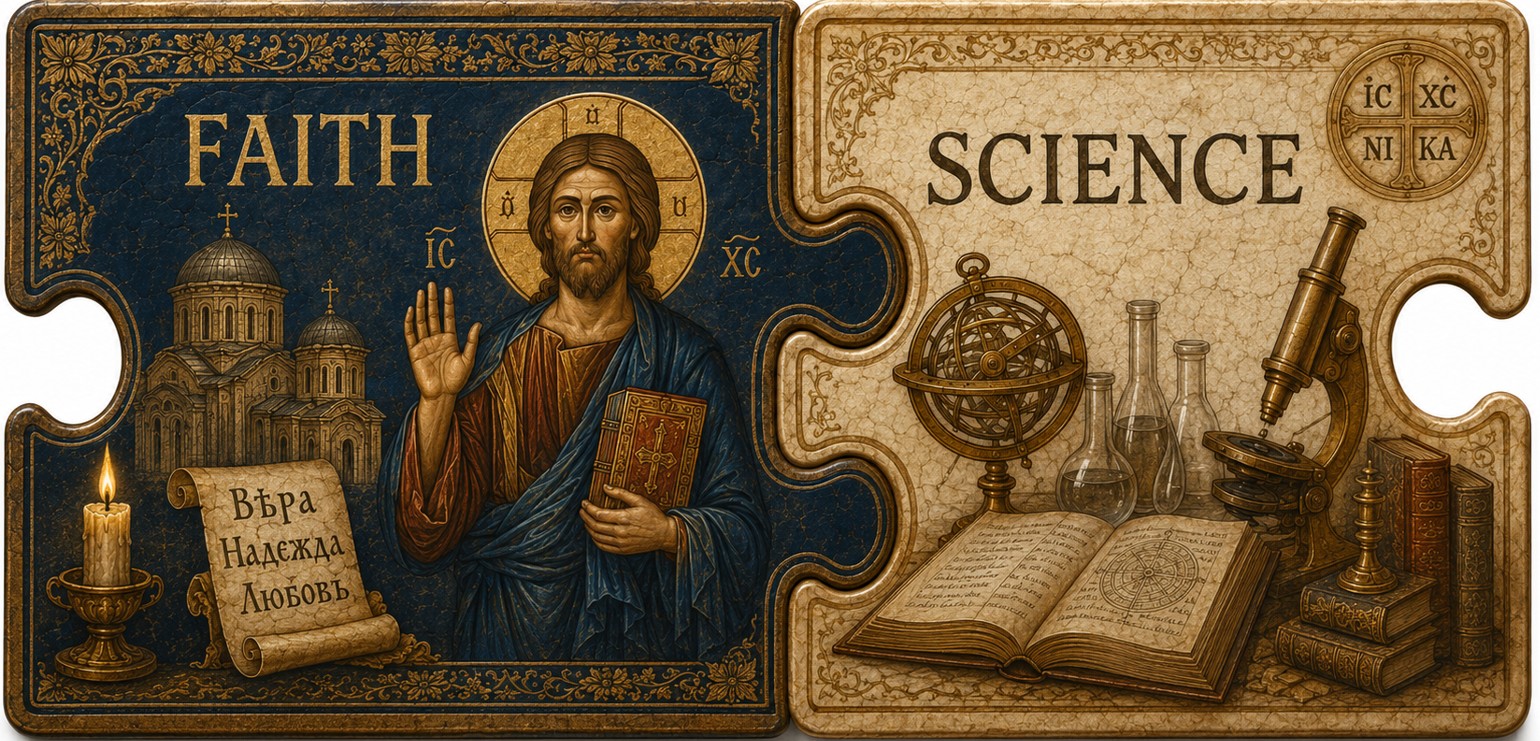
May 21, 2026: “Religion kills science.” “Science disproves God.” “Faith is anti-intellectual.”

For years, young Catholics have heard the same message: you must choose between the laboratory and the Church.
And many believe it.
In fact, surveys show a large number of young Catholics think science and faith fundamentally contradict each other.
But here’s the twist nobody talks about:
Some of the scientists who changed the modern world were deeply Catholic.
The priest who proposed the Big Bang.
The monk who discovered genetics.
The astronomers, physicists, and neuroscientists today who still attend Mass while working in cutting-edge research labs.
So what if the famous “war between science and religion” was never really true?
For decades, popular culture has pushed what historians call the “warfare model” — the idea that science and religion are locked in permanent conflict.
But many historians of science say the real story is far more complicated.
The Catholic Church didn’t just tolerate science.
It helped build it.
Universities across Europe emerged from Catholic intellectual traditions. Monasteries preserved ancient scientific texts. Priests studied astronomy. Clergy mapped the stars. And some of history’s greatest scientific breakthroughs came directly from Catholics.
Most people assume the Big Bang theory came from a secular physicist.
It didn’t.
It was first proposed by Georges Lemaître — a Catholic priest, mathematician, and theoretical physicist.
In the 1920s, Lemaître suggested the universe was expanding outward from a single “primeval atom,” an idea that later became known as the Big Bang theory.
Ironically, some atheist scientists initially resisted the theory because it sounded too close to the biblical idea of creation.
But Lemaître himself warned against mixing science and theology carelessly. He believed science explained the mechanics of the universe, while faith addressed deeper questions of meaning and existence.
To him, the two were not enemies. They were asking different questions.
Long before DNA testing and genetic engineering, an Augustinian monk quietly transformed biology from a monastery garden.
Gregor Mendel — now called the “father of modern genetics” — discovered the fundamental laws of inheritance through experiments on pea plants.
His work laid the foundation for modern genetics.
Not despite his faith. But while living it.
Today, virtually every biology textbook on Earth traces modern genetics back to a Catholic monk growing plants behind monastery walls.
In 2016, a group of researchers launched the Society of Catholic Scientists.
Their mission was simple: To show the world that serious science and serious faith can coexist.
Its members include physicists, chemists, neuroscientists, astronomers, doctors, and engineers from leading universities and research institutions.
And they reject the idea that belief in God makes science less credible.
Their central argument is surprisingly straightforward: Truth cannot contradict truth.
If God is the author of both creation and reason, they argue, then honest scientific discovery cannot genuinely conflict with authentic faith.
For these scientists, science answers how the universe works.
Faith answers why it exists at all.
Part of the confusion comes from famous historical flashpoints like Galileo Galilei.
The Galileo controversy is often presented as proof that Christianity opposed science.
But historians note the real story involved politics, personalities, and incomplete scientific evidence at the time — not simply “science vs religion.”
Modern Catholic thinkers argue the conflict narrative survives largely because it makes a dramatic story.
And dramatic stories spread faster than nuanced history.
Meanwhile, millions of religious scientists quietly continue working in physics labs, hospitals, observatories, and universities around the world.
Catholic scientists often describe science and religion as operating on different levels.
Science studies measurable reality:
Faith asks philosophical and spiritual questions:
One explores mechanisms.
The other explores meaning.
And many scientists argue humanity needs both.
The modern image of science and faith as mortal enemies is powerful.
But history keeps complicating the story.
The Big Bang came from a priest.
Genetics came from a monk.
Modern Catholic scientists continue publishing research while openly practicing their faith.
And organizations like the Society of Catholic Scientists exist for one reason:
To remind the world that belief and reason were never supposed to destroy each other.
Only to search for truth together.



© 2026 CATHOLIC CONNECT POWERED BY ATCONLINE LLP