- 10 November, 2026
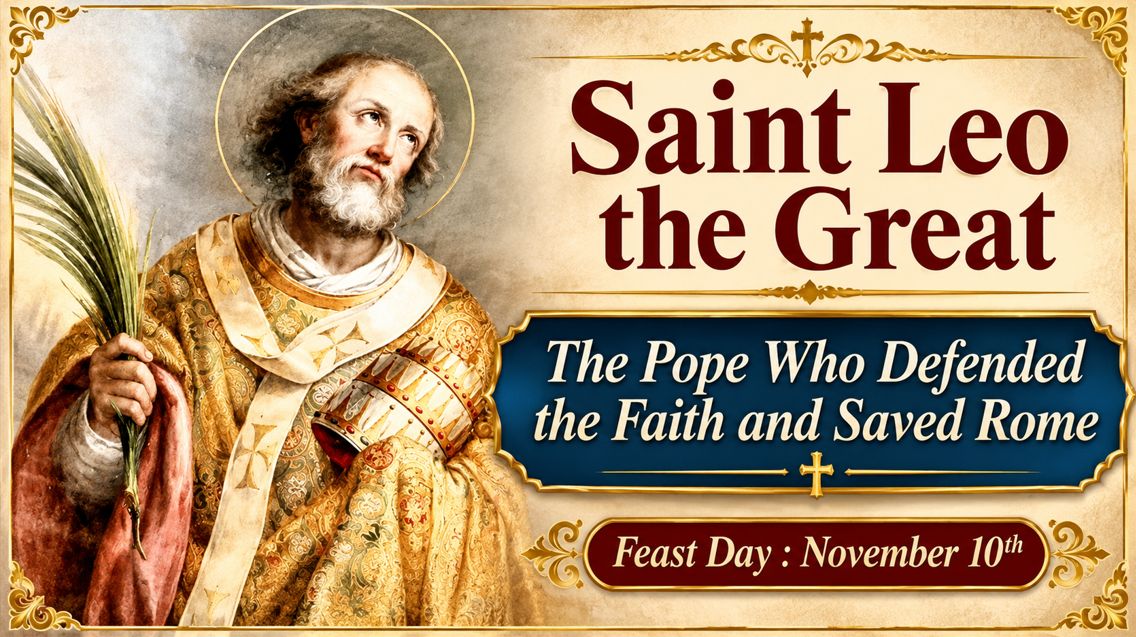
Rome, November 10, 2026: Saint Leo the Great is remembered as one of the most remarkable popes in the history of the Catholic Church. A courageous shepherd, gifted theologian and wise diplomat, he guided the Church through a period of political turmoil and theological division. His meeting with Attila the Hun, his defence of the true teaching about Jesus Christ and his extraordinary leadership earned him the title “the Great.” The Church celebrates his feast on November 10.

Little is known with certainty about Saint Leo’s childhood. He was born around the beginning of the fifth century and became a member of the clergy in Rome. His intelligence, faith and administrative abilities quickly earned him the respect of Church leaders.
As a deacon, Leo served under the early popes and became an important adviser. He was often entrusted with difficult missions, including resolving disagreements among Church and political leaders. In 440, while he was away on a diplomatic mission in Gaul, he was elected Pope. He returned to Rome and was consecrated on September 29, beginning a pontificate that lasted 21 years.
(CLICK HERE to follow Catholic Connect and to stay updated with Catholic News & Content)
One of Saint Leo’s greatest contributions was his defence of the Church’s teaching about the person of Jesus Christ. During his time, serious disagreements arose concerning Christ’s divine and human natures.
Leo wrote an important letter to Flavian, the Patriarch of Constantinople, explaining that Jesus Christ is one Person with two natures, fully divine and fully human. This document became known as the Tome of Leo.
At the Council of Chalcedon in 451, the bishops accepted its teaching as an important expression of the Catholic faith. According to the traditional account, they exclaimed, “Peter has spoken through Leo!” His writings and sermons continue to be valued, and Pope Benedict XIV declared him a Doctor of the Church in 1754.
In 452, Attila the Hun invaded Italy and threatened Rome. Pope Leo travelled to meet him near Mantua and appealed to him to withdraw. Attila eventually retreated, and Leo became remembered for his courage and diplomatic skill.
In 455, when the Vandals under Genseric attacked Rome, Leo again negotiated with the invaders. Although he could not prevent the city from being plundered, he helped secure protection for many people and important churches.
Saint Leo died on November 10, 461, after serving the Church with dedication for more than two decades. He was buried at St. Peter’s Basilica in Rome. His sermons and letters remain valuable witnesses to early Christian teaching and pastoral leadership.
Saint Leo the Great, pray for us!
Visit the Spiritual section of Catholic Connect for more inspiring stories about saints, faith, prayer, and Catholic life.
By Catholic Connect Reporter
Relevant Keywords: Saint Leo the Great, November 10, Pope Leo I, Doctor of the Church, Council of Chalcedon, Tome of Leo, Attila the Hun, Catholic saints, Catholic Church history, early Church.

© 2026 CATHOLIC CONNECT POWERED BY ATCONLINE LLP