- 05 May, 2026
Germany, March 16, 2026: The Catholic Church remembers Heribert of Cologne on March 16, honoring a bishop known for his deep faith, leadership, and compassion for the poor. Living during the early centuries of the Holy Roman Empire, Saint Heribert served both the Church and society with humility and wisdom.


Born around 970 in Worms, Heribert came from a noble German family. He received his early education at the cathedral school in Worms and later continued his studies at the monastery of Gorze Abbey in present-day France.
He was ordained a priest in 994, and his intelligence and spiritual dedication soon brought him into the service of the imperial court.
Heribert became a close adviser to Otto III, who appointed him imperial chancellor for Italy and later for Germany. In this role, he helped manage important political and ecclesiastical matters across the empire.


In 999, Heribert was elected Archbishop of Cologne, one of the most influential dioceses in Europe at the time. He received the pallium from Pope Sylvester II, symbolizing his authority as archbishop.
Despite his high position, historical accounts describe him as a man of prayer and humility who lived simply and remained deeply devoted to the spiritual life.
Saint Heribert made several lasting contributions to the Church.
Founder of a Monastery
In 1003, he founded the Benedictine monastery in Deutz along the Rhine River. The monastery became an important center of prayer, learning, and Christian formation.
Care for the Poor
Heribert was known for his generosity. He frequently distributed his personal wealth to the needy and encouraged priests and church institutions to care for the poor and vulnerable.
Mediator and Peacemaker
As both archbishop and imperial adviser, he helped mediate disputes among nobles and political leaders, working to maintain peace within the empire.
Saint Heribert died on March 16, 1021, in Cologne after faithfully serving the Church for many years.
Because of his reputation for holiness, he was later canonized around 1075 by Pope Gregory VII.
Tradition also credits him with a miracle during a severe drought. According to historical accounts, when the region faced extreme dryness, Heribert prayed earnestly for rain — and rain soon followed. For this reason, he later became known as a patron saint invoked against drought and for rainfall.
Saint Heribert is especially venerated in Cologne, particularly in the district of Deutz, where the monastery he founded once stood.
His relics are preserved in the St. Heribert Church, where pilgrims and visitors continue to honor his memory.
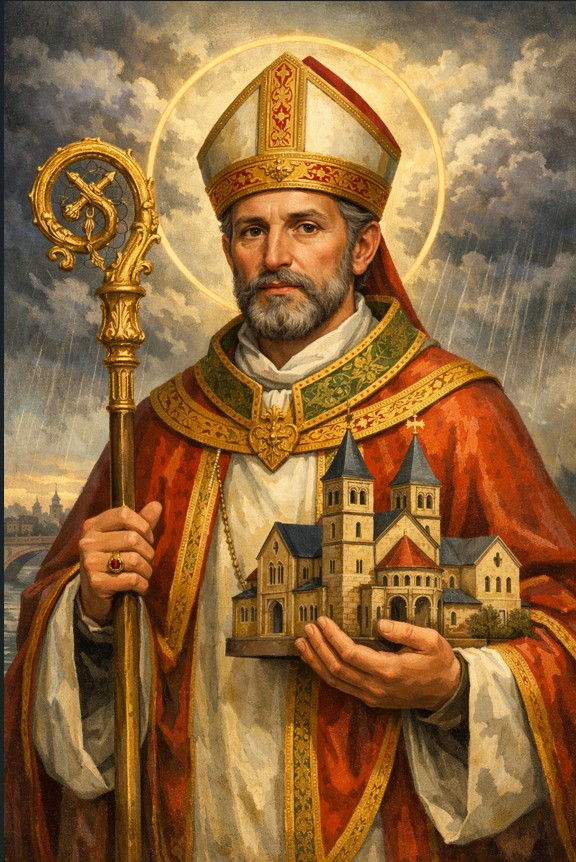
In Christian art, he is often depicted wearing bishop’s vestments and holding a crozier, sometimes accompanied by imagery associated with rain — recalling the miracle attributed to his prayers.
Saint Heribert’s life reminds believers that leadership in the Church is rooted in humility and service. Whether advising emperors, caring for the poor, or guiding the faithful, he remained committed to living the Gospel with courage and compassion.
More than a thousand years later, his witness continues to inspire Christians to seek holiness through prayer, charity, and dedication to God.
To know about more saints please visit the spiritual section.
By Catholic Connect Reporter




© 2026 CATHOLIC CONNECT POWERED BY ATCONLINE LLP