- 15 October, 2026
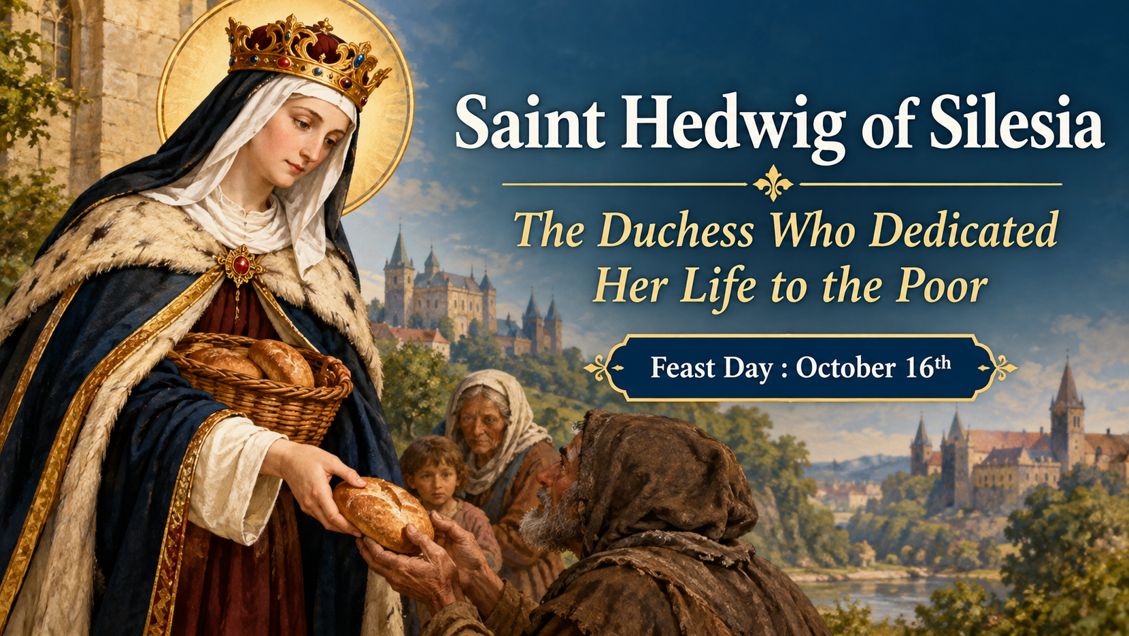
Silesia, 16 October 2026: Can someone born into wealth become a true servant of the poor? Saint Hedwig of Silesia showed that genuine holiness is measured not by status or possessions, but by love, humility and service. A duchess who used her position to help the suffering, she became one of the most beloved saints of Central Europe. Her life continues to inspire Christians to care for the vulnerable and place faith above worldly riches.


Feast Day: 16 October
Born: Around 1174, Andechs, Bavaria
Died: 15 October 1243, Trebnitz, Silesia
Known For: Charity towards the poor, support for hospitals and religious communities, and a life of prayer and humility
Canonised By: Pope Clement IV in 1267
Patronage: Silesia and, in Catholic tradition, widows and those experiencing family difficulties.
Saint Hedwig was born into the noble family of Andechs in Bavaria. At about twelve years old, she married Henry, who later became Duke of Silesia. As duchess, she carried significant responsibilities within the court and supported her husband in governing their territories.
Although surrounded by wealth and privilege, Hedwig developed a reputation for modesty. She learned the language of the people among whom she lived and sought to understand their needs. Rather than allowing her high position to separate her from ordinary people, she used it to reach out to those facing hardship.
Hedwig was especially concerned about people living in poverty, the sick and those who lacked support. She helped establish charitable institutions and supported hospitals and religious communities that cared for people in need.
Tradition recounts that she wore simple or well-worn clothing despite her noble rank. Her choices reflected her belief that people suffering from poverty deserved dignity and compassion, not neglect. She encouraged practical charity, showing that Christian love must be expressed through concrete acts of service.
Hedwig’s life also included profound personal sorrow. She endured the deaths of several of her children, including her son Henry II, who died in battle against Mongol forces in 1241. Through these painful experiences, she continued to seek strength in prayer and trust in God.
Her faith was not separate from her responsibilities as a wife, mother and duchess. Instead, it guided how she responded to suffering and how she cared for others. Her example reminds believers that holiness can grow even in times of grief and uncertainty.
After her husband’s death in 1238, Hedwig devoted herself more fully to religious life at the Cistercian monastery of Trebnitz, which she had helped establish in 1202. There, she continued her life of prayer and charity, living with humility despite her former royal status.
She died in October 1243 and was remembered for her generosity and deep faith. Pope Clement IV canonised her in 1267, recognising her enduring witness to Christian holiness.
Saint Hedwig teaches Catholics to use their resources to help others, remain humble regardless of status and trust God through personal suffering. Her life demonstrates that faith becomes visible through compassion, generosity and service.
In a world where success is often measured by wealth and influence, Saint Hedwig offers a different example. She reminds us that the greatest legacy is not what we possess, but the lives we touch through love and kindness.
Saint Hedwig of Silesia, pray for us!
To know about more saints and Catholic feast days, please visit the spiritual section.
By Catholic Connect Reporter
Saint Hedwig of Silesia, Saint Hedwig feast day, Catholic saints of October, Duchess of Silesia, patron saint of Silesia, medieval Christian saints, charity to the poor, Catholic women saints, Christian humility, faith and service
© 2026 CATHOLIC CONNECT POWERED BY ATCONLINE LLP