- 25 June, 2026
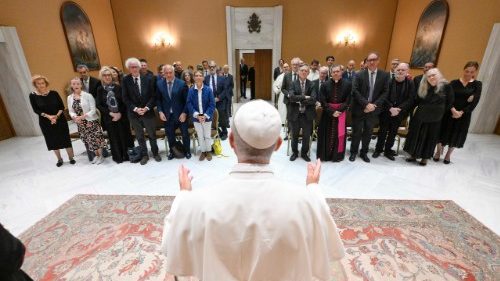
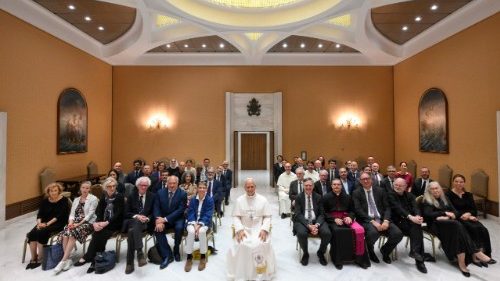
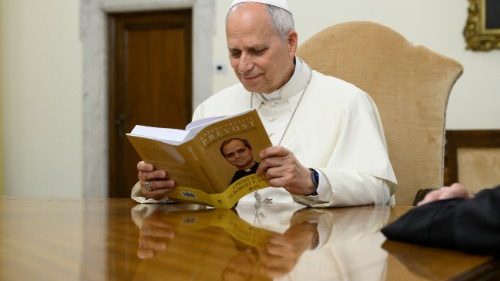
Vatican, June 25, 2026: Pope Leo XIV met writers from around the world to mark the 100th anniversary of the Vatican Publishing House (LEV), reminding authors that writing is an act of humanity, truth and the search for God.

“We need you. We need your imagination, your narrative creativity, and your lively thinking. We need these to create spaces of freedom and authenticity, within which divine grace can make the promise of consolation and peace resound.”
The Pope offered this encouragement on Wednesday during a gathering in Rome marking the centenary of the Libreria Editrice Vaticana, the Vatican Publishing House established in 1926.


Writing, he noted, is a form of human expression in which different styles and languages serve as teachers and role models.
Writing is an act of truth and revelation
Firstly, he said writing is an act of truth and revelation because it reveals who we are, what we believe and hope for, the world we seek, and the future we dream about.
“In this pursuit of truth, we sense that truth is subtle, revealing itself to us in our inner dialogue with God and in our open and respectful dialogue with our neighbors,” he said, warning that “we are never masters of the truth; if anything, it is the truth that ‘conquers’ us.”
The Pope said he hoped writers would inspire others to be drawn towards truth because they themselves are drawn to it.
Writing is an act of humanity
Secondly, he stated that writing is an act of humanity, observing that literature embraces the full range of human experience and offers a wider perspective that broadens our humanity.
“We develop an imaginative empathy that enables us to identify with how others see, experience, and respond to reality,” he said. “Without such empathy, there can be no solidarity, sharing, compassion, or mercy.”
The Pope observed that while writing stories and developing characters, readers identify with them and understand their points of view, emotions, feelings and attitudes.
He described reading as “the great training ground of humanity that you allow your readers to experience, because, in a sense, readers ‘live’ many lives in addition to their own.”
He added that reading also helps people discover different perspectives, avoid treating their own opinions as absolute, and piece together, like a mosaic, the outline of truth, which always transcends us.
Writing concerns God
Finally, Pope Leo underscored that writing concerns God.
“It may seem a bold claim to make,” he acknowledged, “but several theologians have reflected on and written about the harmony between the art of writing and the revelation of the biblical God. It is the very structure of Revelation that gives us the authority to do so.”
The Pope quoted Cardinal Timothy Radcliffe, who wrote, “For Christians, nothing human is alien to Christ. Every attempt to grapple with the fundamental questions of our lives — how to love, how to be just, how to be free, how to face suffering and death — helps us to understand Christ, the one who is most human of all.”
God reveals Himself in the midst of very human stories
“When we delve into the very depths of our humanity,” Pope Leo insisted, “we are not far from God; for there, in the midst of very human stories, God reveals Himself.”
“The God of the Bible,” Pope Leo continued, “manifests Himself in liberation from slavery, in the birth of a son when all hope seemed lost and in merciful and faithful love,” and “speaks through events and encounters, faces and stories.”
“God,” the Pope reminded the writers, “works in our lives through what we do and who we are and through the many people we meet.”
The Holy Father said this was why he wished to repeat the words Pope Saint Paul VI once addressed to all artists: “We need you.”
Pope Leo concluded by thanking writers for their efforts in sowing seeds of reconciliation, encounter and friendship.
Courtesy : Vatican News
© 2026 CATHOLIC CONNECT POWERED BY ATCONLINE LLP